

Newsletter 5862-017
The 3rd Year of the 5th Sabbatical Cycle
The 32nd year of the 120th Jubilee Cycle
The 4th day of the 5th month, 5862 years after the creation of Adam
The 5th Sabbatical Cycle after the 119th Jubilee Cycle
The Sabbatical Cycle of the Tithes to the Widows and Orphans
June 20, 2026
Shabbat Shalom to the Royal Family of Yehovah,
Join Our Sabbath Meetings
Join Our Sabbath Meetings
There are many people in need of fellowship and who are sitting at home on the Sabbath with no one to talk to or debate with. I want to encourage all of you to join us on Shabbat, and to invite others to come and join us as well. If the time is not convenient then you can listen to the teaching and the midrash after on our YouTube channel.
What are we doing and why do we teach this way?
We are going to discuss both sides of an issue and then let you choose. It is the work of the Ruach (Spirit) to direct and to teach you.
The medieval commentator Rashi wrote that the Hebrew word for wrestle (avek) implies that Jacob was “tied”, for the same word is used to describe knotted fringes in a Jewish prayer shawl, the tzitzityot. Rashi says, “thus is the manner of two people who struggle to overthrow each other, that one embraces the other and knots him with his arms”.
Our intellectual wrestling has been replaced by a different kind of struggle. We are wrestling with Yehovah as we grapple with His Word. It is an intimate act, symbolizing a relationship in which Yehovah and you and I are bound together. My wrestling is a struggle to discover what Yehovah expects of us, and we are “tied” to the One who assists us in that struggle.
Today, many say Israel means “Champion of God”, or better — the “Wrestler of God”.
Our Torah sessions each Shabbat teaches you and encourages you to constantly challenge, question, argue against, as well as view alternative views and explanations of the Word. In other words, we are to “wrestle with the Word” to get to the truth. Jews worldwide believe that you need to wrestle with the Word and constantly challenge Dogma, Theology, and views or else you will never get to the Truth.
We are not like most churches where “The preacher talks and everyone listens.” We encourage everyone to participate, to question and to contribute what they know on the subject being discussed. We want you to be a champion wrestler of the Word of Yehovah. We want you to wear the title of Israel, knowing that you not only know but are capable of explaining why you know the Torah to be true with logic and facts.
We have a few rules though. Let others talk and listen. There is no discussion about UFO’s, Nephilim, Vaccines or conspiracy-type subjects. We have people from around the world with different world views. Not everyone cares who is the President of any particular country. Treat each other with respect as fellow wrestlers of the word. Some of our subjects are hard to understand and require you to be mature and if you do not know, then listen to gain knowledge and understanding and hopefully wisdom. The very things you are commanded to ask Yehovah for and He gives to those who ask.
Jas 1:5 But if any of you lacks wisdom, let him ask of God, who gives to all liberally and with no reproach, and it shall be given to him.
We hope you can invite those who want to keep Torah to come and join us by hitting the link below. It is almost like a Torah teaching fellowship talk show with people from around the world taking part and sharing their insights and understandings.
We start off with some music and then some prayers and it’s as though you were sitting around the kitchen back in Newfoundland having a cup of coffee and all of us enjoying each other’s company. I hope you will grace us with your company someday.
Sabbath services begin at 12:30 PM EDT where we will be doing prayers, songs and teaching from this hour.
Shabbat midrash will begin at about 1:15 pm Eastern.
We look forward to you joining our family and getting to know us as we get to know you.
Joseph Dumond is inviting you to a scheduled Zoom meeting.
Topic: Joseph Dumond’s Personal Meeting Room
Join Zoom Meeting
https://us02web.zoom.us/j/3505855877
Meeting ID: 350 585 5877
One tap mobile
+13017158592,,3505855877# US (Germantown)
+13126266799,,3505855877# US (Chicago)
Dial by your location
+1 301 715 8592 US (Germantown)
+1 312 626 6799 US (Chicago)
+1 346 248 7799 US (Houston)
+1 669 900 6833 US (San Jose)
+1 929 436 2866 US (New York)
+1 253 215 8782 US (Tacoma)
Meeting ID: 350 585 5877
Find your local number: https://us02web.zoom.us/u/kctjNqPYv0
Torah Portion
Torah Portions
We read through the entire Torah along with the Prophets and the New Testament once over the course of 3 1/2 years. Or according to the Sabbatical Cycle which means we read it all twice over a 7-year period. This allows us to cover more in-depth rather than being rushed to cover as much as is covered on an annual basis. We allow all to comment and take part in the discussions.
Septennial Torah Portion
If you go to Torah Portion in our archived section, you can then go to the 1st year, which is the 1st year of the Sabbatical Cycle, the one we are in now, as we state at the top of every Newsletter. There, you can scroll down to the proper date and see that this Shabbat, we could very well be midrashing about:
Numbers 11
Job 30-32
Hebrews 12-13
We are in the 1st Sabbatical Cycle in 2024-2025. We go through the entire Bible twice in a 7 year cycle. This means we cover the entire Bible once every 3 1/2 years. It gives us more time to debate and discuss each portion we read.
If you missed last week’s exciting discoveries as we studied that section, you can go and watch past Shabbats on our media section.
2026 Is a Third Tithe Year
2026 Is a Third Tithe Year
We are in the third year of the current 5th Sabbatical Cycle (2024–2030). According to the biblical pattern given in Deuteronomy 14:28-29 and 26:12-15, every third year is designated as the Third Tithe Year — the year set aside specifically for the widows, the fatherless (orphans), the Levites, and the stranger in your gates.
This is not the regular first and second tithe used for the feasts and supporting the work of the ministry. The Third Tithe is an additional tithe (10% of your increase) given directly to care for those who cannot care for themselves.
Sightedmoon.com has taught this consistently for many years: 2026 is a third tithe year (Aviv 2026 to Aviv 2027).
If you have widows or orphans in your own family or immediate circle, this is the year to support them intentionally. The command is clear — do not neglect them.
If you do not have family members in need, or if you want to do more, you can support the widows and orphans who reach out to Sightedmoon.com. Many are struggling in this time of rising costs and uncertainty. Your third tithe gift this year will be used directly to help those in genuine need.
Deuteronomy 14:29 tells us that when we obey this command, “the Lord your God may bless you in all the work of your hand which you do.”
This is not optional. It is one of the specific ways Yehovah tests and blesses His people — especially in a year like 2026, when the signs of scarcity are increasing.
Let us be faithful in the Third Tithe this year.
If you would like to support the widows and orphans through Sightedmoon.com, you can do so here:
https://sightedmoon.com/donate/
May Yehovah bless you as you obey Him in this important command.
What Is The real Meaning of Identity?
Who Do You Think You Are?
WHO DO YOU THINK YOU ARE?
America at 250, Israel’s Lost Names, and the Lie of Replacement Theology
As America approaches her 250th anniversary on July 4, 2026, a far more important question confronts us than fireworks, patriotic speeches, or national celebration. The real question is this: Who are we, biblically?
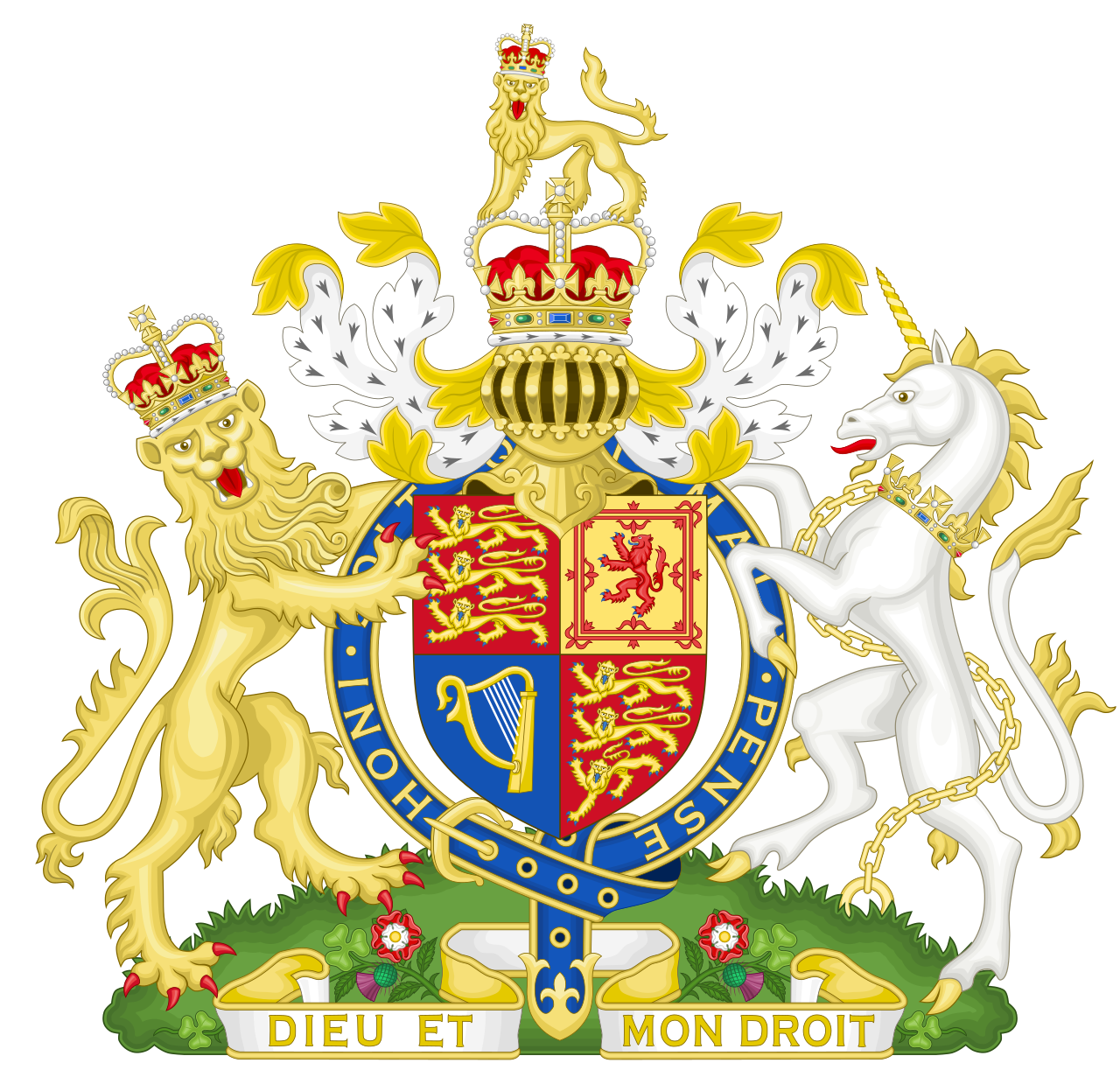
If a people do not know who they are, they will swallow false history, false theology, false prophecy, and a false identity. That is exactly what has happened in our generation. Some Christians declare that God is finished with Israel, that He broke covenant with the Jews, and that the Church has replaced both Israel and Judah. Others, including certain Black Hebrew groups, claim that they alone are the true Israel and that the promises now belong exclusively to them.
Both teachings are false.
Yehovah has not replaced Israel. Yehovah has not replaced Judah. And no modern movement has the right to erase the covenant names that Yehovah Himself gave. The Bible does not say Israel vanished. It says Israel was scattered. The Bible does not say Judah was discarded. It says Judah was preserved. The Bible does not say the covenant no longer matters. It says Yehovah remembers His covenant and will regather His people.
To understand this, we must begin at the beginning and follow the trail in order.
These migrations and preserved name trails matter because Yehovah did not promise Abraham, Isaac, and Jacob that their descendants would become an invisible and irrelevant people lost forever among the nations. He promised them national greatness, kingship, land, military strength, and dominion. To Abraham, Yehovah said, “I will make of thee a great nation” (Genesis 12:2), and again that his seed would possess “the gate of his enemies” (Genesis 22:17). To Isaac, Yehovah renewed the promise, saying, “I will perform the oath which I sware unto Abraham thy father” and “I will make thy seed to multiply as the stars of heaven” (Genesis 26:3-4). To Jacob, Yehovah declared, “A nation and a company of nations shall be of thee, and kings shall come out of thy loins” (Genesis 35:11). Then to Ephraim and Manasseh, through Joseph, Jacob placed the name Israel upon them and declared that Manasseh would become a great people while Ephraim’s seed would become a multitude of nations (Genesis 48:19). The national blessings upon Joseph were then enlarged still further: “Joseph is a fruitful bough” whose branches run over the wall, blessed with strength, abundance, and enduring favor (Genesis 49:22-26). And in Deuteronomy 33:13-17, Moses blessed Joseph with the precious things of heaven and earth, with strength likened to the firstling of his bullock, and with the power to push the people together to the ends of the earth. These were not promises of obscurity, weakness, and disappearance. They were promises of national power, expansion, fruitfulness, strategic control, and greatness in the earth. That is why the rise of great covenant-bearing nations matters in this teaching. It is seen as the outworking of the very promises Yehovah swore to the fathers.
Joseph rose to power in Egypt by the providence of Yehovah and preserved many people alive in the famine. Through him, the family of Jacob entered Egypt and survived. In this teaching, Joseph was not merely a governor in the biblical sense but was also identified with the first Hyksos ruler. The first Hyksos king listed by Manetho is Salitis, and this is connected to Joseph through the Hebrew title Salit, the governor of the land in Genesis 42:6. Joseph, who ruled the grain, administered the land, and stood second only to Pharaoh, is therefore identified in this teaching with Salitis, the first Hyksos king.
The second Hyksos ruler is listed as Bnon or Benon, and in this framework he is linked to Benjamin, whose earlier name was Benoni in Genesis 35:18. So in this line of teaching, Joseph and Benjamin are remembered as the first two Hyksos rulers under altered historical names.
According to the chronology presented in The 2300 Days of Hell, Joseph died in 1528 BC. That date matters greatly. It places Joseph’s death only about twenty-three years before the founding of Athens / Attica in 1556 BC in this chronology, tying the close of Joseph’s life to the early movements that followed from the family lines of Israel and Judah. After Joseph died, his brothers feared that he might still seek revenge for what they had done to him. But Joseph answered them with mercy:
“And Joseph said unto them, Fear not: for am I in the place of God? But as for you, ye thought evil against me; but God meant it unto good, to bring to pass, as it is this day, to save much people alive. Now therefore fear ye not: I will nourish you, and your little ones. And he comforted them, and spake kindly unto them.”
Genesis 50:19-21
Those words stand at the turning point. Joseph reassured his brothers. He did not repay evil. He saw the hand of Yehovah in the suffering that had preserved life. Yet after Joseph’s death, the protected position of Israel in Egypt did not last forever. About seventy years later, according to this chronology, the Pharaoh who did not know Joseph had risen, and the oppression of Israel had deepened. In this framework, Moses was born in 1459 BC, during the period when Hebrew male babies were being killed. Later, Moses fled to Midian in 1419 BC after killing the Egyptian. Then, in 1379 BC, the Exodus took place. This timeline gives perspective to the passing of Joseph, the fading of Hyksos power, the rise of oppression, and the beginning of the great deliverance under Moses.
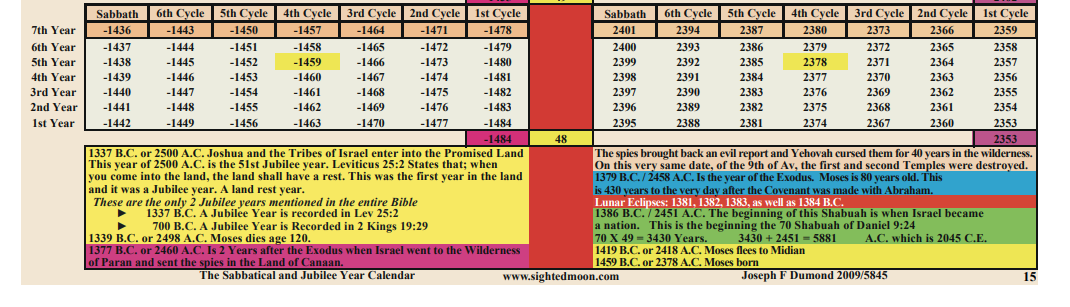
Long before the Assyrian captivity of the northern kingdom, some lines from the house of Judah were already moving westward into the Mediterranean world. In this teaching, two sons from the line of Zerah, the son of Judah, are especially important, Calcol and Dara / Darda. Calcol is identified with Cecrops, the founder of Athens / Attica, which in this chronology was founded in 1556 BC. Dara / Darda is identified with Dardanus, founder of the line associated with Troy, which in this chronology was founded in 1413 BC. This is presented as a preservation of names, royal lines, and migration memory. The line of Dardanus is tied to the Troad, and in this teaching that line came through Crete before settling in the Trojan world. The memory of that line remains in the names Troad and Dardanelles.
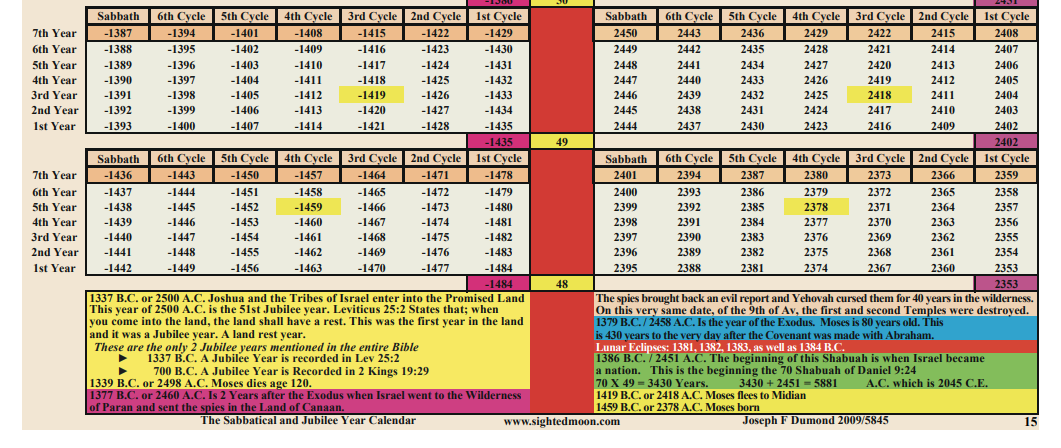
So even at this early stage, before we ever reach the captivity of the ten tribes, we already see Judahite lines leaving marks in the ancient Greek and Trojan world.
According to the chronology presented in The 2300 Days of Hell, Israel entered the Promised Land in 1337 BC. Just before entering the land, a major crisis struck the camp of Israel at Baal Peor. Phinehas killed Zimri, a prince of Simeon, after Zimri openly brought sin into the camp. This is recorded in Numbers 25. Phinehas also killed the Midianitish woman, and the plague was stopped. The tribe of Simeon then suffered one of the most devastating population drops recorded in the wilderness censuses. In the first census, Simeon numbered 59,300 in Numbers 1:23. In the second census, Simeon had fallen to 22,200 in Numbers 26:14. That dramatic decline became an important marker in later tribal history.

As preserved from Steven M. Collins, in “The Missing Simeonites,” he argues that after the Phinehas and Zimri incident, major dissension followed in the camp and that many Simeonites, along with contingents from Ephraim and Naphtali, left the main Israelite body during the wilderness period. Collins primarily links these missing Simeonites to the Spartans. That becomes important later when Greek testimony itself preserves memory of kinship with the Jews. In 1 Maccabees 12:20-21, the Spartans wrote to the high priest: “Areus king of the Lacedaemonians to Onias the high priest, greeting: It is found in writing, that the Lacedaemonians and Jews are brethren, and that they are of the stock of Abraham.” That testimony is significant. The Spartans, or Lacedaemonians, are there said to be brethren of the Jews and of the stock of Abraham. That fits the broader teaching line that tribal and migratory memories survived in the Greek world and were not entirely forgotten.
Centuries later, the united kingdom divided into the house of Israel and the house of Judah. The northern kingdom of Israel was eventually taken into Assyrian captivity. But they did not disappear. Their names changed. This is one of the central historical keys of this teaching. The Assyrians called the northern house of Israel Beth Khumri or Bit Khumri, meaning House of Omri. That name appears in the records concerning Israel and its deportations. In the preserved material, the annals of Tiglath-Pileser III are cited in connection with the land of Khumri.
From there, the name trail continues: Omri → Khumri → Gimirri → Cimmerian → Kymry / Cimbri → Celt. A parallel line is also preserved: Isaac → Saka / Sacae → Saca-suna, sons of Saka → Saxons. These are not empty slogans. They are the preserved migration names through which the exiled Israelites moved in Assyrian, Babylonian, Persian, Greek, and western memory. Israel did not vanish. Israel moved through history under altered names.
But the story of Israel and Judah does not end with the exile of the northern tribes. In this teaching, the royal line of Judah also continued westward through history, preserved in migration traditions, royal genealogies, and national memories. The earlier migrations from the line of Zerah, son of Judah, had already set the stage. From there, the Scoto-Milesian traditions continue the movement west. In this line of teaching, Gathelus, linked with the line of Calcol, led the Scoto-Milesian migration into Ireland within about forty years of the Exodus. Using the chronology presented in The 2300 Days of Hell, this places that arrival roughly in the 1339 to 1319 BC range.

The traditional record says this migrating line moved westward through the Mediterranean world, through Spain and Portugal, and then northward. Some versions preserve the name Gaulus as a variant in that migration stream and connect him with a harbor or stopping place on that route. In this teaching, such traditions are used to preserve memory of the westward movement of the Judahite royal line, even where the details survive more in national lore than in imperial inscriptions. From that same traditional stream comes the figure of Scotta, associated with the royal line, whose marriage into the western line is used to explain how the throne of Judah was transferred into Ireland. From there the royal line later moved into Scotland, and from Scotland into England. This is why the scepter promise to Judah is so central. In this teaching, the scepter remained with Judah, and that royal line continued into the kingship line now associated with the throne of England.
Another stream enters the westward story through Brutus of Troy, also called Brute in medieval tradition. In Joseph Dumond’s teaching, this is part of the broader memory of the Zerah line of Judah moving west through the Trojan / Dardanus line. According to the traditional record, Brutus was a descendant of the Trojan royal house and led a remnant westward after the fall of Troy. He is said to have arrived in Britain around 1100 to 1115 BC, landing in the southwest and eventually establishing a new capital on the River Thames. In the legend, that city was called Troia Nova, or New Troy, and later became associated with Trinovantum, then Caer-Lud, and finally London.
In this teaching, Brutus is important not as a piece of mainstream archaeology but as part of the traditional memory that a Trojan and, therefore, Judah-linked royal line reached Britain and later mingled with the existing Scoto-Milesian line. This becomes one more thread in the larger argument that the promises to Abraham’s seed unfolded not only in the Near East but also through the later royal and national development of the British Isles.
Still later came the migrations of the Angles and Saxons, which become important in identifying the later tribal expressions of Israel in the British Isles. The Saxons fit the line already traced from Isaac → Saka / Sacae → sons of Saka → Saxons. The Angles, or Anglos, are also important in this teaching. Their name is linked with Aegel / Egel, the Hebrew term for a young bull or calf, and this is connected to Jeremiah 31:18, where Ephraim is compared to a young bull. In this understanding, the Anglos preserve another tribal marker tied especially to Ephraim.
Another well-known explanation in British-Israel teaching is the idea that British can be understood as Brit-Ish, or covenant man. In this reading, "brit" is taken from the Hebrew word for "covenant," and "ish" from the Hebrew word for "man." In this teaching, this is used not as a stand-alone proof, but as part of the broader argument that the peoples of Britain were identified with the covenant seed of Israel and carried national responsibilities tied to the promises given to Abraham, Isaac, and Jacob.
The later Scottish national memory also preserves this westward migration tradition. In the Declaration of Arbroath of 1320 AD, the Scots describe themselves as having come from Greater Scythia, through the Mediterranean Sea, through Spain, and into their later homeland. In this teaching, that declaration is treated as a surviving national memory of the older migration path of Israelite and Judahite peoples into the British Isles.
Taken together, these streams—the royal line of Judah, the Trojan remnant, the Scoto-Milesian migration, and the later Angle-Saxon settlements—are presented as converging lines in the formation of the British peoples. This is why, in this teaching, the Brit-Ish people are not just another nation among nations. They are presented as a covenant-bearing people, carrying especially the Ephraimite side of the birthright blessings, while the royal scepter line of Judah continues on the throne.
And what then of America?
America, in this teaching, is not an accident of history and not merely a breakaway colony. America is presented as the great later emergence of the blessings promised through Joseph, specifically through Manasseh, while Britain more strongly reflects Ephraim. The name Israel was placed upon the sons of Joseph in Genesis 48, and the birthright blessings of national greatness, company of nations, abundance, and power passed through them.
The American identity in this teaching is tied not only to the blessings of Manasseh but also to the preservation of the name of Machir, the firstborn son of Manasseh. Manasseh was Joseph’s firstborn son, and Machir was Manasseh’s firstborn son, as shown in Genesis 50:23, Numbers 26:29, and 1 Chronicles 7:14-17. Machir became the father of the Machirites, a strong warrior clan that received the territory of Gilead and was known for military strength.
Drawing on the broader Brit-Am / British-Israel line, this name is understood to have been preserved through history and to stand behind the modern name America. As stated in the 2007 article, “The Gentiles Revealed – The Tribe of Manasseh and Ephraim,” the name America may be understood as preserving the memory of Machir, so that it means “Land of Machir” or “Land of the Sons of Machir.” The name "trail" is presented through forms such as Machir / Ha-Machiri, then later Aimerico / Aimericus / Americus, and finally America.
This matters because Manasseh was prophesied to become a great single people, while Ephraim was to become a multitude of nations. In this teaching, Britain carries the Ephraimite side of the birthright, while America carries the Manasseh side. The name America, understood as preserving Machir, is therefore treated as one more prophetic marker that the descendants of Manasseh became the great single nation blessed with power, fruitfulness, military strength, and worldwide influence.
That is why the modern English-speaking nations matter so much in this line of teaching. The United Kingdom and its offshoots, and above all the United States of America, are treated as the inheritors of the promises given by Jacob to Ephraim and Manasseh. Britain carries the company-of-nations aspect. America carries the great-single-nation aspect. Together they are understood as the latter-day national bearers of the birthright, while Judah preserves the scepter.
Now we must deal directly with the false teachings that deny all of this.
One false Christian teaching says God broke covenant with the Jews, cast away Israel and Judah, and replaced them with a Church that now lives under grace apart from the law. That is false. Israel broke the covenant by disobedience. But Yehovah did not cast away Judah, and He did not erase Israel.
Scripture says the opposite:
“Thus saith the Lord, which giveth the sun for a light by day, and the ordinances of the moon and of the stars for a light by night… If those ordinances depart from before me, saith the Lord, then the seed of Israel also shall cease from being a nation before me for ever.”
Jeremiah 31:35-37
“If ye can break my covenant of the day, and my covenant of the night… then may also my covenant be broken with David my servant.”
Jeremiah 33:20-21
“I say then, Hath God cast away his people? God forbid… God hath not cast away his people which he foreknew.”
Romans 11:1-2
“He that toucheth you toucheth the apple of his eye.”
Zechariah 2:8
The parable of the Prodigal Son helps illustrate this beautifully. The older brother represents Judah. He never left the Father’s house. The younger brother represents lost Israel / Ephraim, who went away into the nations and is now returning. The Father rejoices at the return of the younger son, but the older son was never cast out.
The New Covenant of Jeremiah 31:31-34 is made with the house of Israel and the house of Judah, not with a replacement church.
The nations are not invited to replace Israel. They are invited to be grafted in. Paul explains this plainly in Romans 11. The Gentiles are like wild branches grafted into the olive tree. They do not become a new tree. They do not replace the root. They do not receive a different covenant with different commandments. They are brought into the existing covenant promises made to Israel.
That is why Scripture is so clear that there is one law for everyone who joins themselves to Yehovah.
Numbers 15:15-16 says:
“One ordinance shall be both for you of the congregation, and also for the stranger that sojourneth with you, an ordinance for ever in your generations: as ye are, so shall the stranger be before the Lord. One law and one manner shall be for you, and for the stranger that sojourneth with you.”
If you are grafted into Israel, then you are grafted into Israel’s covenant, Israel’s commandments, Israel’s Sabbaths, Israel’s Feast Days, and Israel’s appointed times. There is not one path for Judah, another for Israel, and another for Gentiles. There is one people of covenant under Yehovah and one law for all who would walk with Him.
That includes the 7th-day Sabbath, the Feast Days of Leviticus 23, and the Sabbatical years of Leviticus 25. These are not Jewish customs. They are the appointed times of Yehovah.
So yes, Gentiles may be saved. Yes, they may be baptized. Yes, they may be brought near through Yehshua the Messiah. But they are not brought near in order to live by a different standard. They are grafted in to walk in the same obedience, under the same covenant, and according to the same law.
Now we must also address the other false doctrine. Some Black Hebrew groups teach that they alone are the true Israelites and that modern Jews are impostors. This too is a form of replacement theology. It merely swaps one false replacement for another.
But the biblical and historical trail cannot be erased by a modern racial claim. If the house of Israel can be traced through Beth Khumri, Khumri, Gimirri, Cimmerian, Kymry / Cimbri, and Celt, and if the parallel line runs through Isaac, Saka / Sacae, sons of Saka, and Saxons, and if Judahite lines can be traced into Greece, Troy, Ireland, Scotland, and England, then the issue is not skin color.
The issue is evidence. The issue is covenant names. The issue is preserved history.
Church replacement theology says Israel no longer matters and the Church has taken her place. Black Hebrew exclusivism says only one modern racial movement is Israel and all others are excluded. Both are false, because both try to replace what Yehovah Himself named.
As America approaches her 250th anniversary, all of this becomes more than historical curiosity. It becomes a prophetic issue.
If the Brit-Ish peoples carry the covenant-bearing history of Ephraim and the throne line of Judah; if the American people have inherited the national blessings given to Manasseh; if the name Israel was placed upon the sons of Joseph; if Judah has never been cast away; and if Gentiles are grafted in rather than replacing the root, then identity is not a side issue.
It is a matter of prophecy, covenant, inheritance, national destiny, and obedience.
A people who do not know who they are will not understand why they were blessed. They will not understand why judgment comes. They will not understand the warnings spoken to Israel in prophecy. And they will not understand the call now going out to wake up, return, and remember.
So again, the question stands before us:
Who do you think you are?
Because Yehovah knows exactly who His people are. He named them. He scattered them. He preserved them through every name change. He preserved the throne line. He fulfilled the birthright. And He is regathering them.
No church has replaced them.
No movement has replaced them.
No racial doctrine has replaced them.
Yehovah alone defines His people.
A Covenant of Peace, or the Setup for Judgment?
More Israel News
It’s Noon in Israel: The Inevitable Confrontation
The agreement is tested in Lebanon and the U.S.'s loss of deterrence.
 |
Donald Trump with Benjamin Netanyahu during a special plenum session in honor of President Trump at the Knesset, October 13, 2025. (Yonatan Sindel/Flash90)
It’s Friday, June 19, and overnight Hezbollah has continued its campaign against IDF forces in southern Lebanon. A commander’s tank was struck by a drone or missile, killing four—among them the battalion commander, while in another sector of the front five Israeli soldiers were badly wounded by an explosive drone. In response, the Israeli Air Force has carried out an extensive bombing campaign across numerous villages.
The fallout was swift. Talks scheduled for today in Switzerland between the United States and Iran—meant to implement the peace deal—were canceled, with Iran citing the IDF’s actions in its fiefdom in southern Lebanon.
This confrontation was inevitable from the moment digital ink hit digital paper on the Memorandum of Understanding. Neither Hezbollah nor Israel is a signatory to the agreement, and the two have been touting entirely different versions of it. Iran has assured its proxy that an Israeli withdrawal from Lebanon is written into the U.S.-Iran MoU, to unfold over a phased 60-day period. Israel, meanwhile, has declared that it will not evacuate its positions in southern Lebanon—and insists it has not been asked to—while U.S. officials have reportedly told it that its right to respond to threats will not be infringed.
The larger question—whether Israel may strike “emerging” threats—isn’t addressed here directly, since this was a response to an attack, not a buildup of Hezbollah forces. But if the Trump administration won’t tolerate an Israeli reprisal to a Hezbollah strike, it certainly won’t stomach Israel hitting a growing missile storage facility on its border.
Trump’s own comments have been ambiguous. Beyond an endorsement of the “precise and humanitarian” warfighting style of Syrian President Ahmad al-Sharaa—the former ISIS leader—he has not told Israel to stop outright. Most of his remarks echo the sentiment he offered two days ago: “I want Israel to be able to protect themselves, but I do want them to use good judgment.” “Good judgment,” one suspects, means Trump’s judgment—a phrase I’ve lately found hard to pair with so flattering an adjective. When the president wakes up, I imagine Truth Social will feature a more profane word for Benjamin Netanyahu’s decision-making.
For all that, the recent conversation between Trump and Prime Minister Benjamin Netanyahu was surprisingly friendly. On the outside, they reported—and quite rightly so—a rift in relations, about throwing Israel under the bus, but between the driver and the one being run over, a calm and quiet conversation took place. For listeners, it brought to mind the story of King David, who fasted and prayed for his sick son. Precisely when the son died, he arose and shook off his mourning: “Why should I fast? Can I bring him back again?”
 |
Donald Trump signs a Memorandum of Understanding between the Islamic Republic of Iran and the United States at the Palace of Versailles, June 17, 2026. (White House)
Although the dimensions of the American surrender are breathtaking in their scope, the surrender itself did not surprise Jerusalem. The assessment voiced by Netanyahu himself in discussions was that the Americans want an agreement, at almost any cost. For many weeks, Israel has known that the agreement would not include stopping the funding of terrorism and shutting down the ballistic missile array. But the inconceivable ease with which the self-proclaimed negotiation genius gave up on the equation—the nuclear program in exchange for lifting the stranglehold—testifies to the intensity of the collapse. One can be insulted, but there is no need to be too impressed by the attacks on Israel and on Netanyahu that accompanied the move. This is just the rhetorical justification for the main move, which is wrapping up the affair while continuously bombing, rhetorically, anyone perceived as interfering. In their conversations this week, Trump remembered to tell Netanyahu again in a call how he congratulated Biden after the 2020 elections, which, in my personal opinion, is a much less severe injustice than attempting to obtain illegal atomic weapons and killing many Americans, but maybe I am missing something.
The child who did not die and is still being fought over is actually Lebanon. Eighty percent of the talks with Washington deal with the struggle over the war with Hezbollah, an Israeli official estimated the day before yesterday. Hezbollah is in a desperate situation, and it is on the verge of breaking. Linking the two fronts will not only save the organization but make it easier for it to resume harassing the residents of the north, or to strengthen, or both. There is a national consensus in Israel on the matter, a consensus that should have been expressed by the heads of the opposition, not just in silence.
Trump’s betrayal of the principles he himself set was so sudden and powerful that many are convinced this is again a deception that will end with Tehran going up in flames. They are in for a rude awakening. But the story, nevertheless, did not end this week. The Iranians will not miss the opportunity to present Trump as an empty vessel, as a joke. At some point, perhaps, he will abandon them again in favor of Israel and the Gulf states. You can count on the ayatollahs to give him the opportunity.
This is an excerpt from my weekly column in Israel Hayom
 |
IDF pilot approaches an F35 fighter jet. (IDF)
So where could things have been done differently against Iran? Should the protesters in Iran in January have been told to forget about help? Maybe to say to Trump in February, “Thank you, Mr. President, but attack alone; we pass?” Maybe to avoid destroying the ballistic missile industry, from the opportunity to deduct 300 billion dollars from Iranian assets?
Opponents of Netanyahu and Trump are aiming the time machine specifically at 2018, to the decision to exit the nuclear deal that Obama signed with Iran. The claim is that leaving the agreement is what sent Iran to enrich enough uranium for 10 bombs and to race forward with the program. Former President Barack Obama gloated over his successor this week and essentially said that any agreement with Iran would look the same.
This is a selective interpretation of the facts. First, according to the original agreement, the main restrictions on uranium enrichment were supposed to gradually expire within 10 to 15 years. Or, in other words: right about now. Not illegally, but with the permission and authority of the Security Council and without sanctions. Even within the agreement, Iran would have reached the same amount of fissile material. The dramatic difference is that right now it is doing so as a blatant violation, under a regime of sanctions and diplomatic isolation, whereas if we had stayed in the agreement, it would have done so with the backing of the U.N. Security Council, with its coffers swelling from hundreds of billions of dollars of free trade.
But mainly, a half-truth is worse than a lie: Iran did not leap to 60 percent enrichment immediately after the American withdrawal in May 2018. For many long months, and even beyond that, it feared the reaction of the Trump administration and stayed within the limits of the agreement. The dramatic rise in enrichment began only when the Iranians recognized that the American military threat was not credible.
Surprisingly, or not, this happened after Trump was replaced by Biden, and it was clear to everyone that there was no credible military threat and that the West was deterred from conflict. And this is exactly—but exactly—what might happen now, when the Iranians are wounded and bruised but hold the weapon of closing the Strait of Hormuz and the belief that Trump will never embark on another adventure. It might require another president and another daring operation to extract an archive to cancel this agreement as well.
Shabbat Shalom! We will be back on Sunday.
Israel’s Conscription Crisis Exposes a Nation Divided
Posted Jun 19, 2026 by Martin Armstrong
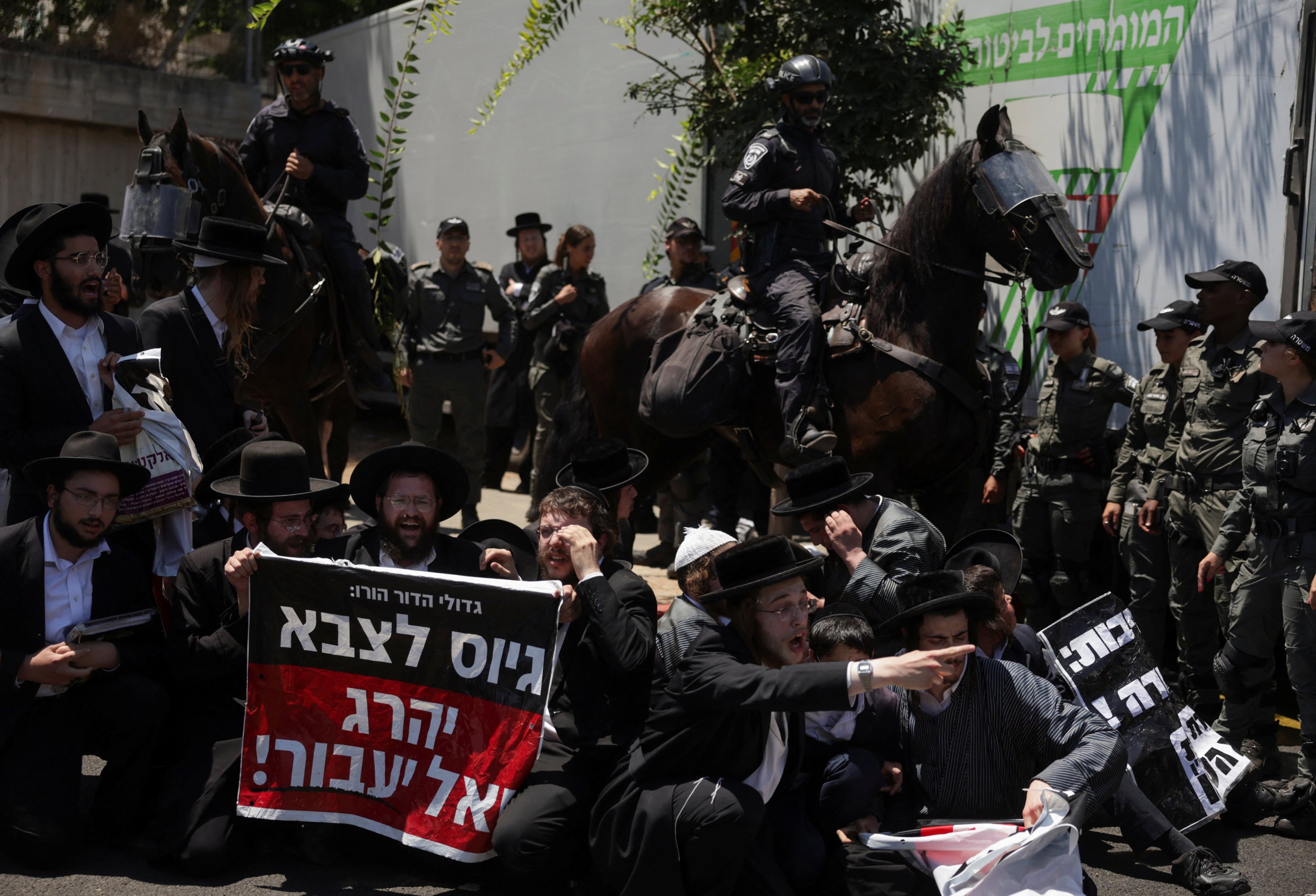
Tens of thousands of ultra-Orthodox Jews have taken to the streets, blocking highways, shutting down rail lines, and clashing with police over mandatory military conscription. Some demonstrations have brought major cities to a standstill. This is no fringe protest. It is a direct challenge to the authority of the state itself and highlights a deep fracture that has been growing within Israeli society for decades.
What the outside world often fails to understand is that the issue goes back to the founding of Israel in 1948. Ultra-Orthodox Jews, known as Haredim, were granted exemptions from military service if they devoted themselves to full-time religious study. At the time, the numbers were relatively small. Today, however, the ultra-Orthodox population represents roughly 13% of Israel’s population and is one of the fastest-growing demographic groups in the country. After years of legal battles, Israel’s courts ruled that the blanket exemptions could no longer continue indefinitely. The military has now issued tens of thousands of draft notices, yet only a fraction have responded.
Israel is simultaneously fighting multiple conflicts while suffering manpower shortages. Reservists have been called up repeatedly, many serving hundreds of days away from their families and businesses. As casualties mount and military commitments expand, resentment has grown among secular and traditional Israelis who see themselves carrying the burden while a large segment of society remains exempt. The result has been a political explosion that has destabilized Netanyahu’s government and contributed to the collapse of his coalition.
Manpower shortages are happening throughout the world as nations see that their troops are disposable until there is no one left to replace the last men. Israel was entirely dependent on support from the US, which is why Trump’s recent pivot is peculiar in timing, as it corresponds with our War Cycle that indicated heated tensions over the summer. Come August, the cycle is turning up; peace, unfortunately, is not going to happen.
Polls show 61% of Israelis do not want Netanyahu to seek reelection. Now, 13% of the population is at odds with Bibi and his unholy wars. This is why there is extreme danger ahead: Netanyahu needs a military victory to secure power.
Thank you Joseph for a newsletter with such value! As a Texas and an American about to celebrate 250 years, I enjoyed every word, every song and the history that was shared.
How great is our God?
In God we trust!
The puzzle pieces of prophecy are falling into place. Soon the puzzle will be complete. Prophecy will become reality. On that day, fury will come up in the face of our God and his Day of Vengeance will commence. The only safe place will be under the shadow and covering of the Almighty God, the Creator of All that is. Make your calling and election sure. Fill your lamps with oil you foolish virgins and prepare to meet the Bridegroom. Maranatha