

Newsletter 5862-016
The 3rd Year of the 5th Sabbatical Cycle
The 32nd year of the 120th Jubilee Cycle
The 26th day of the 4th month, 5862 years after the creation of Adam
The 5th Sabbatical Cycle after the 119th Jubilee Cycle
The Sabbatical Cycle of the Tithes to the Widows and Orphans
June 13, 2026
Shabbat Shalom to the Royal Family of Yehovah,
I have already found a number of errors in our SightedMoon.com AI, so I have updated it once again with what I hope are much tighter instructions. Now I need your help to really test it.
Please put it through its paces. Ask it the hardest and most complicated questions you can think of about the calendar, today’s date, the current month, how to determine the barley, and anything else that will show whether it is truly answering from our books, teachings, and website, together with the ancient sources that support them. If it gives a strange, bizarre, or clearly incorrect answer, please forward that response to me by email. And if it slips back into generic Christian apologetics instead of answering from the SightedMoon.com framework, please let me know that as well.
What if the Holy Temple services taught so much more than sacrifice?
What if the nightly watches of the Levites, the warning cries in the darkness, the burning of the covering of a sleeping priest, and the daily songs sung in the courts of Yehovah were all prophetic shadows pointing directly to our own time?
In recent interviews, both Amanda Grace and Dr. Alex McFarland said something that should sober every believer: the church is asleep. It is not watching. It is not warning. It is not standing faithfully at its post. That is not a small criticism. It is a prophetic diagnosis. And when that diagnosis is set beside the Temple watches, the command to watch throughout Scripture, and the daily songs of the Levites, a much larger picture begins to come into view.
The Levites were not merely musicians, and they were not merely guards. They were watchmen. They sang according to the day, they guarded according to their course, and their service was woven into the very structure of creation, worship, and time itself. Their songs were tied to the days of the week, the days of creation, and, according to ancient understanding, to the seven-thousand-year plan of redemption. Their watch was a warning. Their music was a message. Their duty was to remain awake while others slept.
If that is true, then the question before us is no longer academic. It is urgent. Are we now living in a time when the church has fallen asleep on its watch? Are the Two Witnesses standing where the church should have been standing all along? And could the daily songs once sung by the Levites in the Temple still be speaking not only about the past but also about the prophetic milestones of modern Israel and the days now rushing upon us?
This is what we must now examine.
Join Our Sabbath Meetings
Join Our Sabbath Meetings
There are many people in need of fellowship and who are sitting at home on the Sabbath with no one to talk to or debate with. I want to encourage all of you to join us on Shabbat, and to invite others to come and join us as well. If the time is not convenient then you can listen to the teaching and the midrash after on our YouTube channel.
What are we doing and why do we teach this way?
We are going to discuss both sides of an issue and then let you choose. It is the work of the Ruach (Spirit) to direct and to teach you.
The medieval commentator Rashi wrote that the Hebrew word for wrestle (avek) implies that Jacob was “tied”, for the same word is used to describe knotted fringes in a Jewish prayer shawl, the tzitzityot. Rashi says, “thus is the manner of two people who struggle to overthrow each other, that one embraces the other and knots him with his arms”.
Our intellectual wrestling has been replaced by a different kind of struggle. We are wrestling with Yehovah as we grapple with His Word. It is an intimate act, symbolizing a relationship in which Yehovah and you and I are bound together. My wrestling is a struggle to discover what Yehovah expects of us, and we are “tied” to the One who assists us in that struggle.
Today, many say Israel means “Champion of God”, or better — the “Wrestler of God”.
Our Torah sessions each Shabbat teaches you and encourages you to constantly challenge, question, argue against, as well as view alternative views and explanations of the Word. In other words, we are to “wrestle with the Word” to get to the truth. Jews worldwide believe that you need to wrestle with the Word and constantly challenge Dogma, Theology, and views or else you will never get to the Truth.
We are not like most churches where “The preacher talks and everyone listens.” We encourage everyone to participate, to question and to contribute what they know on the subject being discussed. We want you to be a champion wrestler of the Word of Yehovah. We want you to wear the title of Israel, knowing that you not only know but are capable of explaining why you know the Torah to be true with logic and facts.
We have a few rules though. Let others talk and listen. There is no discussion about UFO’s, Nephilim, Vaccines or conspiracy-type subjects. We have people from around the world with different world views. Not everyone cares who is the President of any particular country. Treat each other with respect as fellow wrestlers of the word. Some of our subjects are hard to understand and require you to be mature and if you do not know, then listen to gain knowledge and understanding and hopefully wisdom. The very things you are commanded to ask Yehovah for and He gives to those who ask.
Jas 1:5 But if any of you lacks wisdom, let him ask of God, who gives to all liberally and with no reproach, and it shall be given to him.
We hope you can invite those who want to keep Torah to come and join us by hitting the link below. It is almost like a Torah teaching fellowship talk show with people from around the world taking part and sharing their insights and understandings.
We start off with some music and then some prayers and it’s as though you were sitting around the kitchen back in Newfoundland having a cup of coffee and all of us enjoying each other’s company. I hope you will grace us with your company someday.
Sabbath services begin at 12:30 PM EDT where we will be doing prayers, songs and teaching from this hour.
Shabbat midrash will begin at about 1:15 pm Eastern.
We look forward to you joining our family and getting to know us as we get to know you.
Joseph Dumond is inviting you to a scheduled Zoom meeting.
Topic: Joseph Dumond’s Personal Meeting Room
Join Zoom Meeting
https://us02web.zoom.us/j/3505855877
Meeting ID: 350 585 5877
One tap mobile
+13017158592,,3505855877# US (Germantown)
+13126266799,,3505855877# US (Chicago)
Dial by your location
+1 301 715 8592 US (Germantown)
+1 312 626 6799 US (Chicago)
+1 346 248 7799 US (Houston)
+1 669 900 6833 US (San Jose)
+1 929 436 2866 US (New York)
+1 253 215 8782 US (Tacoma)
Meeting ID: 350 585 5877
Find your local number: https://us02web.zoom.us/u/kctjNqPYv0
Torah Portion
Torah Portions
We read through the entire Torah along with the Prophets and the New Testament once over the course of 3 1/2 years. Or according to the Sabbatical Cycle which means we read it all twice over a 7-year period. This allows us to cover more in-depth rather than being rushed to cover as much as is covered on an annual basis. We allow all to comment and take part in the discussions.
Septennial Torah Portion
If you go to Torah Portion in our archived section, you can then go to the 1st year, which is the 1st year of the Sabbatical Cycle, the one we are in now, as we state at the top of every Newsletter. There, you can scroll down to the proper date and see that this Shabbat, we could very well be midrashing about:
Numbers 10
Job 26-29
Hebrews 11
We are in the 1st Sabbatical Cycle in 2024-2025. We go through the entire Bible twice in a 7 year cycle. This means we cover the entire Bible once every 3 1/2 years. It gives us more time to debate and discuss each portion we read.
If you missed last week’s exciting discoveries as we studied that section, you can go and watch past Shabbats on our media section.
2026 Is a Third Tithe Year
2026 Is a Third Tithe Year
We are in the third year of the current 5th Sabbatical Cycle (2024–2030). According to the biblical pattern given in Deuteronomy 14:28-29 and 26:12-15, every third year is designated as the Third Tithe Year — the year set aside specifically for the widows, the fatherless (orphans), the Levites, and the stranger in your gates.
This is not the regular first and second tithe used for the feasts and supporting the work of the ministry. The Third Tithe is an additional tithe (10% of your increase) given directly to care for those who cannot care for themselves.
Sightedmoon.com has taught this consistently for many years: 2026 is a third tithe year (Aviv 2026 to Aviv 2027).
If you have widows or orphans in your own family or immediate circle, this is the year to support them intentionally. The command is clear — do not neglect them.
If you do not have family members in need, or if you want to do more, you can support the widows and orphans who reach out to Sightedmoon.com. Many are struggling in this time of rising costs and uncertainty. Your third tithe gift this year will be used directly to help those in genuine need.
Deuteronomy 14:29 tells us that when we obey this command, “the Lord your God may bless you in all the work of your hand which you do.”
This is not optional. It is one of the specific ways Yehovah tests and blesses His people — especially in a year like 2026, when the signs of scarcity are increasing.
Let us be faithful in the Third Tithe this year.
If you would like to support the widows and orphans through Sightedmoon.com, you can do so here:
https://sightedmoon.com/donate/
May Yehovah bless you as you obey Him in this important command.
New Moon 5th Month
New Moon 5th Month
This Tuesday June 16, 2026, will be the 29th day of this 4th month. Take your family out and have everyone look for the new crescent moon Tuesday evening after sunset. Have a contest to see who will see it first. When you see it, blow the shofar to announce it and let us know on our Telegram Mishpachah channel.
By doing this, you will learn how to sight the moon to begin the month. You will be teaching your kids and/or grandkids this ancient method, and you will be learning how to be watchmen.
Look in the western sky after the sunset.

The Watchman


The Church Is Asleep, But the Watchmen Must Wake Them Up
The Church Is Asleep, But the Watchmen Must Wake Them Up

The Daily Songs of the Levites and the Seven-Thousand-Year Plan of Redemption

Many people read about the Levites singing in the Temple and assume their service was only ceremonial, beautiful perhaps, but limited to the worship of that moment. Yet the more closely we examine the daily songs of the Levitical choir, the more we begin to see that they were not random selections, nor were they merely musical accompaniments to the sacrifices. They were prophetic.
Every day in the Holy Temple, the Levites stood in their appointed place and sang the song assigned for that day. These songs were linked to the daily service, to the order of creation, and according to the sages, to the unfolding plan of history itself. The Temple service was not merely about what was happening in that moment. It was a living prophetic pattern of the entire plan of Yehovah from creation to redemption.
The Daily Song of the Levitical Choir
The Oral Tradition preserves the order of the daily songs. In Tamid 7:4, we are told that each day of the week had its own Psalm sung by the Levites in the Holy Temple. These songs were performed while the morning and evening wine libations were poured out on the altar by the officiating priests. Thus the Levitical service of song accompanied and completed the priestly service of sacrifice.
The songs were as follows:
• Sunday – Psalm 24
• Monday – Psalm 48
• Tuesday – Psalm 82
• Wednesday – Psalm 94
• Thursday – Psalm 81
• Friday – Psalm 93
• Sabbath – Psalm 92
This weekly cycle repeated continually. On the New Moon and on the festivals, different songs were sung, but for the regular daily service, these seven Psalms formed the rhythm of the Temple’s praise.
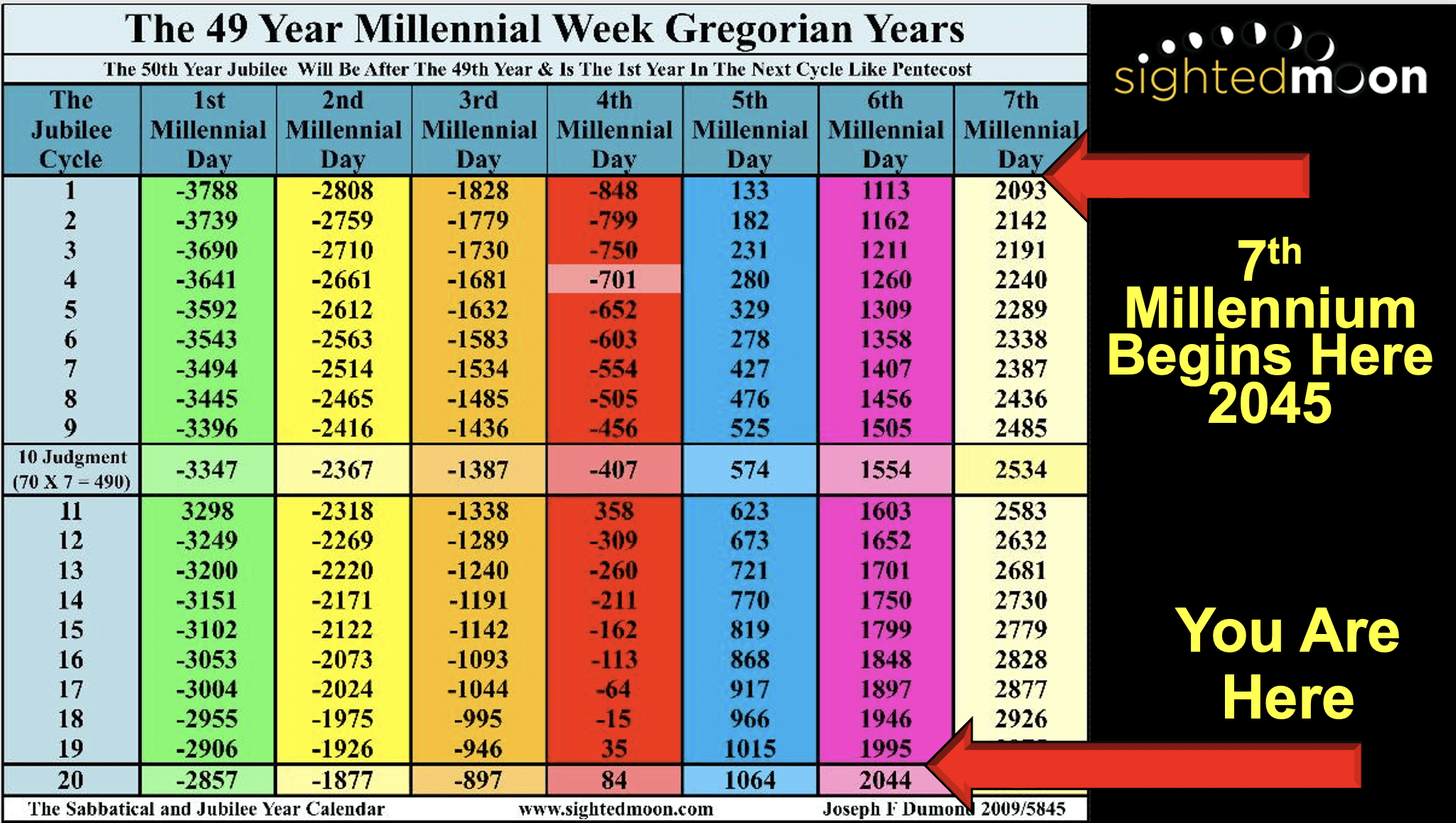
This alone is important, but the deeper significance is even greater. These seven daily songs correspond not only to the seven days of creation but also, according to ancient Jewish understanding, to the seven-thousand-year structure of human history.
One Day as a Thousand Years
The prophetic foundation for this understanding is found clearly in Scripture.
“For a thousand years in Your sight are but as yesterday when it is past, and as a watch in the night.” Psalm 90:4
Peter confirms the same principle:
“But, beloved, do not let this one thing be hidden from you, that one day is with the Lord as a thousand years, and a thousand years as one day.” 2 Peter 3:8
This helps us understand why many in Israel saw the seven days of creation as a pattern for seven thousand years of history. Six days of labor are followed by the seventh-day Sabbath. So too, six thousand years of human labor, conflict, sin, and struggle are followed by the great Sabbath rest, the Messianic reign.
This is also why Revelation 20 speaks six times of the thousand-year reign of Messiah. The Sabbath millennium is not an invented theme. It is the completion of a pattern already built into creation itself.
Sunday, Psalm 24, and the First Thousand Years
On the first day of the week the Levites sang Psalm 24.
“The earth is Jehovah’s, and the fullness of it; the world, and they who dwell in it.” Psalm 24:1
This corresponds to the first day of creation, when Yehovah established heaven and earth and laid claim to His world. In the prophetic pattern, it also corresponds to the earth’s first thousand years, when mankind still dwelt in the early fullness of the world before the flood. The earth belonged to Yehovah, and its fullness testified to His sovereign right over all creation.
Psa 24:1 A Psalm of David. The earth is Jehovah’s, and the fullness of it; the world, and those who dwell in it.
Psa 24:2 For He has founded it on the seas, and established it on the rivers.
Psa 24:3 Who shall go up into the hill of Jehovah? Or who shall stand in His holy place?
Psa 24:4 He who has clean hands and a pure heart; who has not lifted up his soul to vanity, and has not sworn deceitfully.
Psa 24:5 He shall receive the blessing from Jehovah, and righteousness from the God of his salvation.
Psa 24:6 This is the generation of those who seek Him, who seek Your face, O God of Jacob. Selah.
Psa 24:7 Lift up your heads, O gates; and be lifted up, O everlasting doors; and the King of glory shall come in.
Psa 24:8 Who is this King of glory? Jehovah strong and mighty, Jehovah mighty in battle.
Psa 24:9 Lift up your heads, O gates; even lift up, O everlasting doors; and the King of glory shall come in.
Psa 24:10 Who is this King of glory? Jehovah of Hosts, He is the King of glory. Selah.
Monday, Psalm 48, and the Second Thousand Years
On the second day the Levites sang Psalm 48.
“Great is Jehovah, and greatly to be praised in the city of our God, in the mountain of His holiness.” Psalm 48:1
The second day of creation was the day of division, when the waters were separated and the firmament established. In later prophetic thought, this day pointed toward Yehovah’s ordering of His world and the setting apart of His holy mountain. The second thousand years move toward the choosing of the place where His Name would dwell. Thus, the song of Monday is tied to the mountain of His holiness and the city of our God.
Psa 48:1 A Song and Psalm for the Sons of Korah.Great is Jehovah, and greatly to be praised in the city of our God, in the mountain of His holiness.
Psa 48:2 Beautiful on high, the joy of the whole earth, is mount Zion, on the sides of the north, the city of the great King.
Psa 48:3 God is known in her strongholds for a refuge.
Psa 48:4 For, lo, the kings were gathered; they passed by together.
Psa 48:5 They saw, so they marvelled; they were troubled, and hurried away.
Psa 48:6 Fear took hold on them there, and pain, like a woman in labor.
Psa 48:7 You break the ships of Tarshish with an east wind;
Psa 48:8 as we have heard, so we have seen in the city of Jehovah of Hosts, in the city of our God. God will establish it forever. Selah.
Psa 48:9 We have thought of Your loving-kindness, O God, in the midst of Your temple.
Psa 48:10 According to Your name, O God, so is Your praise to the ends of the earth. Your right hand is full of righteousness; let mount Zion rejoice!
Psa 48:11 Let the daughters of Judah shout for joy because of Your judgments!
Psa 48:12 Walk around Zion, and go all around it; count the towers of it,
Psa 48:13 Set your heart on its ramparts, pass between its strongholds; so that you may tell it to the coming generation.
Psa 48:14 For this God is our God forever and ever; He will be our guide even to death.
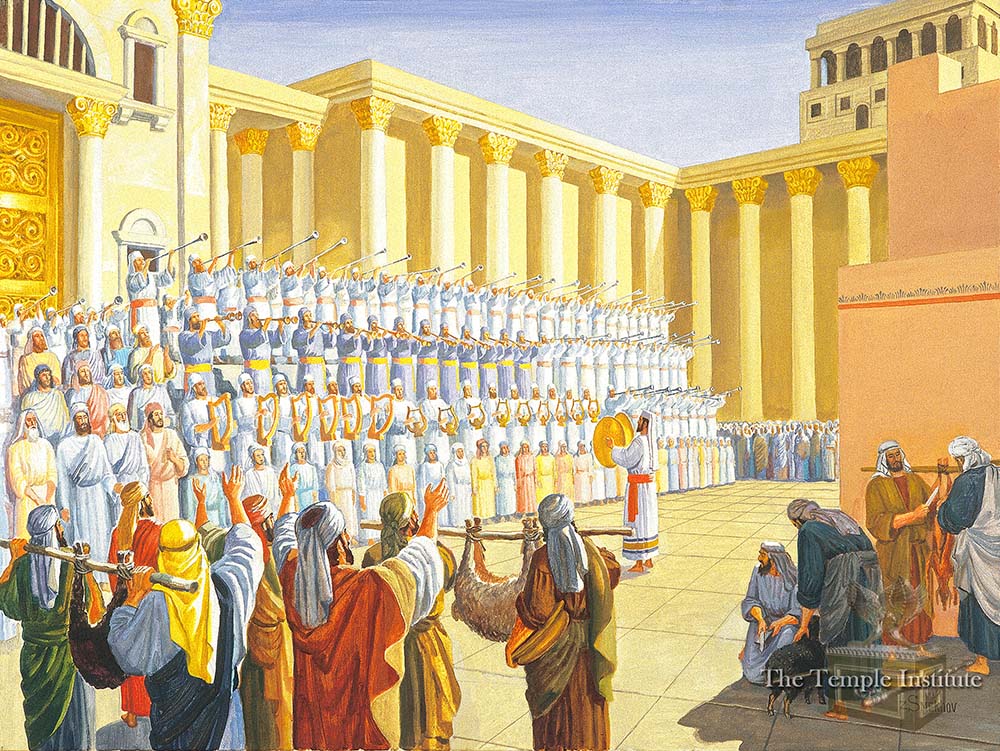

This makes Psalm 81 one of the most important Psalms of the feast of trumpet blowing. It ties together joy, assembly, covenant memory, and the sounding of the shofar. In prophetic terms, this becomes even more significant, because Yom Teruah is bound up with watchfulness, awakening, and the coming of the King.
Psa 81:1 To the Chief Musician. On Gittith, A Psalm of Asaph. Sing aloud to God our strength; shout for joy to the God of Jacob.
Psa 81:2 Lift up a psalm, and bring the timbrel here, the pleasing lyre and harp.
Psa 81:3 Blow the ram’s horn in the new moon, in the time appointed, on our solemn feast day.
Psa 81:4 For this was a Precept for Israel, an ordinance of the God of Jacob.
Psa 81:5 This He ordained in Joseph for a testimony, when He went out over the land of Egypt; I heard a language I understood not.
Psa 81:6 I removed his shoulder from the burden; his hands were delivered from the pots.
Psa 81:7 You called in trouble, and I delivered you; I answered you in the secret place of thunder; I tested you at the waters of Meribah. Selah.
Psa 81:8 Hear, O My people, and I will testify to you; O Israel, if you will listen to Me,
Psa 81:9 there shall be no strange god in you; nor shall you worship any strange god.
Psa 81:10 I am Jehovah your God, who brought you out of the land of Egypt; open your mouth wide, and I will fill it.
Psa 81:11 But My people would not listen to My voice, and Israel would have none of Me.
Psa 81:12 So I gave them up to the stubbornness of their own hearts; and they walked in their own conceits.
Psa 81:13 Oh that My people had listened to Me, andIsrael had walked in My ways!
Psa 81:14 I would soon have humbled their enemies, and would have turned My hand against their foes.
Psa 81:15 The haters of Jehovah would have been found liars to Him, and their time would have lasted forever.
Psa 81:16 And He would have fed them also with the finest of the wheat; and with honey out of the rock I would have satisfied you.
Psa 29:1 A Psalm of David. Give to Jehovah, O you mighty, give to Jehovah glory and strength.
Psa 29:2 Give to Jehovah the glory due to His name; worship Jehovah in the beauty of holiness.
Psa 29:3 The voice of Jehovah is on the waters; the God of glory thunders; Jehovah is above many waters.
Psa 29:4 The voice of Jehovah is in power, the voice of Jehovah is in majesty.
Psa 29:5 The voice of Jehovah breaks the cedars; yea, Jehovah breaks the cedars of Lebanon.
Psa 29:6 He also makes them to skip like a calf, Lebanon and Sirion like a young wild ox.
Psa 29:7 The voice of Jehovah goes through flames of fire.
Psa 29:8 The voice of Jehovah shakes the wilderness; Jehovah shakes the wilderness of Kadesh.
Psa 29:9 The voice of Jehovah causes the does to calve, and uncovers the forests; and in His temple all of it is saying, Glory!
Psa 29:10 Jehovah sits on the flood; yea, Jehovah sits as King forever.
Psa 29:11 Jehovah will give strength to His people; Jehovah will bless His people with peace.
Yom Kippur
For Yom Kippur, the Day of Atonement, the Levitical service was of a different character from the regular daily or festival pattern. No single fixed Psalm is preserved for Yom Kippur in the same clear and repetitive way that the seven daily songs are preserved in Tamid 7:4. This in itself is fitting, because the day was unlike any other. It was not marked by the joyful tone of the pilgrimage festivals but by affliction of soul, confession, cleansing, and atonement before Yehovah.
The Levites certainly sang during the sacrifices and during the High Priest’s special service, but the overall atmosphere was reverent, weighty, and penitential rather than celebratory. The joyful Hallel was not associated with Yom Kippur as it was with Passover, Shavuot, and Sukkot. The emphasis of the day was not triumph, but reconciliation. It was the day of confession, the day of the two goats, the day when the High Priest entered the Holy of Holies, and the day when the people stood in awe before Yehovah.
For that reason, later tradition has often associated Yom Kippur with Psalms that emphasize repentance, mercy, forgiveness, and cleansing. Among the most fitting are Psalm 51, with its cry, “Create in me a clean heart, O God”; Psalm 130, which rises “Out of the depths” in a plea for redemption; Psalm 27, with its confidence in Yehovah’s salvation in the midst of judgment; and Psalm 103, which magnifies the mercy of the One “who forgives all your iniquities.” Whether or not each of these can be tied directly to the Temple service itself, they capture well the spirit of the day.
Psa 51:1 To the Chief Musician. A Psalm of David, when Nathan the prophet came to him, after he had gone in to Bathsheba. Have mercy on me, O God, according to Your loving-kindness; according to the multitude of Your tender mercies, blot out my transgressions.
Psa 51:2 Wash me completely from my iniquity, and cleanse me from my sin.
Psa 51:3 For I confess my transgressions; and my sin is ever before me.
Psa 51:4 Against You, You only, have I sinned, and done evil in Your sight; that You might be justified when You speak, and be clear when You judge.
Psa 51:5 Behold, I was brought forth in iniquity, and in sin did my mother conceive me.
Psa 51:6 Behold, You desire truth in the inward parts; and in the hidden part You shall make me to know wisdom.
Psa 51:7 Purge me with hyssop, and I shall be clean; wash me, and I shall be whiter than snow.
Psa 51:8 Make me to hear joy and gladness; that the bones which You have broken may rejoice.
Psa 51:9 Hide Your face from my sins, and blot out all my iniquities.
Psa 51:10 Create in me a clean heart, O God, and renew a right spirit within me.
Psa 51:11 Cast me not away from Your presence, and take not Your Holy Spirit from me.
Psa 51:12 Restore to me the joy of Your salvation, and uphold me with a willing spirit.
Psa 51:13 Then I will teach transgressors Your ways; and sinners shall be converted to You.
Psa 51:14 Deliver me from the guilt of shedding blood, O God, O God of my salvation, and my tongue shall sing aloud of Your righteousness.
Psa 51:15 O Jehovah, open my lips, and my mouth shall show forth Your praise.
Psa 51:16 For You do not desire sacrifice; or else I would give it; You do not delight in burnt offering.
Psa 51:17 The sacrifices of God are a broken spirit; a broken and a contrite heart, O God, You will not despise.
Psa 51:18 Do good in Your good pleasure to Zion; build the walls of Jerusalem.
Psa 51:19 Then shall You be pleased with the sacrifices of righteousness, with burnt offering and whole burnt offering; then they shall offer bulls on Your altar.
Psa 130:1 A Song of degrees. Out of the depths I have cried to You, O Jehovah.
Psa 130:2 Lord, hear my voice, and let Your ears listen to the voice of My prayers.
Psa 130:3 If You will keep in mind iniquities, O Jehovah, who shall stand, O Lord?
Psa 130:4 But there is forgiveness with You, that You may be feared.
Psa 130:5 I wait for Jehovah, my soul waits, and in His Word I hope.
Psa 130:6 My soul waits for Jehovah more than morning-watchers who are watching for the morning.
Psa 130:7 Let Israel hope in Jehovah; for with Jehovah there is mercy, and with Him is plentiful redemption.
Psa 130:8 And He shall redeem Israel from all his iniquities.
Psa 27:1 A Psalm of David. Jehovah is my light and my salvation; whom shall I fear? Jehovah is the strength of my life; of whom shall I be afraid?
Psa 27:2 When the wicked, my enemies and my foes, came on me to eat my flesh, they stumbled and fell.
Psa 27:3 Though an army should camp against me, my heart shall not fear; though war should rise against me, in this I am trusting.
Psa 27:4 One thing I have desired from Jehovah, that I will seek after: that I may dwell in the house of Jehovah all the days of my life, to behold the beauty of Jehovah, and to pray in His temple.
Psa 27:5 For in the time of trouble He shall hide me in His shelter, in the secrecy of His tabernacle He shall hide me; He shall set me up on a rock.
Psa 27:6 And now my head shall be lifted up above my enemies, my encirclers; and I will offer sacrifices of joy in His tabernacle. I will sing; yea, I will sing praises to Jehovah.
Psa 27:7 Hear, O Jehovah, when I cry with my voice; and have mercy on me, and answer me.
Psa 27:8 My heart says to You, Seek my face; Your face, O Jehovah, I will seek;
Psa 27:9 Hide not Your face from me. Turn not Your servant away in anger; You have been my help; leave me not, neither forsake me, O God of my salvation.
Psa 27:10 When my father and my mother forsake me, then Jehovah will take me up.
Psa 27:11 Teach me Your way, O Jehovah, and lead me in a plain path, because of my enemies.
Psa 27:12 Deliver me not over to the will of my enemies; for false witnesses have risen up against me, and he that breathes out cruelty.
Psa 27:13 I would have fainted unless I had believed to see the goodness of Jehovah in the land of the living.
Psa 27:14 Hope in Jehovah; be of good courage, and He shall make your heart strong; yea, hope in Jehovah.
Psa 103:1 A Psalm of David. Bless Jehovah, O my soul; and all that is within me, bless His holy name.
Psa 103:2 Bless Jehovah, O my soul, and forget not all His benefits;
Psa 103:3 who forgives all your iniquities; who heals all your diseases;
Psa 103:4 who redeems your life from ruin; who crowns you with loving-kindness and tender mercies;
Psa 103:5 who satisfies your mouth with good; your youth is renewed like the eagle’s.
Psa 103:6 Jehovah works righteousness and judgment for all who are pressed down.
Psa 103:7 He made known His ways to Moses, His acts to the sons of Israel.
Psa 103:8 Jehovah is merciful and gracious, slow to anger, and rich in mercy.
Psa 103:9 He will not always chasten, nor will He keep His anger forever.
Psa 103:10 He has not dealt with us according to our sins, nor rewarded us according to our iniquities.
Psa 103:11 For as the heavens are high above the earth, so is His mercy toward those who fear Him.
Psa 103:12 As far as the east is from the west, so far has He removed our transgressions from us.
Psa 103:13 As a father pities his children, Jehovah pities those who fear Him.
Psa 103:14 For He knows our form; He remembers that we are dust.
Psa 103:15 As for man, his days are as grass; as a flower of the field, so he flourishes.
Psa 103:16 For the wind passes over it, and it is gone; and its place shall know it no more.
Psa 103:17 But the mercy of Jehovah is from everlasting to everlasting on those who fear Him, and His righteousness is to sons of sons;
Psa 103:18 to those who keep His covenant, and to those who remember to do His Commandments.
Psa 103:19 Jehovah has prepared His throne in the heavens; and His kingdom rules over all.
Psa 103:20 Bless Jehovah, O angels of His, who excel in strength, who do His command, listening to the voice of His Word.
Psa 103:21 Bless Jehovah, all His hosts, ministers of His who do His pleasure.
Psa 103:22 Bless Jehovah, all His works in all places of His rule; bless Jehovah, O my soul.
Thus, Yom Kippur stands apart. The music of that day did not center on rejoicing but on repentance. It did not proclaim a festive celebration but solemn cleansing. It was the sound of Israel seeking mercy, confession, and reconciliation before the face of Yehovah.
More Than Music, a Prophetic Calendar of Praise
All of these songs were sung with instrumental accompaniment and were carefully timed with the pouring of the wine libations upon the altar. In other words, the music of the Temple was inseparably joined to the sacrificial service, the priestly ministry, and the appointed times of the year.
This reveals something very important. The Temple service was not filled with random religious music. It moved in harmony with:
• the days of the week
• the New Moon
• the festivals
• the wine libations
• the altar service
• and the calendar established by Yehovah
The Levites were not merely singers. They were proclaimers of sacred time. Their songs testified not only to worship in the moment but also to the whole ordered pattern of creation, covenant, redemption, and the appointed times of Yehovah.
0 Comments