

Newsletter 5862-009
The 3rd Year of the 5th Sabbatical Cycle
The 32nd year of the 120th Jubilee Cycle
The 7th of the 3rd month, 5862 years after the creation of Adam
The 5th Sabbatical Cycle after the 119th Jubilee Cycle
The Sabbatical Cycle of the Tithes to the Widows and Orphans
April 25, 2026
Shabbat Shalom to the Royal Family of Yehovah,
It is the 49th day of counting the Omer.
Why We Are Expanding This Year
With this Shabbat we have now reached Day 49. It is the seventh Sabbath since the waving of the Omer on March 5, 2026.
But before I get to this week’s teaching, I want to speak to you plainly about why we have been doing so much last year and again this year.
In 2025, we spent about $78,000 in advertising to promote the warning and our books. In 2026, we have signed agreements to spend $36,000 with Pray.com to host our podcasts weekly, twice each Shabbat. We have also signed with a PR firm to help place this message on major Christian television and radio shows across North America. That representation will cost well over $36,000 at the base level, and I expect our advertising costs this year may rise as high as $150,000.
At the same time we have undertaken redoing the website once again. It currently is not going to stand up to the way technology is changing and has to be updated to meet what we expect to be the coming demands.
I want you to understand why I am doing this.
It is not about building the SightedMoon.com brand.
It is not about making money.
It is about the warning found in Ezekiel 3 and 33.
Ezk 3:16 And it happened at the end of seven days, even it happened that the Word of Jehovah came to me, saying,
Ezk 3:17 Son of man, I have made you a watchman to the house of Israel. Therefore hear the Word of My mouth, and give them warning from Me.
Ezk 3:18 When I say to the wicked, You shall surely die; and you do not give him warning, nor speak to warn the wicked from his wicked way, to save his life; the same wicked one shall die in his iniquity; but I will require his blood at your hand.
Ezk 3:19 Yet if you warn the wicked, and he does not turn from his wickedness nor from his wicked way, he shall die in his iniquity; but you have delivered your soul.
Ezk 3:20 And when the righteous turns from his righteousness and commits iniquity, and when I lay a stumbling block before him, he shall die. Because you have not given him warning, he shall die in his sin, and his righteousness which he has done shall not be remembered; but his blood I will require at your hand.
Ezk 3:21 But if you warn the righteous so that the righteous does not sin, and if he does not sin, he shall surely live because he is warned; also you have delivered your soul.
And to make sure you get it, and I mean you really get it, Yehovah tells Ezekiel the same thing again.
Ezk 33:1 And the Word of Jehovah came to me, saying,
Ezk 33:2 Son of man, speak to the sons of your people, and say to them: When I bring the sword on it, on a land, and take one man from the people of the land, of their borders, and set him for their watchman;
Ezk 33:3 if, when he sees the sword come on the land, he blows the trumpet and warns the people,
Ezk 33:4 then whoever hears the sound of the trumpet and does not take warning, if the sword does come and take him away, his blood shall be on his own head.
Ezk 33:5 He heard the sound of the trumpet and did not take warning. His blood shall be on himself. But he who takes warning shall deliver his soul.
Ezk 33:6 But if the watchman sees the sword coming, and does not blow the trumpet and the people are not warned; if the sword comes and takes anyperson from among them, he is taken away in his iniquity. But I will require his blood at the watchman’s hand.
Ezk 33:7 And you, son of man, I have set you a watchman to the house of Israel. Therefore you shall hear the Word from My mouth, and warn them from Me.
Ezk 33:8 When I say to the wicked, O wicked one, you shall surely die; if you do not speak to warn the wicked from his way, that wicked one shall die in his iniquity; but I will require his blood at your hand.
Ezk 33:9 But, if you warn the wicked of his way, to turn from it; if he does not turn from his way, he shall die in his iniquity, but you have delivered your soul.
That is what has driven this work since we began. We have operated on a shoestring budget for many years, and many of you have faithfully stood with us month after month. I thank you for that. But the end of this age is now here, and for us to stay small at this crucial hour is a crime. We must find any way possible to make the warning go farther across all of Israel, all 12 tribes.
We were warning about 2020 when no one else was. Once we knew we had that time correct, we began warning about 2023. We got that right as well. And now we are warning about 2026. Our credentials are before us in all of our Newsletters. If nothing happened in 2020, we were going to close the doors on this ministry. But something BIG did happen, and you all know it.
That is why SightedMoon is expanding right now.
James is helping preserve and strengthen the website and the more than 21 years of newsletters that must not be lost. Pauline is helping improve how we present the message through graphics, Facebook, and YouTube. Ryan is helping host and grow the podcast. Sombra continues to help carry the podcast, the Midrashes, and the work in Africa. Shawna, Kim, Ivette, Consuelo, and Sally are each helping strengthen different parts of the work, from PR and organization to translation and audio narration. What began with me trying to explain the Jubilee cycles to people has now grown into an organization. It was not something I planned. But it is a conglomeration of many things we have done over the years. We must now streamline everything so that it all works together, guiding the new person to learn and helping them to obey Yehovah.
This year we are striving to preserve the archive, strengthen the website, improve the public presentation of the message, grow the podcast, improve YouTube, expand the audiobooks, strengthen translation efforts, and appear on larger Christian media platforms so that more people can hear, understand, and respond.
That is extremely ambitious. It is meant to be. And it seems daunting when you look at it as a whole. But it must be done in order to help the new comers begin to grow and understand.
If you are not already supporting this work and you believe this warning needs to go out, then I would ask you to prayerfully consider helping with a $10, $25, or $100 monthly donation. If you understand what we are trying to do, then perhaps you may want to be a part of it and help pay it forward for those yet to come.
And I also want to say this plainly: I know many of you have prayed, and are praying, for me, my team, and this work. I thank you for that more than I can say. I ask you now to pray with fresh understanding, knowing what we are trying to do in waking up the ten virgins, both the foolish and the wise. Pray that Yehovah will open doors no man can shut, provide what is needed, protect this work from error and distraction, and use it to awaken all those whom He is calling in these final hours.
This weekend is Shavuot and we will be having our Shavuot service on Sunday beginning at 10 AM eastern.
In our Newsletter this week, I am showing you some of the early signs of famine once again. I am not saying anything new really. The nightly news sources are doing all the talking. Listen to the videos and understand just how far reaching the shutting down of the Strait of Hormuz is. No, the USA is not replacing the volume of oil tankers that come through the Strait, no matter how much President Trump says they are. This is both for the oil and fertilizers. We have talked about the Philippines in prior newsletters. This week we are talking about Australia and the USA and how this oil crisis is being compounded with a record heatwave and drought in the spring planting and harvesting season. The newscasters are also talking about the price of beef and how families must now choose between food products and the increasing cost of living. And those same broadcasters are saying that this disruption is lightly affecting things this year but is going to have a huge impact on next year’s planting season.
All of this is coming exactly at the time we have been saying would be the year the two witnesses would come on the world scene in 2026 and the start of the 3 1/2 years of famine. We have been saying this since 2005. I am not forcing the subject. I am merely sharing what the news is saying. Are you getting ready?
Join Our Sabbath Meetings
Join Our Sabbath Meetings
There are many people in need of fellowship and who are sitting at home on the Sabbath with no one to talk to or debate with. I want to encourage all of you to join us on Shabbat, and to invite others to come and join us as well. If the time is not convenient then you can listen to the teaching and the midrash after on our YouTube channel.
What are we doing and why do we teach this way?
We are going to discuss both sides of an issue and then let you choose. It is the work of the Ruach (Spirit) to direct and to teach you.
The medieval commentator Rashi wrote that the Hebrew word for wrestle (avek) implies that Jacob was “tied”, for the same word is used to describe knotted fringes in a Jewish prayer shawl, the tzitzityot. Rashi says, “thus is the manner of two people who struggle to overthrow each other, that one embraces the other and knots him with his arms”.
Our intellectual wrestling has been replaced by a different kind of struggle. We are wrestling with Yehovah as we grapple with His Word. It is an intimate act, symbolizing a relationship in which Yehovah and you and I are bound together. My wrestling is a struggle to discover what Yehovah expects of us, and we are “tied” to the One who assists us in that struggle.
Today, many say Israel means “Champion of God”, or better — the “Wrestler of God”.
Our Torah sessions each Shabbat teaches you and encourages you to constantly challenge, question, argue against, as well as view alternative views and explanations of the Word. In other words, we are to “wrestle with the Word” to get to the truth. Jews worldwide believe that you need to wrestle with the Word and constantly challenge Dogma, Theology, and views or else you will never get to the Truth.
We are not like most churches where “The preacher talks and everyone listens.” We encourage everyone to participate, to question and to contribute what they know on the subject being discussed. We want you to be a champion wrestler of the Word of Yehovah. We want you to wear the title of Israel, knowing that you not only know but are capable of explaining why you know the Torah to be true with logic and facts.
We have a few rules though. Let others talk and listen. There is no discussion about UFO’s, Nephilim, Vaccines or conspiracy-type subjects. We have people from around the world with different world views. Not everyone cares who is the President of any particular country. Treat each other with respect as fellow wrestlers of the word. Some of our subjects are hard to understand and require you to be mature and if you do not know, then listen to gain knowledge and understanding and hopefully wisdom. The very things you are commanded to ask Yehovah for and He gives to those who ask.
Jas 1:5 But if any of you lacks wisdom, let him ask of God, who gives to all liberally and with no reproach, and it shall be given to him.
We hope you can invite those who want to keep Torah to come and join us by hitting the link below. It is almost like a Torah teaching fellowship talk show with people from around the world taking part and sharing their insights and understandings.
We start off with some music and then some prayers and it’s as though you were sitting around the kitchen back in Newfoundland having a cup of coffee and all of us enjoying each other’s company. I hope you will grace us with your company someday.
Sabbath services begin at 12:30 PM EDT where we will be doing prayers, songs and teaching from this hour.
Shabbat midrash will begin at about 1:15 pm Eastern.
We look forward to you joining our family and getting to know us as we get to know you.
Joseph Dumond is inviting you to a scheduled Zoom meeting.
Topic: Joseph Dumond’s Personal Meeting Room
Join Zoom Meeting
https://us02web.zoom.us/j/3505855877
Meeting ID: 350 585 5877
One tap mobile
+13017158592,,3505855877# US (Germantown)
+13126266799,,3505855877# US (Chicago)
Dial by your location
+1 301 715 8592 US (Germantown)
+1 312 626 6799 US (Chicago)
+1 346 248 7799 US (Houston)
+1 669 900 6833 US (San Jose)
+1 929 436 2866 US (New York)
+1 253 215 8782 US (Tacoma)
Meeting ID: 350 585 5877
Find your local number: https://us02web.zoom.us/u/kctjNqPYv0
Torah Portion
Torah Portions
We read through the entire Torah along with the Prophets and the New Testament once over the course of 3 1/2 years. Or according to the Sabbatical Cycle which means we read it all twice over a 7-year period. This allows us to cover more in-depth rather than being rushed to cover as much as is covered on an annual basis. We allow all to comment and take part in the discussions.
Septennial Torah Portion
If you go to Torah Portion in our archived section, you can then go to the 1st year, which is the 1st year of the Sabbatical Cycle, the one we are in now, as we state at the top of every Newsletter. There, you can scroll down to the proper date and see that this Shabbat, we could very well be midrashing about:
Numbers 3
Ezekiel 47-48
Job 1-2
3 John 1
Jude
We are in the 1st Sabbatical Cycle in 2024-2025. We go through the entire Bible twice in a 7 year cycle. This means we cover the entire Bible once every 3 1/2 years. It gives us more time to debate and discuss each portion we read.
If you missed last week’s exciting discoveries as we studied that section, you can go and watch past Shabbats on our media section.
Counting the Omer
Counting the Omer
Few Will Enter
Few Will Enter
The Narrow Gate, the Commandments, and Love for the Brethren
One of the most sobering questions ever asked of Yehshua was this:
Luke 13:23-24 “And one said to Him, Lord, are the ones being saved few? And He said to them, Strive to enter in at the narrow gate. For I say to you, many will seek to enter in and shall not be able.”
Notice carefully, Yehshua did not dismiss the question. He did not say not to worry about it. He did not say that nearly everyone was going to heaven or that all would enter. Instead, He gave a warning. He said to strive to enter at the narrow gate, because many will seek to enter and will not be able to get in.
This same warning is given in Matthew:
Matthew 7:13-14 “Enter in at the narrow gate, because wide is the gate and broad is the way that leads to destruction, and many are those who enter in through it. Because narrow is the gate and constricted is the way which leads to life, and there are few who find it.”
There are only two ways. One is broad, easy, popular, and filled with many. The other is narrow, difficult, and found by only a few. The broad way leads to destruction. The narrow way leads to life.
So what is the narrow way?
Is it merely attending church, paying your tithes, and serving as a deacon or Sunday school teacher?
It is merely saying, “Lord, Lord” or claiming things in the name of Jesus?
It is hearing truth without obeying it, claiming the commandments are nailed to the cross and no longer in effect.
Yehshua Himself said:
Matthew 7:21-23 “Not everyone who says to Me, Lord, Lord, shall enter into the kingdom of Heaven, but he who does the will of My Father in Heaven. Many will say to Me in that day, Lord, Lord, did we not prophesy in Your name, and through Your name throw out demons, and through Your name do many wonderful works? And then I will say to them I never knew you! Depart from Me, those working lawlessness!”
This is one of the most terrifying passages in all of Scripture. These are not atheists. These are not pagans. These are religious people, people who thought they were serving Yehovah. They used His name. They read this newsletter. They did works in His name. And yet Yehshua says to them, “Depart from Me,” because they were workers of lawlessness.
That word matters. Lawlessness is the opposite of obedience. It is the rejection of Yehovah’s law. It is living as though His commandments no longer matter. But it is more than that. It is not having His love in you.
That is why obedience is not optional.
John 14:15 “If you love Me, keep My commandments.”
Yehshua did not say, “If you love Me, ignore My commandments.”
He did not say, “If you love Me, replace obedience with emotion.”
He did not say, “If you love me, have more praise and worship festivals.”
He said plainly, “If you love Me, keep My commandments.”
John confirms this truth:
1 John 2:3-4 “And by this we know that we know Him, if we keep His commandments. The one who says, I know Him, and does not keep His commandments, is a liar, and the truth is not in him.”
Again, Scripture could not be clearer. This is how we know that we know Him, if we keep His commandments. And if someone says, “I know Him,” but refuses His commandments, John says that person is a liar.
John says it again:
1 John 5:2-3 “By this we know that we love the children of God, whenever we love God and keep His commandments. For this is the love of God, that we keep His commandments, and His commandments are not burdensome.”
Love for God is not proven by words alone. It is proven by obedience.
This is why so few enter. The narrow gate is narrow because it requires repentance. It requires surrender. It requires obedience. It requires us to stop following the crowd and begin walking in the commandments of Yehovah.
In Luke 13, those shut out protest to Yehshua:
Luk 13:25 And once the Master of the house has risen up and has shut the door, and you begin to stand outside and to knock at the door, saying, Lord, Lord, open to us, and He shall answer and say to you, I do not know you; from where are you;
Luk 13:26 then you shall begin to say, We ate and drank in Your presence, and You have taught in our streets.
Luk 13:27 But He shall say, I tell you, I do not know you; from where you are. Depart from Me, all workers of unrighteousness!
They had proximity to truth and could ask questions. They had exposure to His teachings. They had heard Him and seen the miracles or heard about them. But exposure is not obedience. Familiarity is not faithfulness. Hearing the truth is not the same as doing it.
Jas 2:14 My brothers, what profit is it if a man says he has faith and does not have works? Can faith save him?
Jas 2:15 If a brother or sister is naked and destitute of daily food,
Jas 2:16 and if one of you says to them, Go in peace, be warmed and filled, but you do not give them those things which are needful to the body, what good is it?
Jas 2:17 Even so, if it does not have works, faith is dead, being by itself.
Jas 2:18 But someone will say, You have faith, and I have works. Show me your faith without your works, and I will show you my faith from my works.
Jas 2:19 You believe that there is one God, you do well; even the demons believe and tremble.
Jas 2:20 But will you know, O vain man, that faith without works is dead?
Jas 2:21 Was not Abraham our father justified by works when he had offered Isaac his son upon the altar?
Jas 2:22 Do you see how faith worked with his works, and from the works faith was made complete?
Jas 2:23 And the Scripture was fulfilled which says, “Abraham believed God, and it was imputed to him for righteousness, and he was called the friend of God.”
Jas 2:24 You see then how a man is justified by works, and not by faith only.
Jas 2:25 And in the same way, was not Rahab the harlot also justified by works when she had received the messengers and had sent them out another way?
Jas 2:26 For as the body without the spirit is dead, so faith without works is dead also.
This pattern is seen all through Scripture. There is always a remnant. There are always a few doing the work.
Matthew 22:14 “For many are called, but few are chosen.”
1 Peter 3:20 “…when once the longsuffering of God waited in the days of Noah… wherein few, that is, eight souls were saved by water.”
Isaiah 10:22 “For though your people Israel be as the sand of the sea, only a remnant of them shall return…”
The pattern never changes. The majority do not obey. The majority do not listen. The majority choose the easy road. But the remnant, the few, strive to enter, obey the commandments, and endure to the end.
And there is another mark of the true disciple that modern religion often ignores. Yehshua said His people would not only be known by obedience. They would also be known by their love for one another.
John 13:34-35 “A new commandment I give to you, that you love one another, as I loved you, that you also love one another. By this all shall know that you are My disciples, if you have love toward one another.”
Yehshua did not say His disciples would be known merely by what they claim to know. He did not say they would be known only by arguments, charts, or theological debates. He said they would be known by their love that they showed one another.
And yet what do we so often see? Many who claim to be in the truth have no love for the brethren at all. The moment someone disagrees with them or sees a matter differently, the hatred comes out. They curse. They gossip, slander, and speak evil of the brethren. They mock and pray for their destruction, thinking they are being righteous. As they leave they swear, they accuse, and they divide the fellowship. They wound the very brethren they claim to love.
Many have left SghtedMoon.com in exactly this spirit, cursing and swearing as they went. And by their own words they exposed their own hearts.
John speaks to this plainly:
1 John 3:14-15 “We know that we have passed from death to life because we love the brothers. The one who does not love his brother abides in death. Everyone hating his brother is a murderer, and you know that no murderer has everlasting life abiding in him.”
This is not a small matter. Hatred for the brethren is not a personality flaw. It is not a minor weakness. Scripture says the one who hates his brother abides in death.
And again:
1 John 4:20-21 “If anyone says, I love God, and hates his brother, he is a liar. For the one not loving his brother whom he has seen, how is he able to love God whom he has not seen? And we have this commandment from Him, that the one loving God should also love his brother.”
A person may claim to have truth. He may claim to understand prophecy. He may say he knows the calendar, the feast days, the Jubilee cycles, or the deeper things of Scripture. But if he has no love for the brethren, if he curses his brother, if he attacks and devours those with whom he disagrees, then he is revealing that something is deeply wrong in his walk.
1Co 13:1 Though I speak with the tongues of men and of angels, and have not charity, I have become assounding brass or a tinkling cymbal.
1Co 13:2 And though I have prophecies, and understand all mysteries and all knowledge; and though I have all faith, so as to move mountains, and do not have charity, I am nothing.
1Co 13:3 And though I give out all my goods to feed the poor, and though I deliver my body to be burned, and have not charity, I am profited nothing.
1Co 13:4 Charity has patience, is kind; charity is not envious, is not vain, is not puffed up;
1Co 13:5 does not behave indecently, does not seek her own, is not easily provoked, thinks no evil.
1Co 13:6 Charity does not rejoice in unrighteousness, but rejoices in the truth,
1Co 13:7 quietly covers all things, believes all things, hopes all things, endures all things.
1Co 13:8 Charity never fails. But if there areprophecies, they will be abolished; if tongues, they shall cease; if knowledge, it will be abolished.
1Co 13:9 For we know in part, and we prophesy in part.
1Co 13:10 But when the perfect thing comes, then that which is in part will be caused to cease.
1Co 13:11 When I was an infant, I spoke as an infant, I thought as an infant, I reasoned as an infant. But when I became a man, I did away with the things of an infant.
1Co 13:12 For now we see in a mirror dimly, but then face to face. Now I know in part, but then I shall fully know even as I also am fully known.
1Co 13:13 And now faith, hope, charity, these three remain; but the greatest of these is charity.
Truth without love becomes a weapon in the hands of the flesh.
The true brethren are not known merely by what they know. They are known by how they love, how they endure, how they correct with patience, and how they refuse to hate one another even in disagreement.
The saints are described this way in Revelation:
Revelation 14:12 “Here is the patience of the saints; here are the ones keeping the commandments of God and the faith of Jesus.”
Notice that the saints are not described as commandment breakers. They are not described as lawless. They are those keeping the commandments of God and the faith of Jesus.
So let no man deceive you.
The narrow gate is not broad.
The saved are not the careless majority.
And those who truly love God do not cast away His commandments.
If you love Him, keep His commandments.
If you know Him, walk as He walked.
If you love the brethren, do not hate, curse, slander, and devour them.
If you would enter life, strive to enter at the narrow gate.
Because many will seek to enter and will not be able to….
THE NARROW GATE IS NOT A NEW IDEA, BUT A DEEPLY JEWISH ONE
When Yehshua spoke about the narrow gate and the two ways, He was not inventing a new religious concept detached from the Torah. The exact phrase “narrow gate” may not have been a standard Jewish idiom, but the idea behind it was deeply Jewish and already well established. What Yehshua was doing was taking an ancient and familiar Biblical pattern and sharpening it with urgency, force, and finality.
The Torah had already set this pattern before Israel.
Deuteronomy 30:19 “I have set before you life and death, blessing and cursing. Therefore choose life…”
From the very beginning, the choice was never between many roads. It was always between two. One leads to life and blessing. The other leads to death and cursing. That is the same structure Yehshua uses when He speaks of the narrow gate and the broad way.
The Psalms say the same thing.
Psalm 1:6 “For Yehovah knows the way of the righteous, but the way of the wicked shall perish.”
Again, there are only two ways. The way of the righteous and the way of the wicked. The way that Yehovah knows, and the way that perishes. This is the Jewish foundation behind the words of Yehshua in Matthew 7 and Luke 13.
By the time of the Second Temple period, this understanding had become even more clearly developed. Jewish writings often spoke of the two ways, or of two opposing spiritual paths. One was the way of truth, obedience, and life. The other was the way of falsehood, rebellion, and death. This was not a foreign language to Jewish ears. It was part of the air they breathed.
Judaism also spoke of taking on the yoke of Torah. In other words, the path of life was never treated as casual, careless, or easy. To walk with Yehovah meant discipline. It meant accepting His rule. It meant study, obedience, restraint, and submission. That is why the way of life could rightly be understood as narrow. Not narrow because Yehovah is unjust, but narrow because truth is not broad enough to accommodate rebellion.
The same struggle is seen in the Jewish understanding of the yetzer ha-tov and the yetzer ha-ra, the good inclination and the evil inclination. Man is always being pulled between obedience and disobedience, righteousness and sin, life and death. This fits perfectly with the language of Yehshua in Luke 13:24:
Luke 13:24 “Strive to enter in at the narrow gate…”
The word “strive” shows struggle, effort, and urgency. Entry into life is not casual. It is not automatic. It is not secured by mere profession. It requires repentance, obedience, and endurance.
So the framework itself was deeply Jewish. But Yehshua sharpens it in several very important ways.
First, He intensifies the warning. Judaism strongly emphasized obedience and disobedience, life and death, blessing and cursing. But Yehshua presses the matter further by saying:
Matthew 7:14 “…narrow is the way which leads to life, and there are few who find it.”
And again:
Luke 13:24 “…many will seek to enter in and shall not be able.”
That is stronger language. It is not merely a call to choose rightly. It is a warning that the majority will choose wrongly.
Second, Yehshua adds the image of the gate. The Hebrew Scriptures and Jewish thought often speak of a path or a way. Yehshua keeps that but adds the gate as a point of entry, a point of decision, a point beyond which there may be no return. This gives the warning a sharper edge. One must enter now. One must choose now.
Third, He adds the terrifying language of personal judgment.
Luke 13:25 “…and He shall answer and say to you, I do not know you…”
This is more than a statement about morality. It is a statement about relationship, recognition, and covenant standing before the Master of the house. Many may think they belong. Many may assume they are safe. But if they are walking in disobedience, He says, “I do not know you.”
And fourth, Yehshua adds finality.
Luke 13:25 “And once the Master of the house has risen up and has shut the door…”
The door does not remain open forever. The gate is narrow now, but the day is coming when the door will be shut. Once that happens, pleading, familiarity, and religious memory will not save anyone.
So if a Jew in the first century heard Yehshua speak of the narrow gate, he would not have thought, “This is a brand new religion.” He would have recognized the old biblical pattern of life and death, righteous and wicked, obedience and rebellion, blessing and cursing. But he would also have heard Yehshua intensify that pattern with greater urgency.
In effect, Yehshua was saying:
Yes, there are two ways.
Yes, there is a way of life and a way of death.
Yes, Torah still defines righteousness.
But the matter is more urgent than you think, more exclusive than you think, and more final than you think.
That is why the narrow gate is such a fearful warning. It is not Greek philosophy. It is not church tradition. It is the ancient biblical call to choose life, now spoken with even greater force by the Messiah Himself.…
Why Do We Read Ruth on Shavuot?
Why Do We Read Ruth on Shavuot?
Harvest, Covenant, David, and the Hidden Pattern of Redemption
On Shavuot it is the long-standing Jewish custom to read Megillat Ruth, the Scroll of Ruth. The liturgical custom itself is preserved in the festal reading cycle associated with Masekhet Soferim 14:16-18, where the appointed readings of the sacred scrolls are tied to the moedim. At the simplest level, the connection seems obvious. Ruth’s story unfolds in the harvest season. Naomi and Ruth arrive in Bethlehem “in the beginning of barley harvest” (Ruth 1:22, MKJV), and Ruth remains in the fields of Boaz “to glean to the end of barley harvest and of wheat harvest” (Ruth 2:23, MKJV). Shavuot, of course, is itself “the feast of weeks” and “the firstfruits of the wheat harvest” (Exodus 34:22, MKJV). That is the outer reason for the custom, and it is true as far as it goes.
But it does not go far enough.
The Book of Ruth is not read on Shavuot merely because it is set in the right agricultural season. Harvest is the surface. The deeper pattern is covenant. Beneath the barley field stands Sinai. Beneath the gleaning stands the Exodus. Beneath the marriage stands redemption. And beneath the genealogy stands David.
Ruth’s story begins with a decisive rupture from her old world. She does not merely accompany Naomi out of kindness. She renounces Moab and cleaves herself to the God of Israel. Her confession is one of the great covenant declarations in all of Scripture: “Your people shall be my people, and your God my God” (Ruth 1:16, MKJV). That is far more than sentiment. It is identity, loyalty, and covenant transfer. Ruth leaves one people and joins herself to another. She leaves one god-world and comes under the authority of Yehovah.
This is why Ruth’s journey mirrors Israel’s own journey. Israel left Egypt in order to enter the covenant at Sinai. Ruth leaves Moab in order to come under the wings of the God of Israel. Israel crossed out of bondage and into a covenant future. Ruth crosses out of barrenness and widowhood into covenant hope. The shape is the same. Departure comes first, then provision, then covenant, then redemption.
That is why the details of Ruth matter so much. She arrives in Bethlehem, the House of Bread, at the beginning of barley harvest (Ruth 1:22, MKJV). She is suddenly dependent upon provision not of her own making. She does not own a field. She cannot command a harvest. She can only gather what grace leaves behind. In this sense she resembles Israel in the wilderness, gathering what Yehovah provides one day at a time. Israel gathered manna. Ruth gleans barley. Both are sustained by provisions that come from above and beyond themselves.
Boaz sees immediately that Ruth’s story is more than survival. He says to her, “A full reward be given you by the LORD God of Israel, under whose wings you have come to trust” (Ruth 2:12, MKJV). That is covenant language. Ruth is not merely a hungry woman in a field. She is a stranger who has come to seek refuge under the wings of the God of Israel. This is exactly why her story belongs to Shavuot. Shavuot is not only about grain. It is about coming under the rule of Yehovah. It is about being brought near in covenant.
The threshing floor then becomes the great turning point of the book. Naomi tells Ruth to wash, anoint herself, and go down to the floor, and there Boaz “shall tell you what you shall do” (Ruth 3:3-4, MKJV). Ruth obeys. When Boaz awakens, she says, “Spread your skirt over your handmaid, for you are a near kinsman” (Ruth 3:9, MKJV). In other words, cover me. Take me under your covenant protection. Redeem me.
This scene is often read only as a private moment between Boaz and Ruth, but that is too small. The threshing floor echoes Sinai. At Sinai, Israel stood at the foot of the mountain to enter covenant with her God (Exodus 19:17, MKJV). At the threshing floor, Ruth comes in humility to the feet of the one who can redeem her. At Sinai there is a cleansing, an approach, fear, a covenant, and the formation of a people. At the threshing floor there is a cleansing, an approach, fear, a covenant, and the redemption of a bride. The setting is different, but the pattern is the same.
This is why Ruth is not merely a harvest story. It is a covenant story. It is the story of a woman who comes from outside, enters the covenant people, and places herself under the authority of the redeemer.
That word matters. Boaz is not simply a kind man. He is a goel, a kinsman-redeemer. Under the Torah, redemption has an order and a legal structure. There is a nearer kinsman. There is a process. The matter must be settled lawfully before the bride can be taken. Only after the redemption is secured do we read, “So Boaz took Ruth, and she was his wife” (Ruth 4:13, MKJV). Redemption comes first. Union comes afterward. That pattern runs all through Scripture. The redeemer must redeem before he takes a bride.
The book then ends not in sentimentality but in kingship. The women say of the child born to Ruth that “there is a son born to Naomi,” and the genealogy ends with the words, “And Obed begat Jesse, and Jesse begat David” (Ruth 4:17, MKJV). This is one of the reasons rabbinic tradition gives Ruth such prominence. The Talmud says plainly that Samuel wrote his own book, Judges, and Ruth (Bava Batra 14b). The same sugya also explains why Ruth stands at the head of the Writings even though it begins in suffering: because it ends in hope and redemption and because David descended from her (Bava Batra 14b). In other words, Ruth is not preserved merely as a touching village narrative. It is preserved because it vindicates and explains the line of David.
That is one reason Shavuot and Ruth belong together so naturally. Shavuot is the feast of covenant revelation, and Ruth is the story of covenant entrance. Shavuot remembers the giving of Torah, and Ruth is the story of a woman who embraces the God and people of Torah. Shavuot celebrates harvest, and Ruth lives out the harvest season. Shavuot stands under the shadow of kingship, and Ruth leads directly to David.
Later Jewish tradition also links David himself to Shavuot, which makes the reading even more fitting. Whether one approaches that tradition liturgically or historically, the association is ancient and meaningful: Ruth is read at the feast not only because of harvest but also because her story carries the line of David.
The New Testament does not break this pattern; it deepens it. In Acts 2, on the morning of Shavuot, the disciples are gathered together, and the Spirit is poured out. The crowd hears them and mocks, saying, “These men are full of new wine” (Acts 2:13, MKJV). That accusation is startling, because there is only one other famous place in Scripture where fervent prayer is mistaken for drunkenness: Hannah at the sanctuary. Eli says to her, “How long will you be drunk? Put away your wine from you” (1 Samuel 1:14, MKJV). Hannah answers that she has poured out her soul before the LORD (1 Samuel 1:15, MKJV). From that anguished prayer comes Samuel, and according to the Talmud, Samuel is the one who writes Ruth (Bava Batra 14b), and Samuel is the one who anoints David (1 Samuel 16:13, MKJV).
Then Peter, standing on Shavuot in Acts 2, points directly to David: “Men, brothers, let me freely speak to you of the patriarch David, that he is both dead and buried, and his tomb is with us to this day” (Acts 2:29, MKJV). The connection is astonishing. Hannah, mistaken for drunkenness, gives birth to Samuel. Samuel writes Ruth and anoints David. Ruth gives us David’s line. And on Shavuot, when the disciples are accused of drunkenness, Peter rises and speaks of David. That is not random. It is the same redemptive pattern surfacing again.
Ruth also reveals something else that is central to Shavuot, namely the bringing in of the outsider. Scripture never lets us forget who she is. She is “Ruth the Moabitess.” Yet she is brought near. She takes refuge under the wings of Yehovah (Ruth 2:12, MKJV). She enters covenant. She is redeemed. She becomes part of the house from which David comes. That pattern reaches forward into the prophets and into Acts itself. Isaiah says of the sons of the stranger who join themselves to the LORD that He will bring them to His holy mountain (Isaiah 56:6-7, MKJV). And in Acts 2, Jews from many nations hear the mighty works of God in their own tongues (Acts 2:6-11, MKJV). Ruth is not merely a private convert. She is a prophetic sign that the outsider can be brought near through covenant faithfulness.
This is why the book belongs to the feast of weeks. The journey from Passover to Shavuot is not only a calendar count. It is a spiritual journey from redemption toward covenant fullness. Ruth’s story walks that same road. She leaves the old land. She comes to the House of Bread. She lives by provision. She comes under God’s wings. She approaches the redeemer. She is covered. She is redeemed. She enters covenant union. And from that union comes David.
So why do we read Ruth on Shavuot?
We read Ruth on Shavuot because the story is not merely about gleaning in the fields. It is about leaving Moab and choosing the God of Israel (Ruth 1:16, MKJV). It is about arriving at Bethlehem at the beginning of barley harvest (Ruth 1:22, MKJV). It is about continuing through barley and wheat harvest (Ruth 2:23, MKJV). It is about taking refuge under the wings of Yehovah (Ruth 2:12, MKJV). It is about the covenantal approach to the redeemer at the threshing floor (Ruth 3:9, MKJV). It is about redemption before marriage (Ruth 4:13, MKJV). It is about the royal line that culminates in David (Ruth 4:17, MKJV). And rabbinic tradition itself underscores this by preserving the Shavuot reading custom (Masekhet Soferim 14:16-18) and by identifying Samuel as the writer of Ruth and David as the reason the book ends in hope (Bava Batra 14b).
In other words, Ruth is read on Shavuot because hidden inside her story is the pattern of the feast itself. It is harvest, yes. But more than harvest, it is covenant. It is redemption. It is kingship. It is the stranger brought near. It is the bride covered by the redeemer. And it is the road that leads from barley fields to David, from David to promise, and from promise to fulfillment.
Israel Memorial Day-Yom HaZikaron
Israel Memorial Day-Yom HaZikaron
On Monday April 20, 2026 Israel entered a very difficult day in The Holy Land, a day where the trauma and grief that so many are desperately trying to process and cope with reaches new depths!
On Israel’s Memorial Day, we stand together in remembrance with them.
Monday night and Tuesday, we remember and honour the 25,648 soldiers who fell defending Israel and the victims of acts of horrific terror.
The brave men and women in uniform who died defending the Jewish Homeland, and all the precious souls who were brutally murdered in terror attacks!
Their lives and stories will never be forgotten; we cherish and honour all of their memories!
I want to now share two stories with you that portray the agony that Israel is going through this year, both as a nation and as individuals.

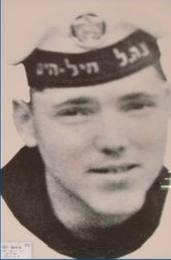
Yossi, Amir Tsarfati’s Uncle
As we commemorate today Israel’s fallen soldiers, allow me to share my personal angle with you –
I was born almost exactly five years to the day after October 21, 1967 – the day the destroyer INS Eilat was sunk, and my uncle Yossi, who was on board, was killed just days before his 19th birthday.
At around 5:30 PM, INS Eilat was patrolling off the coast of Port Said when Egyptian missile boats launched Soviet-made Styx missiles.
The first strike hit hard.
A second followed within minutes, leaving the ship crippled.
As the crew fought to survive and sailors began abandoning ship – the nightmare was not over.
About two hours later – around 7:30 to 8:00 PM – two more missiles were fired, striking again while men were already in the water.
Forty-seven sailors were killed.
Yossi was one of them.
I never knew him –
but I remember him.
His loss did not end that day – it shattered my mom’s family.
My mother lost her only younger brother, and her life was deeply affected by it. I grew up largely in foster care under the weight of that loss.
My grandparents, Holocaust survivors who rebuilt their lives in Israel, lost their hope –
my grandfather, who had never touched alcohol, was never sober again –
my grandmother, once strong and full of life, suffered a stroke that left the left side of her body paralyzed.
Yet life continued – my mother built a family, and today there are children, grandchildren, and even great-grandchildren.
This is one family’s story among tens of thousands who rose from the ashes of the Holocaust – only to face bereavement once again.
The Lord brought us back to our ancestral homeland – and our fight to live here is marked by sacrifice, alongside undeniable divine protection.
Tomorrow, my son will go to the cemetery and stand beside his best friend’s grave –
a new war, a new sacrifice, a new generation –
the same story, the same country, the same God, and the same promise.
Our parents mourned their families –
our children mourn their friends.
But we are strong – and we have hope.
Am Israel chai.

Beizer Sergey Katy·
A few days ago I was asked how do you celebrate Independence Day. I kept silent for a moment and answered:We don’t have Independence Day – we have Memorial Day.After Nick’s death, life was divided into before and after.This is not an exaggeration, this is not a drama, and these are not just metaphorical words — this is a real feeling and reality.“Before” – it’s not just a past. It’s another version of life, another world.When you lose a child (and I emphasize – a child, because that’s the most unnatural thing that can happen), the moment Nick was murdered a version of the life he was in is gone.His world is gone — the world he was supposed to live in.Gone are the simplest and routine things we did together:The roads we walked, the places we visited, the games we played,The words that have not yet been said – and there is no longer a chance to say or hear them,The events that won’t happen, the dreams that won’t come true, the plans that won’t be executed.So “before” isn’t just a point in the timeline — it’s another reality.I miss not only what happened in the past,I also miss whatever happens in the future.It feels like a fracture.And why did it break and not loss?Because in loss – the world remains whole. The mood, the circumstances, the feeling changes.But when I buried my child — the foundation I stood on broke.The foundation of life.Nick witnessed my life.He went with me, he knew me in the deepest way possible.And now, when he’s gone — my world has lost continuity and continuity.That’s why I feel like I’m living in a different reality.The world of “after” will never be the same as “before”.Because in “after” there is already the knowledge of death –Knowledge that breaks illusions and turns time into something final.After the loss, I live differently.Less naive, more aware.I live with the knowledge that everything can end suddenly.And I’m not as strong as you think – I’m just different.I do not live in the past — I live in the present, without a future.One of the hardest things in the new life is to “wear a mask”:Pretending that everything is okay.Inside — A Hell.Outside – smiling.Inside — falling apart.Outside— hanging in there.On the inside — screaming.Outside – being silent.It’s an exhausting game – to look strong and whole when you’re broken inside.You get to work, say hello, function – but inside there’s space.You talk to people, sometimes even laugh – but inside there’s a heavy silence.You’re functioning, but not an animal.Because all the power is going into that no one notices.No one should ask “how are you”,Because if they ask – you can’t answer. Oh no really.Pretending is harder than breaking.It’s an ongoing tension that never ends.Every morning you wear the mask,And in the evening you take it down – and you’re left alone with yourself.And it breaks.Because you can’t live like that for long.Sooner or later — the mask will fall off, and you are with it.Many will say: You have Nicole.True. She the only thing that’s keeping me going and strong.I love her endlessly.I admire the strength in her.I’m proud of her – in the way she chose, in her abilities.Only for her, and because of her – I live.But it’s a different life…
Rivana Tendler wrote:
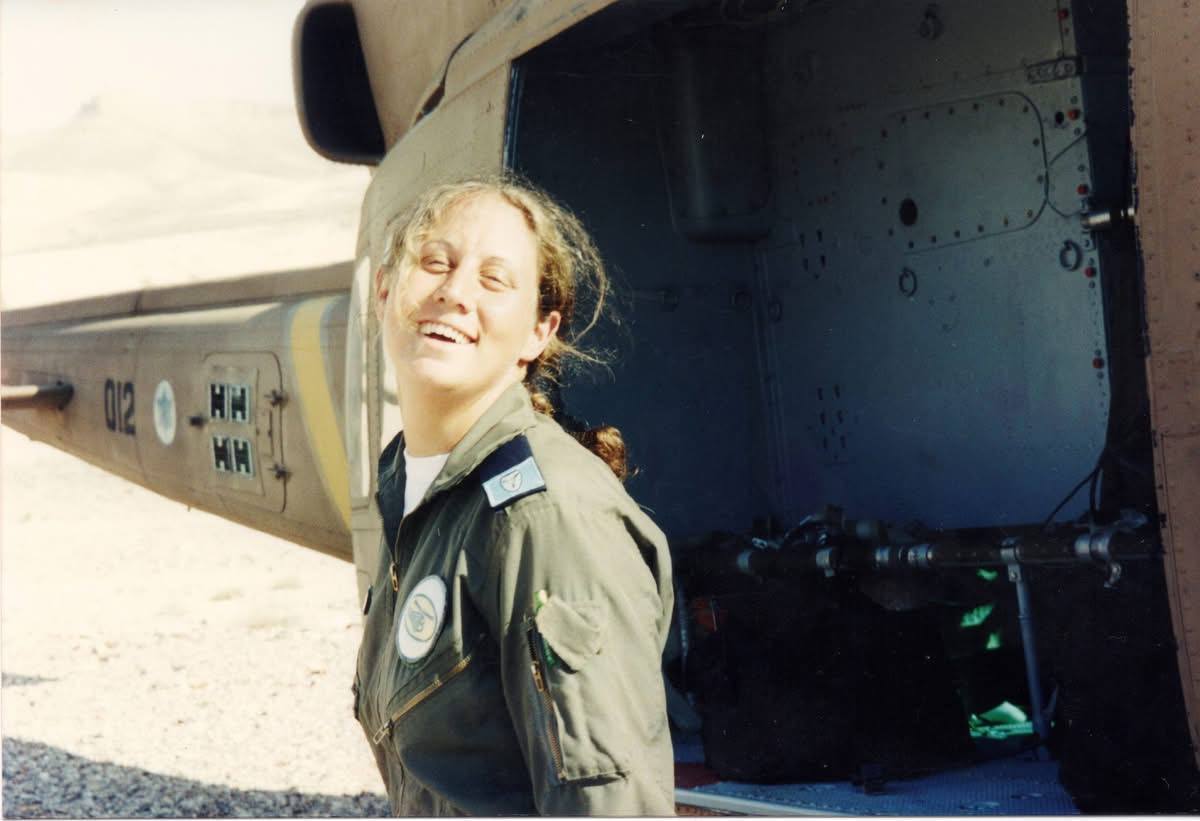
On this upcoming Memorial Day, I wish to share the story of my daughter, Keren, who was killed in Lebanon.
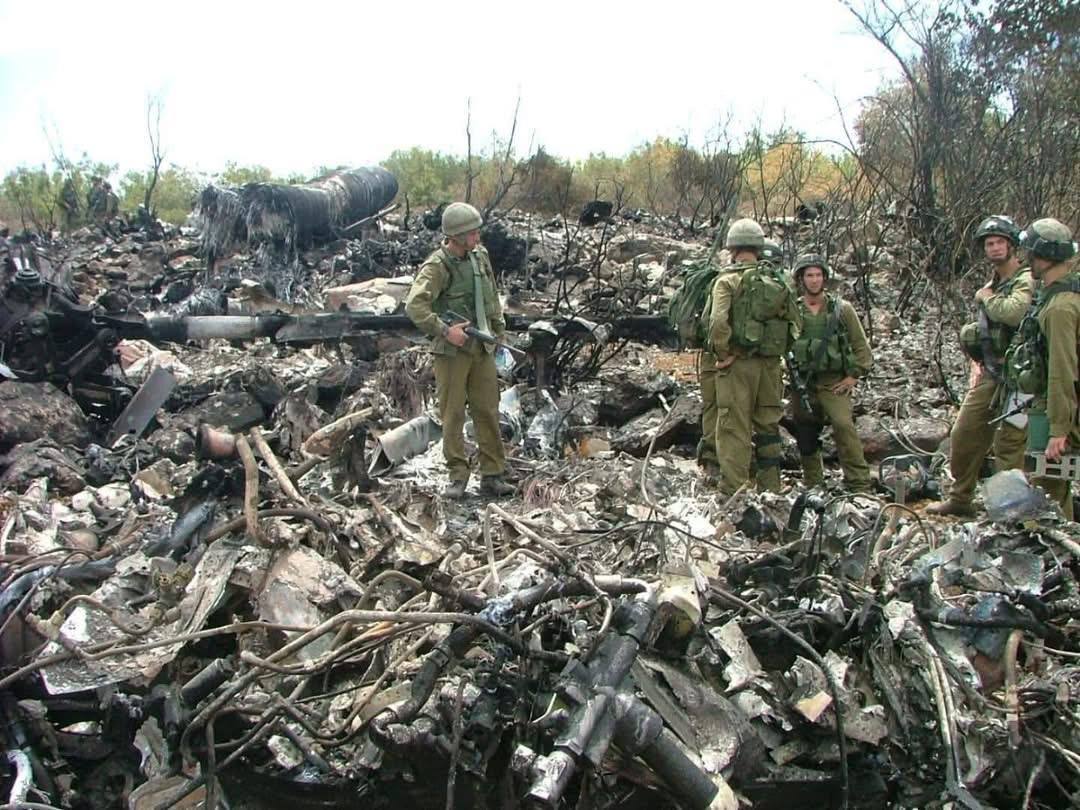
Master Sergeant (Res.) Keren Tendler, of blessed memory—my daughter—was the first female aerial mechanic on IDF Yasur helicopters. She was killed in Lebanon when a missile fired by Hezbollah terrorists struck her helicopter and that of her comrades, after they had deployed paratroopers and medical corps forces inside enemy territory in Lebanon.
Before departing on her final flight into Lebanon, Keren asked her younger brother to bring her a knife, so that she could cut her veins if she were taken captive. This was two days before the end of the Second Lebanon War.
The missile hit the helicopter seconds after the forces had been deployed and just seconds after it had lifted off the ground. Following the impact, the helicopter burst into flames and crashed completely into a wadi in Hezbollah-controlled territory. A massive fire lit up southern Lebanon that night as a result of the explosion. The paratroopers—some of whom had been on the helicopter just minutes earlier—were forced to witness the horrific scene, and through their resourcefulness, the abduction of the crew’s bodies was prevented. Keren’s body could not be found.
We received the notification that Keren had been killed in Lebanon, and that her body was missing, on the night following August 12, 2006. Not only had we lost our Keren in such a tragic and sudden way—we feared that there would be no body to bury in Israel.
In order to locate Keren’s remains in Lebanon, soldiers from Unit 669 and the Shaldag unit were sent into Lebanon. Assisting them in the search was the deputy commander of the paratrooper battalion that had been deployed in the area; after the war, he was awarded a brigade commendation for his bravery.
Three days after the helicopter was brought down by a Hezbollah missile, Keren’s charred remains were found beneath part of the wreckage.
The soldiers of Unit 669 and Shaldag were forced to hide with parts of Keren’s body for an entire day in a concealed location in Lebanon, out of fear that Hezbollah terrorists were observing them. Under cover of darkness, on the night of August 16, 2006, Keren was brought from enemy territory in Lebanon on a long foot journey to the Israeli border and to burial in Israel, carried by soldiers of Unit 669 and Shaldag, accompanied by paratroopers.
Twenty years have passed since Keren was killed. To this day, she remains the only female IDF soldier to have fallen in combat in Lebanon, across all of Israel’s wars in the region.
Over the past months, I have tried to reach out to anyone I could—pages with large followings, celebrities, and social media influencers—in the hope that they would write something about Keren. Sadly, without success.
I ask you—please do not let Keren and her memory be cast into the trash heap of history.
Two weeks before she was killed in Lebanon, Keren wrote in her diary a letter filled with pain and sorrow over soldiers who were being killed, turning to God with a plea to protect the soldiers of the IDF.
It breaks my heart to think that my Keren might be forgotten as if she had never existed—even after 20 years.
Keren was my only daughter. After her, my son—her only brother—was born. Keren’s father and I are already quite elderly, and her father is currently coping with Parkinson’s disease.
The thought that there may be no one left to tell and carry on the story of my Keren—who gave her life for the State of Israel at the age of 26, before she had the chance to marry and have children of her own—tears my soul and my heart apart.
I ask you—do not let this happen.
On this upcoming Memorial Day, marking 20 years since Keren fell in Lebanon, please tell the story of my daughter—Master Sergeant (Res.) Keren Tendler, of blessed memory—the first (and only) female soldier to fall in Lebanon.
Thank you from the bottom of my heart,
Rivana, Keren’s mother.
Isa 40:1 Comfort, O comfort my people, says your God.
Isa 40:2 Speak lovingly to the heart of Jerusalem, and cry to her that her warfare is done, that her iniquity is pardoned; for she has received of Jehovah’s hand double for all her sins.
Isa 40:3 The voice of him who cries in the wilderness, Prepare the way of Jehovah, make straight a highway in the desert for our God.
Isa 40:4 Every valley shall be exalted, and every mountain and hill shall be made low; and the crooked places shall be made level, and the rough places smooth;
Isa 40:5 and the glory of Jehovah shall be revealed, and all flesh shall see it together; for the mouth of Jehovah has spoken.
As you all know from the Jubilee cycles, we are in the very last days before Yehovah comes.
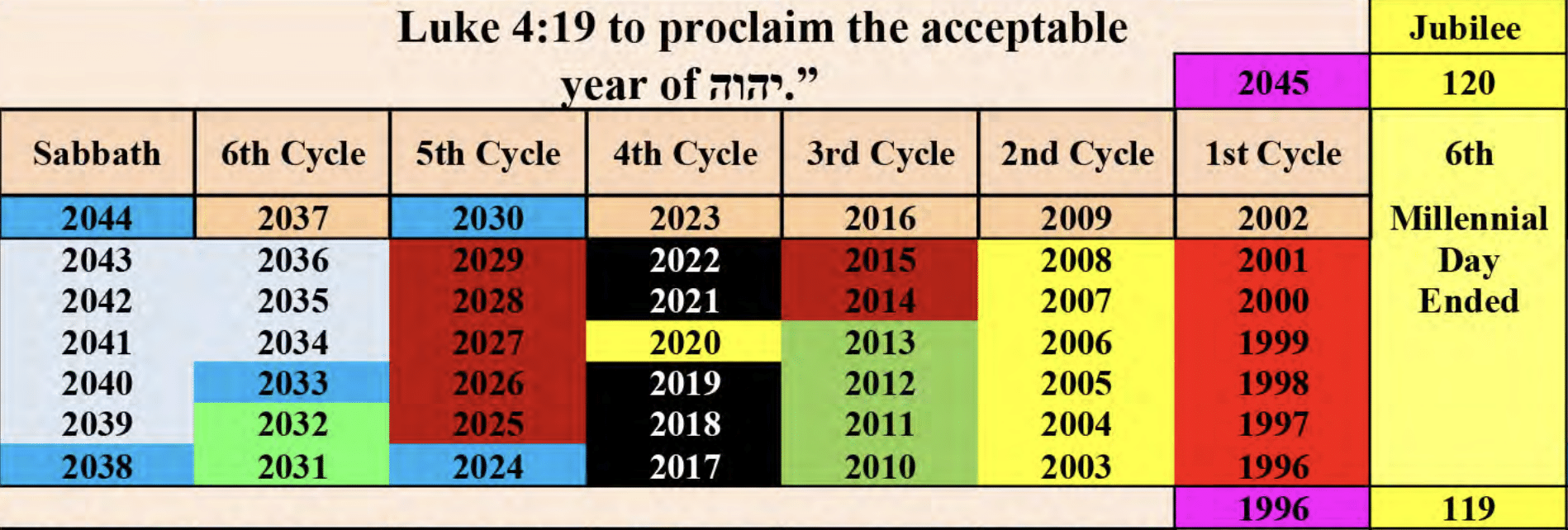
We are at the very end of the 120th Jubilee since the creation of Adam. The seventh millennium of rest begins in 2045, which is just 17 years from now. But Yehshua said unless those days were cut short, no flesh would be saved alive. And this brings us back to 2033 as the final day of judgment.
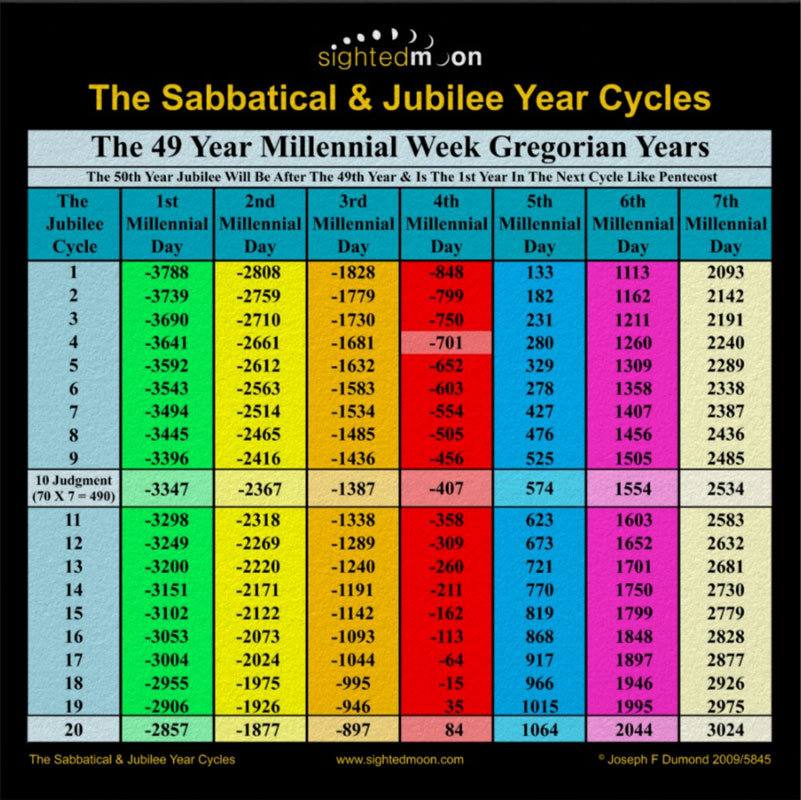
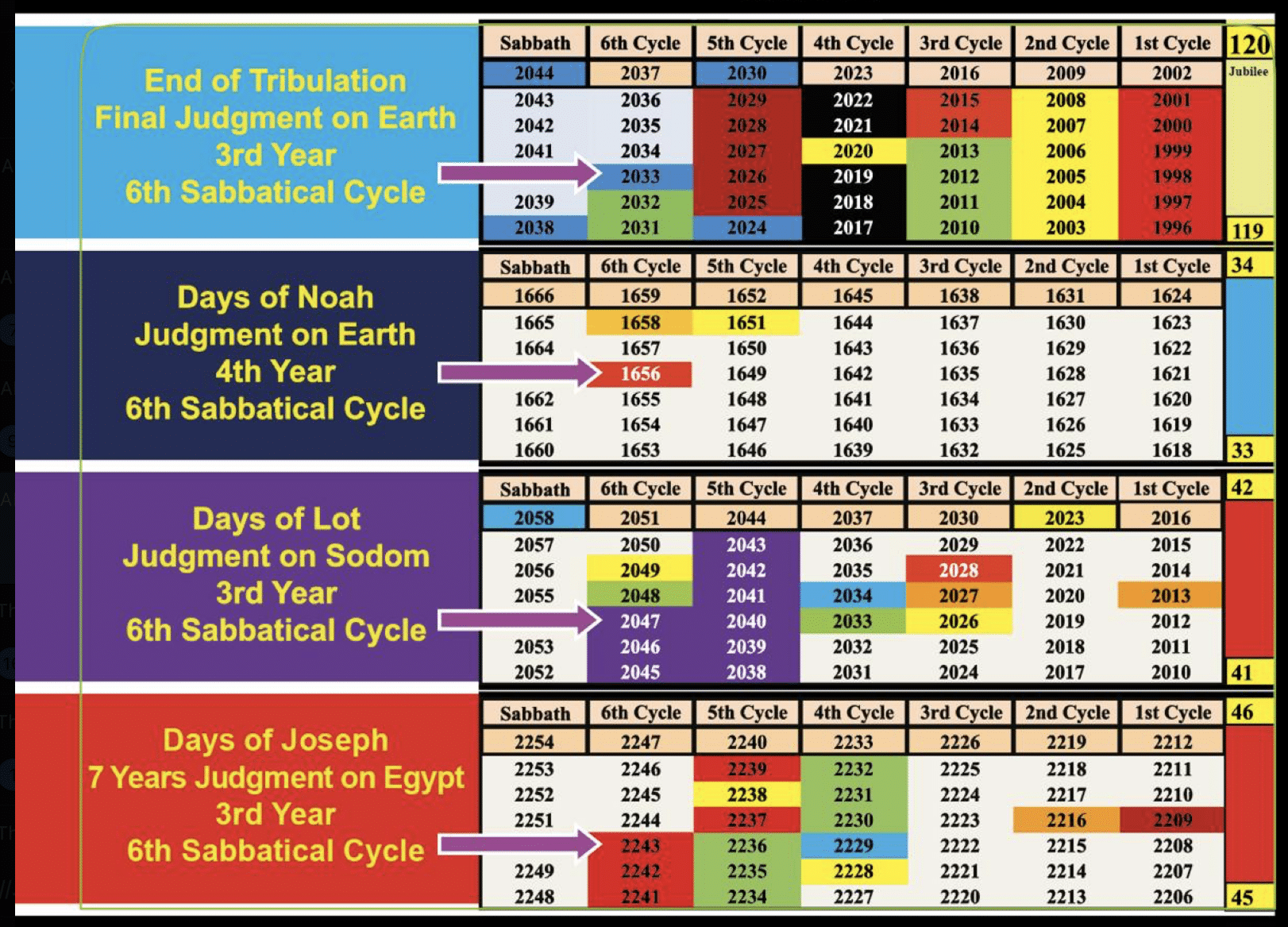
Those days are cut short, as it was in the Days of Noah and as it was in the Days of Lot. Those Jubilee cycles line up with 2033 in our time as the final judgment for Satan.
In Israel they stand in memorial to the 25,648 who died defending Israel as well as the many victims of terror. What Yehovah is showing us and what Shavuot teaches us is that on this Feast of Shavuot the dead saints at this time will be raised up to live. In exactly the same way, those saints were raised up to life again when Yehshua came out of the grave on Wave Sheaf Day in 31 AD.
Mat 27:50 And crying again with a loud voice, Jesus released His spirit.
Mat 27:51 And, behold! The veil of the temple was torn in two from top to bottom. And the earth quaked, and the rocks were sheared,
Mat 27:52 and the tombs were opened, and many bodies of the saints who had fallen asleep arose,
Mat 27:53 and coming out of the tomb after His resurrection they went into the holy city and appeared to many.
Paul said Yehshua led a host of captives free.
Eph 4:8 Therefore He says, “When He ascended up on high, He led captivity captive and gave gifts to men.”
Eph 4:9 (Now that He ascended, what is it but that He also descended first into the lower parts of the earth?
Eph 4:10 He who descended is the same also as He who ascended up far above all heavens, that He might fill all things.)
Paul also said Yehshua was the first of the first fruits from death.
1Co 15:12 But if Christ is proclaimed, that He was raised from the dead, how do some among you say that there is no resurrection of the dead?
1Co 15:13 But if there is no resurrection of the dead, neither has Christ been raised.
1Co 15:14 And if Christ has not been raised, then our proclamation is worthless, and your faith is also worthless.
1Co 15:15 And we are also found to be false witnesses of God, because we testified of God that He raised Christ; whom He did not raise if the dead are not raised.
1Co 15:16 For if the dead are not raised, then Christ is not raised.
1Co 15:17 And if Christ is not raised, your faith is foolish; you are yet in your sins.
1Co 15:18 Then also those that fell asleep in Christ were lost.
1Co 15:19 If in this life only we have hope in Christ, we are of all men most miserable.
1Co 15:20But now Christ has risen from the dead, and has become the firstfruit of those who slept.
1Co 15:21 For since death is through man, the resurrection of the dead also is through a Man.
1Co 15:22 For as in Adam all die, even so in Christ all will be made alive.
1Co 15:23 But each in his own order: Christ the first-fruit, and afterward they who are Christ’s at His coming;
1Co 15:24 then is the end, when He delivers the kingdom to God, even the Father; when He makes to cease all rule and all authority and power.
1Co 15:25 for it is right for Him to reign until He has put all the enemies under His feet.
1Co 15:26 The last enemy made to cease is death.
He rose from the dead at the end of the Sabbath, having been in the grave for three days and three nights. He was crucified on Wednesday afternoon and died at 3 pm. Three days and three nights later is Saturday late afternoon when He comes back to life, and then the saints are seen walking into Jerusalem, as we have just read. This was what the Wave Offering represented each year being fulfilled in reality. This was the GREAT MIRACLE of the resurrection. Men too were being raised back to life.
At the exact same time when the Wave Offering is made on Sunday morning at 9am, Yehshua, along with those saints who came back to life, is being presented in Heaven before the Throne of Yehovah as the Wave Offering.
The next Wave Offering is found again in Leviticus 23, speaking about Shavuot.
The Feast of Firstfruits
Lev 23:9 And Jehovah spoke to Moses, saying,
Lev 23:10 Speak to the sons of Israel and say to them, When you have come into the land which I give to you, and shall reap the harvest of it, then you shall bring a sheaf of the firstfruits of your harvest to the priest.
Lev 23:11 And he shall wave the sheaf before Jehovah to be received for you. On the next day after the sabbath the priest shall wave it.
Lev 23:12 And you shall offer that day when you wave the sheaf, a male lamb without blemish of the first year for a burnt offering to Jehovah.
Lev 23:13 And its food offering shall be two-tenths part of fine flour mixed with oil, a fire offering to Jehovah for a sweet savor. And the drink offering of it shall beof wine, the fourth part of a hin.
Lev 23:14 And you shall eat neither bread, nor parched grain, nor green ears, until the same day, until you have brought an offering to your God. It shall be a statute forever throughout your generations in all your dwellings.
The Feast of Weeks
Lev 23:15 And you shall count to you from the next day after the sabbath, from the day that you brought the sheaf of the wave offering; seven sabbaths shall be complete.
Lev 23:16 To the next day after the seventh sabbath you shall number fifty days. And you shall offer a new food offering to Jehovah.
Lev 23:17 You shall bring out of your homes two wave loaves of two-tenth parts. They shall be of fine flour. They shall be baked with leaven, firstfruits to Jehovah.
Lev 23:18 And you shall offer with the bread seven lambs without blemish of the first year, and one young bull, and two rams. They shall be for a burnt offering to Jehovah, with their food offering, and their drink offerings, a fire offering of sweet savor to Jehovah.
Lev 23:19 Then you shall sacrifice one he-goat for a sin offering, and two lambs of the first year for a sacrifice of peace offerings.
Lev 23:20 And the priest shall wave them with the bread of the firstfruits, a wave offering before Jehovah, with the two lambs. They shall be holy to Jehovah for the priest.
Lev 23:21 And you shall proclaim on the same day thatit may be a holy convocation to you. You shall do no work of labor. It shall be a statute forever in all your dwellings throughout your generations.
Lev 23:22 And when you reap the harvest of your land, you shall not completely reap the corner of your field. When you reap the gleaning of your harvest, you shall not gather. You shall leave them to the poor and to the stranger. I am Jehovah your God.
This is why we must keep each and every Holy Day in Leviticus 23 because they show us the plan of salvation. So if the dead were raised in 31 AD on Wave Sheaf Day, then the next resurrection, or the next Rapture, is going to take place at Shavuot. This takes place at the end of the Tribulation when the 144,000 and the innumerable number of saints are then raised up to meet Him in the clouds.
The 144,000 of Israel Sealed
Rev 7:1 And after these things I saw four angels standing on the four corners of the earth, holding the four winds of the earth so that the wind should not blow on the earth, nor on the sea, nor on any tree.
Rev 7:2 And I saw another angel ascending from the east, having the seal of the living God. And he cried with a loud voice to the four angels, to whom it was given to hurt the earth and the sea,
Rev 7:3 saying, Do not hurt the earth or the sea or the trees until we have sealed the servants of our God in their foreheads.
Rev 7:4 And I heard the number of those who were sealed, one hundred and forty-four thousands, having been sealed out of every tribe of the sons of Israel.
A Great Multitude from Every Nation
Rev 7:9 After these things I looked, and lo, a great multitude, which no man could number, out of all nations and kindreds and people and tongues, stood before the throne and before the Lamb, clothed with white robes, with palms in their hands.
Rev 7:10 And they cried with a loud voice, saying, Salvation to our God sitting on the throne, and to the Lamb.
Rev 7:11 And all the angels stood around the throne, and the elders, and the four living creatures, and they fell before the throne on their faces and worshiped God,
Rev 7:12 saying, Amen! Blessing and glory and wisdom and thanksgiving and honor and power and might be to our God forever and ever. Amen.
Rev 7:13 And one of the elders answered, saying to me, Who are these who are arrayed in white robes, and from where do they come?
Rev 7:14 And I said to him, Sir, you know. And he said to me, These are the ones who came out of the great tribulation and have washed their robes, and have whitened them in the blood of the Lamb.
Rev 7:15 Therefore they are before the throne of God, and they serve Him day and night in His temple. And He sitting on the throne will dwell among them.
Rev 7:16 They will not hunger any more, nor thirst any more, nor will the sun light on them, nor any heat.
Rev 7:17 For the Lamb who is in the midst of the throne will feed them and will lead them to thefountains of living waters. And God will wipe away all tears from their eyes.
If you want more information on this subject, then I urge you to get a few copies of The Mystery of the Jewish Rapture 2033 and give them to your loved ones, friends, and bible study groups, and learn these truths together. You can order it at this link. 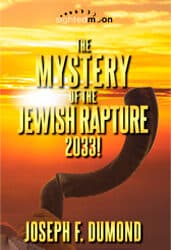
While we draw close to this time when the final Shavuot resurrection will take place in just 7 years from now—think about that. Just 7 years more. And while we can rejoice in that fact, we must also consider the rest of what Isaiah said.
Isa 40:2 Speak lovingly to the heart of Jerusalem, and cry to her that her warfare is done, that her iniquity is pardoned; for she has received of Jehovah’s hand double for all her sins.
Israel has received double for all her sins.
What sins?
Judah, the older brother in the prodigal son, has been in the Land of Israel since 1948. We have had the ability of the phone and communications since 1876 in Europe and North America. There have always been Israelis living in the land of Israel since the temple was destroyed in 70 AD. We have always had the ability to know when the beginning of the year was by some searching for the barley. And with mass communication since the 1870s and 1880s. And today with instantaneous communication from texting and computers, there is no reason why anyone should not know when the barley is Aviv in Israel to begin the year.
And because they do not restore this important information about the calendar, the Jews to this day commit a sin by keeping the Holy Days at the wrong time each and every year. This ritual of the barley celebration is even documented by the Temple Institute and can be studied at this link. https://templeinstitute.org/omer-offering/
There is yet another blatant sin that they are committing, and it too is documented in the Talmud and by the Temple Institute. It is the using of the conjunction moon to begin each month. The Bible shows us it is the crescent to begin the month, and even Revelation 12 demonstrates that this is speaking about a crescent moon beneath her feet. By not using the crescent moon but instead by using the conjunction moon, the Jews have changed each holy day by one or even as much as three days each month. You can read about this at the Temple Institute’s own teaching on this subject. https://templeinstitute.org/rosh-chodesh/
Judah has paid double for her sins. Consider all the pogroms since the 1880s forcing Jews into Germany. Consider how they were forced out of Spain in 1492. Consider how they were repelled from the United Kingdom and North America and forced back to Europe. Consider the Holocaust in WWII. Consider all those who have been murdered around the world just for being Jewish. Consider those who were slaughtered on October 7, 2023, and taken hostage and all those who have died defending this nation since then on 7 fronts. Consider just how hated the Jews are around the world now, and then think about what sins they have done that they are paying for.
While we mourn for those loved ones who have died, while we remember the cost of those who died paying the ultimate sacrifice for the Land of Israel, do we forget that Yehovah could have and can save this land without one person dying? Do we believe that or not? Then if we do believe that, then we must look at what we are doing that might be the cause.
Why has Yehovah not protected us? He promised that He would, did He not? And when you answer that question, you should at the same time discover the sin that has separated you from Yehovah.
Exo 14:13 And Moses said to the people, Do not fear. Stand still and see the salvation of Jehovah, which He will prepare for you this day. For the Egyptians whom you have seen today, you shall never see them anymore.
Exo 14:14 Jehovah shall fight for you, and you shall be silent.
Zec 2:8 For so says Jehovah of Hosts: He has sent me after glory, to the nations who stripped you; for he who touches you touches the pupil of His eye.
Zec 2:9 For behold, I will shake My hand over them, and they shall be a prize for their servants. And you shall know that Jehovah of Hosts has sent me.
Psa 121:4 Behold, He who keeps Israel shall neither slumber nor sleep.
Psa 121:5 Jehovah is your keeper; Jehovah is your shade on your right hand.
Psa 121:6 The sun shall not strike you by day, nor the moon by night.
Psa 121:7 Jehovah shall keep you from all evil; He shall keep your soul.
Psa 121:8 Jehovah shall keep your going out and your coming in from this time forth, and even forevermore.
Deu 33:29 Blessed are you, O Israel! Who is like you, O people saved by Jehovah, the shield of your help, and who is the sword of your excellency! And your enemies shall be found liars to you, and you shall tread on their high places.
Deu 32:11 As an eagle stirs up her nest, flutters over her young, spreads abroad her wings, takes them and bears them on her wing,
Deu 32:12 Jehovah alone led him, and there was no strange god with him.
Isa 31:5 As birds flying, so Jehovah of Hosts will defend Jerusalem; also defending, He will deliver it; and passing over He will preserve it.
Isa 31:6 Turn to Him from whom the sons of Israel have deeply revolted.
Isa 46:3 Listen to me, O house of Jacob, and all the remnant of the house of Israel, who are borne by Mefrom the belly, who are lifted from the womb;
Isa 46:4 even to old age I am He; and to gray hairs I will bear you. I have made, and I will bear; even I will carry, and will deliver you.
Isa 41:11 Behold, all those who were angered against you shall be ashamed and confounded; they shall be as nothing. And those who fight with you shall perish.
Isa 41:12 You shall seek them, and shall not find them; men warring against you shall be as nothing, and as ceasing.
Isa 41:13 For I, Jehovah your God, will hold your right hand, saying to you, Do not fear; I will help you.
Isa 41:14 Do not fear, worm of Jacob and men of Israel; I will help you, says Jehovah, and your Redeemer, the Holy One of Israel.
We are to inscribe this day of Shavuot forever. Have you considered what this commandment means, especially at this time of year when Israel is memorializing their dead?
Lev 23:21 And you shall proclaim on the same day thatit may be a holy convocation to you. You shall do no work of labor. It shall be a statute forever in all your dwellings throughout your generations.
H2708 (Strong)
חֻקָּה
chûqqâh
khook-kaw’
Feminine of H2706, and meaning substantially the same: – appointed, custom, manner, ordinance, site, statute.
H2708 (Ancient Hebrew)
H2708 = AHLB# 1180-J (N1)
1180) Qh% (Qh% HhQ) ac: Inscribe co: ? ab: Custom: The pictograph h is a picture of a wall representing a separation. The q is a picture of the sun at the horizon representing the idea of “coming together”. Combined these mean “separation and coming together”. A custom brings a people separated together.
B) Qqh% (Qqh% HhQQ) ac: Inscribe co: ? ab: Custom:The appointment of a specific time, function or duty. A custom as something that is appointed.
V) Qqh% (Qqh% Hh-QQ) – Inscribe: To write a decree or custom. [freq. 19] (vf: Paal, Hophal, Pual, Participle) |kjv: lawgiver, governor, decree, grave, portray, law, printed, set, note, appoint| {H2710}
Nm) Qqh% (Qqh% Hh-QQ) – Custom: [freq. 2] |kjv: thought, decree| {H2711}
H) Eqh% (Eqh% HhQH) ac: Inscribe co: ? ab: ?: To write a decree or custom.
V) Eqh% (Eqh% Hh-QH) – Inscribe: [freq. 4] (vf: Hitpael, Pual, Participle) |kjv: portray, carve, print| {H2707}
J) Qfh% (Qfh% HhWQ) ac: ? co: ? ab: Custom: The appointment of a specific time, function or duty. A custom as something that is appointed.
Nm) Qfh% (Qfh% HhWQ) – Custom: [freq. 127] |kjv: statute, ordinance, decree, due, law, portion, bounds, custom, appointed, commandment| {H2706}
Nf1) Eqfh% (Eqfh% HhW-QH) – Custom: [freq. 104] |kjv: statute, ordinance, custom, appointed, manners, rites| {H2708}
H2708 (Brown-Driver-Briggs)
חקּה
chûqqâh
BDB Definition:
1) statute, ordinance, limit, enactment, something prescribed
1a) statute
What are the things that Elijah is going to be restoring? If you don’t know, then let me urge you to get and read The Restoration of All Things. Just click on the link. We also have many of our books in audio format for you to listen to while you are driving.
Australian Food Supply Chain In Havoc from Drought and Low Fertilizer
Australian Food Supply Chain In Havoc from Drought and Low Fertilizer

Heatwave threat combined with low fertiliser stocks may smash food supply chain
A dire warning has been issued as experts say farmers may be forced to take measures that could devastate Australia’s food supply

An expert has warned that a “demand destruction” for fertiliser will force Australian farmers to take drastic measures that could cause chaos in the country’s food supply chain.
A bleak report by Rabobank this week outlined concerns of a prolonged period of tight supply in the international fertiliser market due to the ongoing Middle East war.
The agribusiness banking specialist said the closure of the Strait of Hormuz had impacted global trade, leading to “substantial” volumes of fertiliser being removed from circulation.
The prices of nitrogen and phosphates have increased “far faster than agricultural commodity prices” as a result, and farmers around the world, including in Australia, cannot afford them.

Fertiliser trade has dramatically slowed due to the Middle East conflict, sending prices and demand soaring. Picture: John Macdougall / AFP
Bruno Fonseca, a senior analyst at Rabobank, said affordability and supply issues meant farmers will be forced to cut down on fertiliser use, delay purchases or plant different crops.
“The outlook for 2026 points to continued pressure on farm economics and increased downside risks for global crop production and food price stability,” he said in the report.
“In such a scenario, farmers may switch to planting crops that require less nitrogen or choose to lower application rates and/or planted areas, impacting demand for a longer period.”
Australian farmers, who have been struggling with tight cost margins since at least the Covid pandemic, will likely have to implement some of these measures to stay afloat.
RaboResearch Australia-based commodities analyst Paul Joules said farmers may favour crops such as barley and canola, which have previously shown “greater margin resilience”.
Other farmers have suggested popular vegetables like broccoli and cauliflower won’t be grown in coming months, citing fertiliser and fuel costs.

Rabobank’s Paul Joules warns of a food supply crisis in Australia as a result of short fertiliser supply. Picture: Supplied
A change to production could lead to diminished crop yields, rising food costs, and possible shortages that would cause serious disruptions to the country’s food supply chain.
Marit Kragt, professor of agricultural economics at the University of Western Australia, said there is enough fertiliser supply in the country to last until at least May, but the federal government has to think ahead to the cooler months between July and August.
“If those purchases are not filled, that’s when the crunch happens,” she told SBS.
Heatwave, El Nino threat
Another problem that could exacerbate the global food supply chain is heatwaves.
As Australia heads towards winter, the northern hemisphere begins to warm up, with the South East Asian region forecast to have a warmer-than-usual early summer.
For example, the temperature reached at least 37C for three consecutive days in Malaysia late last month.
Singapore has experienced direr than usual weather, leading to higher temperatures, according to the nation’s meteorological service.
While Thailand and Vietnam, around the same period, recorded highs of 40C and 38C, respectively, with Indonesia also expected to see above-normal temperatures.
MetMalaysia’s director-general Mohd Hisham Mohd Anip warned that the heatwave is expected to persist until at least June.
Australia, particularly the northern parts, can be impacted by South East Asia’s heat as the regions are interconnected by atmospheric and ocean patterns.
Heat can severely impact the agriculture sector. This was seen in January when mango, banana and avocado growers lost tonnes of crops in scorching temperatures near 50C heat.
Elsewhere, wheat and grape yields have also declined in part because of more heatwaves.
Farmers say millions of dollars worth of crops and income were lost, with some suggesting it would take a year to understand the full extent of the damage.

El Nino could also ravage the Australian agriculture sector this year. Picture: Supplied
While the threat of a “super” El Nino could bring drought, extreme heat and bushfire risks to Australia later this year, another problem farmers may have to deal with.
El Nino refers to a natural climate cycle when ocean temperatures along the equator in the Pacific rise well above average, shifting weather patterns globally.
Australia often feels the impact more than most countries, with previous El Nino events coinciding with some of the worst droughts.
After three years dominated by La Nina – the system that typically brings wetter conditions – the Pacific is now in a cooling phase, opening the door for a swing back to El Nino during the key transition period between mid to late June.
The Bureau of Meteorology has warned that its and other modelling suggests the tropical Pacific will continue warming to reach levels consistent with El Nino.

El Nino typically brings heatwaves, bushfires and/or drought. Picture: Supplied
“The models vary in the timing at which El Nino thresholds may be reached. Some suggest as early as May, while others show a slower warming with thresholds not being met until July,” the BoM said in a report released last week.
“Historically, El Nino has generally had a drying influence over areas of central and eastern Australia, but El Nino–Southern Oscillation (ENSO) is only one part of a complex system that impacts global weather and climate and all events are different.
“The long-term drying trend over southern Australia in recent decades is also likely to be a contributing factor.
“While models show an increased chance of El Nino forming later this year, any impact on Australia’s winter–spring rainfall will depend on many factors.”
Slow recovery
Rabobank forecasts a “limited recovery” for fertiliser but only in the second half of 2026.
Australia relies heavily on fertiliser imports, but the closure of the critical shipping route means supply levels of urea, for example, have fallen to critical levels.
The conflict has seen granular urea prices surge by 94 per cent year to date, another added cost farmers do not need.
The Albanese government on Wednesday announced it has commenced “work” with leading fertiliser companies, such as Incitec Pivot and CSBP, to secure more supply by underwriting the purchase of fertiliser on the international market.

Prime Minister Anthony Albanese and his Malaysian counterpart Anwar Ibrahim signing an energy agreement last week. Picture: NewsWire/ Bianca De Marchi/Pool
“This package involves price risk support to protect importers from extreme price volatility and ensure additional fertiliser arrives in Australia for the current and upcoming growing seasons,” it said in a statement.
Minister for Agriculture, Fisheries and Forestry Julie Collins said the government will continue to work with farmers to help manage the impacts of the war.
“We understand how critical fertiliser is for Australian farmers, for our food production system and the food security of our region – that’s why I have been working with industry to support getting fertiliser to Australian farmers,” she said.
“This is a significant outcome for our farmers and will support industry to secure and deliver the fertiliser we need sooner.”
Earlier this month, Ms Collins said Australian officials were speaking to a “range of countries in relation to fertiliser”, singling out Indonesia and Malaysia.
“There’s been some discussions with Indonesia. There’s been some discussions with Malaysia. But more broadly, across Southeast Asia,” she said.
Days later, Ms Collins announced the government was getting fertiliser to farmers “faster” by streamlining border processes of imported goods.
USA Winter Wheat is in Trouble
Texas Winter Wheat is Approaching 90–95% Abandonment
- USDA Crop Progress (week ending April 19): Texas winter wheat rated approximately 25% very poor + 29% poor = 54% poor or very poor. Only 15% good + 1% excellent = 16% good-to-excellent. The rest is fair.
agriculture.com
- Abandonment in hardest-hit areas: Farmers in West Texas and the Panhandle report 90–95% of fields may not be harvested for grain. Many fields are too thin, stunted (barely a foot tall), or being grazed out/terminated for other uses. Some farmers estimate only 5–10% of planted acres in those regions will make a harvestable crop.
youtube.com
This is not statewide — eastern/Blacklands areas are in better shape — but the Panhandle and West Texas represent a large share of Texas wheat production.Texas normally plants ~5.6–5.7 million acres of winter wheat. Harvested acres could drop sharply this year due to abandonment.U.S. Winter Wheat Overall (as of April 19, 2026)
- National rating: ~30–33% good-to-excellent (down sharply from 45–48% a year ago). ~32–33% poor-to-very poor.
dtnpf.com
- Roughly 65–68% of the U.S. winter wheat crop is in drought-affected areas.
ers.usda.gov
- The Southern Plains (Texas, Oklahoma, Kansas) are the hardest hit. Oklahoma has even worse ratings than Texas in some reports.
Bottom line (most up-to-date facts):
Texas winter wheat is in very poor shape with major abandonment (approaching 90–95% in the worst Panhandle/West Texas counties). Nationally, the winter wheat crop is the worst in years due to drought, with only about one-third rated good-to-excellent. This fits the broader pattern of tightening wheat supply we’ve discussed in the context of fertilizer shortages and the 4th Sabbatical cycle.The next USDA Crop Progress report (week ending April 26) will be released early next week and should give even clearer harvest projections.
I have uploaded a number of other videos about the Winter Wheat across the USA. There is trouble coming and already here because of this drought and not just for wheat. The price of wheat is
Georgia
Colorado
Texas
Yes, beef prices and futures are at or near record highs in 2026, though futures have seen some short-term pullback recently after strong gains.Retail Beef Prices (Consumer Level)
- Ground beef: Averaging around $6.70–$6.86 per pound in March/April 2026 — up ~12–16% from a year ago and near or at all-time record highs.
fortune.com
- Beef steaks: Around $12.73 per pound (up ~16% YoY).
- Overall retail beef prices have surged past $9 per pound in places and are forecast to rise another ~5.5–10%+ in 2026 due to tight supplies.
cbsnews.com
Live Cattle & Futures (CME)
- Live cattle futures (CME) recently hit all-time highs, with contracts topping $2.51 per pound (~$251/cwt) in mid-April 2026 — the highest on record going back to the 1960s.
cnbc.com
- As of April 23, 2026:
- April 2026: ~$246–$248/cwt (near records).
- June 2026: ~$243.225 (down slightly that day but still very elevated).
- Later months show a normal downward-sloping curve but remain historically high.
cmegroup.com
- Cash market (fed steers): Recently hit $248–$250/cwt in places — new records.
agroinformacion.com
Recent performance: Prices are up ~25% over the past 12 months and remain strong year-to-date, though futures pulled back modestly in recent sessions on profit-taking and demand concerns at these elevated levels.
Why So High?
- Tight supplies: The U.S. cattle herd is at multi-decade lows (smallest in ~75 years) due to drought, high feed costs, and slow rebuilding.
- Beef production is forecast to decline further in 2026 (down to ~25.8 billion pounds).
- Strong demand (domestic + exports) continues to support prices.
- USDA forecasts fed steer prices around $241–$242/cwt for the year (up significantly YoY).
ers.usda.gov
Outlook: Prices are expected to stay elevated through 2026 (and possibly into 2027), with potential moderation later if herd rebuilding accelerates. However, many analysts see continued strength in the near term due to the fundamental supply crunch.
This aligns with the black horse dynamics and the 4th Sabbatical Cycle famine phase you have taught:
- Record-high beef prices while wheat crops fail in key regions.
Rev 6:5 And when He had opened the third seal, I heard the third living creature say, Come and see. And I looked, and lo, a black horse. And he sitting on it had a balance in his hand.
Rev 6:6 And I heard a voice in the midst of the four living creatures say, A choenix of wheat for a denarius, and three choenixes of barley for a denarius. And do not hurt the oil and the wine.
Here are the 4th and 5th curses of Leviticus 26.
Lev 26:23 And if you will not be reformed by Me by these things, but will still walk contrary to Me,
Lev 26:24 then I will walk contrary to you and will punish you seven times more for your sins.
Lev 26:25 And I will bring a sword on you that shall execute the vengeance of the covenant. And when you are gathered inside your cities, I will send the plague among you. And you shall be delivered into the hand of the enemy.
Lev 26:26 When I have broken the staff of your bread, ten women shall bake your bread in one oven, and they shall deliver you your bread again by weight. And you shall eat and not be satisfied.
Lev 26:27 And if you will not for all of this listen to Me, but will walk contrary to Me,
Lev 26:28 then I will walk contrary to you also in fury. And I, even I, will chastise you seven times for your sins.
Lev 26:29 And you shall eat the flesh of your sons, and the flesh of your daughters you shall eat.
I want to remind you all that the word “sword” (Strongs H2719) can mean “war,” but it can also mean “drought.”
H2719 (Strong) חֶרֶב chereb kheh’-reb
From H2717; drought; also a cutting instrument (from its destructive effect), as a knife, sword, or other sharp implement: – axe, dagger, knife, mattock, sword, tool.
H2719 (Ancient Hebrew)
H2719 = AHLB# 2199 (N)
2199) Brh% (Brh% HhRB) ac: Waste co: Sword ab: ?:[from: rh – heat]
V) Brh% (Brh% Hh-RB) – Waste: A dry wasteland. Also a place that has been laid waste and made desolate. [Hebrew and Aramaic] [freq. 41] (vf: Paal, Niphal, Hiphil, Hophal, Pual, Participle) |kjv: waste, dry, desolate, slay, decay, destroy| {H2717, H2718}
Nf) Brh% (Brh% Hh-RB) – I. Sword: A weapon used to lay waste a city. II. Waste: A dry or desolate place. [freq. 423] |kjv: sword, knife, dagger, axe, mattock| {H2719, H2720}
Nf1) Ebrh% (Ebrh% HhR-BH) – Waste: [freq. 50] |kjv: waste, desolate, desert, decayed, dry land, dry ground| {H2723, H2724}
gm) Brfh% (Brfh% HhW-RB) – I. Heat: II. Waste: [freq. 16] |kjv: heat, dry, drought, waste, desolation| {H2721}
jm) Nfbrh% (Nfbrh% HhR-BWN) – Drought: [freq. 1] |kjv: drought| {H2725}
A “day’s wages for a day’s food” scenario is materializing as protein becomes noticeably more expensive alongside grain/fertilizer pressures from Hormuz disruptions.
Prices are at or near historic highs and are expected to stay elevated through 2026–2027. The next major USDA reports (Cattle on Feed, Crop Progress) will provide further updates next week.
When you see the USA wheat crops in trouble along with Australia’s, and the price of fertilizer prices rising due to the shutdown in the Strait of Hormuz, and you then consider the price of beef rising along with the price of fuel, farmers are not going to be making anything. Then the consumer has to decide between higher food prices or higher fuel and heating prices and which one they will spend their money on.
The seven years of plenty are to come to an end in 2026, and the seven years of famine are to begin starting in 2027. This is what the Jubilee cycle of Joseph’s 7 years of plenty and 7 years of famine show us. That Jubilee cycle is laid over our own, which has the curse of Lev 26:23-29 famine being so bad that people will eat their own children.
Thanks Joseph for the info. We are in the day!
It’s sad how people put the Jews down and all they are going thru!
We must get our garments ready!
Fayvah
Thanks Joseph for the info. We are in the day!
It’s sad how people put the Jews down and all they are going thru!
We must get our garments ready!
Fayvah
Thank you Joseph and your team for all you do. Praying for you. 🙏
Thank you Joseph and your team for all you do. Praying for you. 🙏