

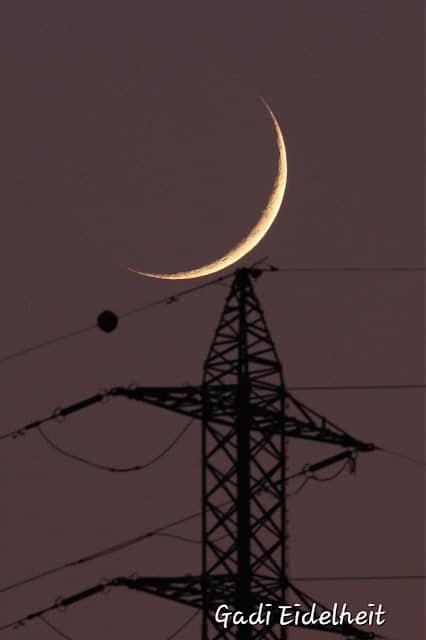

Newsletter 5861-045
The 2nd Year of the 5th Sabbatical Cycle
The 30th year of the 120th Jubilee Cycle
The 13th day of the 11th month, 5861 years after the creation of Adam
The 5th Sabbatical Cycle after the 119th Jubilee Cycle
The Sabbatical Cycle of the Red Heifer, Famine, Captivity & The 2 Witnesses
January 3, 2026
Shabbat Shalom to the Royal Family of Yehovah,
This week’s teaching is taken from my presentation, which I did on my recent speaking tour to PA and NY. It challenged many people about what they thought or had previously objected to: keeping the crescent moon and barley to begin the year and month. I hope you can understand what I am presenting. If not, Ryan and I have presented this in a series of podcasts that he will release. So sign up for them so you can hear what we are presenting in each one.
The Festival dates have all been updated at https://sightedmoon.com/holy-days/. If the barley is Aviv by Wave Sheaf Day on March 8, 2026, then all these dates are very close, depending on when the moon will be seen. Once again, this confirms the Hebrewism Yehshua said, that no one would know the day or the hour. We are just not sure until we actually see the barley and sight the moon; then we will know for certain.
We also launched Sightedmoon Radio in December 2025, with Ryan Nall as our host and manager. https://live365.com/station/Sightedmoon-Radio-a64763 We are still in the process of building it out, but Ryan has permitted me to announce it to you all so that you can tune in and enjoy my selection of music and our ongoing teachings. We have been working on it since November 2025 and have much more to do. You may not like my music, but we hope to add more in the future. Yes, we pay royalties for every song on our platform. We hope to have this on FM and Sirius soon, so you can listen while driving to and from work.
I would also like to encourage you to sign up for our podcasts at sightedmoon.com. Please share these podcasts on your social media platforms and let others know about the things you are learning here. You can sign up and receive updates when each new podcast comes out by signing up at this link: https://www.subscribebyemail.com/sightedmoon.blubrry.com/feed/podcast/
I want to encourage you all to give the gift that keeps on giving. Give your loved ones a copy of It Was A Riddle Not A Command and tell them it shows precisely which day Jesus was born on. Let this book do for them what you cannot do yourself. Let it convict them. Then you can have that conversation you have been praying Yehovah will grant you by having your family in this walk with you. Get a copy and give it to them today. https://sightedmoon.com/riddle-lp/. We read this book at the Shabbat meetings a few years ago and have recently published these videos, which include the readings and the midrash that followed. Please have a look in order to whet your appetite to share this book (YouTube Link).
We also need your support and ask that you consider buying us a coffee each day this month. Just that little bit of help on your part will help us cover the ads, website costs, and promotions so others can learn as well. Our ad campaigns are in full swing as I write and will be for the next two months. Join us and be part of this work at the end of this age. I also want to thank everyone who has supported us each month for many years. You have paid it forward and made it possible for those new people Yehovah is now calling. I hope others will join us and help carry this torch to the next level.
Sightedmoon.com Podcasts
Sightedmoon.com Podcasts
Here is the link to all the podcasts Ryan is now cranking out. https://podcasts.apple.com/us/podcast/sightedmoon-podcasts/id1208198329
Subscribe to the podcast here https://sightedmoon.blubrry.com/subscribe-to-podcast/
I encourage you all to subscribe so you can listen to it in your car or while working around the house.
It Was A Riddle Not A Command
It Was A Riddle Not A Command
Listen to this Podcast discussing one of Joseph’s most popular books.
You Can Learn the Secret Meaning of:
No One Knows the Day of the Hour
Why does no One Know When Jesus was born?
When Does the Thief in the Night Come?
Why Are the Foolish Virgins Rejected?
No One Knows The Day or The Hour is a Hebrew idiom or parable.
Jesus spoke in parables to conceal His message which He later explained to the Apostles.
No One Knows The Day or the Hour is telling you the very day He will come back on!
The exact opposite to what you thought it said!
This is the very same day when He first came.
The Book of Revelation Tells you the very day and hour He was born.
You are given clues in Revelation about the thief that comes in the night, about being caught naked and ashamed. All of these clues tell you about the very day He is coming back.
Paul wrote to the Thessalonians telling them they had no need to write them about the Day of the Lord
FOR THEY KNEW FULL WELL THE MOEDIM!!!
Knowing the Moedim shows you the Day and Hour No Man Can Know.
We are also told about the Two Witnesses in the Book of Revelation…
What revelations do the Two Witnesses show you about the birth of Jesus?
There was a heavenly Host praising God when Jesus was born.
This, too, tells you the Day He was born.
Are you aware that the 5 Foolish Virgins did not understand what the Thief in the Night was?
Do You?
All these questions and so much more are explained in detail.
It was a Riddle for us to figure out.
It was not a command that we could not know.
We can KNOW.
YOU Can Know!

Thoroughly researched and profoundly significant!
5.0 out of 5 stars
There just isn’t a better book on Christian prophecy than this! What an eye opener!
Of the many books and articles that I have read on prophecy in my personal search for truth, this is the only one that does not rely on old ideas that were developed hundreds of years ago when knowledge was minimal. So much more has been learned through historical and archeological research. The world has changed so much that before now no one could have clearly envisioned how prophecy might play out.
I think the average Christian doesn’t realize that recent developments in technology and huge increases in knowledge offer us a unique opportunity to raise the veil so that we might see clearly what was once hidden behind a dark glass.
After learning about these things and seriously considering the Bible, with a willingness to set aside my traditional beliefs about prophecy, I have come to the conclusion that this book is inspired by God. Mr. Dumond presents compelling information that overturns long held assumptions and unverified beliefs making the entire body of prophetic knowledge fully accessible. As a matter of fact I think that just about anyone with no previous knowledge of the Bible would understand things that scholars have devoted their lives to explaining.
I would like everyone to know what is being shown in the pages of this book. No serious truth seeker should pass up the opportunity to have their eyes opened through its revelations. I believe it is the most important book ever written,- next to the Bible itself.
Thank you Joseph Dumond.
Amazon Customer: Ross Boraan

Order your copy Today!

The Stones Cry Out Part 1 & Part 2
The Stones Cry Out Part 1 & Part 2
Do you want to know how to prove the Zadok Calendar, the Enoch Calendar, and the Book of Jubilee Calendar false?
Do you want to know how the calendar issue became so confusing?
I got this awesome endorsement and I want to share it here now. with you.

In The Stones Cry Out, I walk you through the history of each change and why those changes came about, starting with the Maccabean days. Yes, it all began around 164 B.C. When Yehshua was here, he was dealing with two schools of thought. The Sadducees were all but wiped out when the Temple fell in 70 C.E. This left only the Pharisees, who began to be persecuted after the failure of the Bar Kochbah Revolt in 134 C.E.
The truth began to become out of focus around 160 C.E. when Rabbi Jose wrote the Seder Olam. This work originally was written to proof Simon Bar Kochbah was the Messiah. When that did not pan out the history was later revived and then redacted as the truth into the Mishneh Torah by Rabbi Judah ha Nasi in 180 C.E. After this the Jerusalem Talmud begins to debate these issues. It was then during this time as the Jerusalem Talmudist are forced to flee and the Babylonian Talmudist continue to grow until the 6th century that Hillel came up with a solution to help them keep the Holy Days at the proper time while they were out of the land of Israel. He did this in 358 C.E. This work was then modified and adjusted over the next 800 years with additions added and other rejected. Until it was finally redacted once again in 1177 by Rambam. And with that we now have the modern Hillel calendar which includes the errors passed on during each redaction. These errors included the time of the Sabbatical and Jubilee years.
Once the Temple was destroyed in 70 C.E., the Jews recorded time by counting from the time It was destroyed. This is why the 40 tombstones of Zoar, which record this information, are crucial to understand.
When you understand why the Postponement rules were first created so that the crescent moon would not be seen in another part of the world before it was seen in Israel then you can understand how they were still trying to follow the crescent moon to begin the month. The Tombstones show us this exact thing. The tombstones also show us when the Jews changed from a crescent moon to a Conjunction moon to begin the month. They also show us when the Jews changed the year from the month of Aviv to the Tishri to begin the year.
I really want you to understand these things so you know why you do what you do as far as following a calendar to keep Yehovah’s moedim.
Get your Free copies of The Stones Cry Out Part 1 and Part 2 here https://sightedmoon.com/the-stones-cry-out-lp/
And share this information with your FB friends and Bibles Study groups. If they don’t like it, it never cost them anything.
Get your copy today. If you want a paperback copy, I have them on Amazon for the least amount they would let me post them there. Order both of them and start to understand the history of how these changes affect those who follow Yehovah and keep His Feasts.
I would like to add this recent comment to encourage you all to get this book and learn these truths. And the Book is FREE. You have no reason not to get it.
Most people assume that Hillel created the calendar in 358 C.E. They then assume that because it was a Sanhedrin, they are not allowed to change in order to obey Yehovah. The Hillel calendar has been changed many times since 358 C.E. up until 1177 C.E. Few people talk about these changes but we do in our latest Book The Stones Cry Out Part 1 which is free on our website. The Hillel calendar was changed on many occasions and many sought to make other changes during this time. They never needed a Bet Din to approve those changes. They just did them. So this excuse that we do not have the right to obey Yehovah because the Bet Din has not approved it is a crock of crap.
You have the obligation to obey Yehovah. You have the duty to prove which calendar you are to go by. You must prove it beyond all doubt. Yehshua never followed the Hillel calendar. Nor did any of the Apostles.
The reason no man can know the day or the hour is because it refers to a crescent moon to begin the 7th month. That is the day He was born on and the day He comes to judge on. At a day and hour no one can know. Using the Hillel calendar predicts Yom Teruah years in advance so every one knows when to keep it. But even in the Hillel calendar they keep two days of Yom Teruah reckoning back to the sighted moon. Also in the postponement rules developed long after Hillel, they again state that if the conjunction is at a certain time then the day begins at such and such, in order that the moon will not be seen in another part of the world before it is seen in Israel. That was rule number 2.
Everyone has to choose. You have the right to be wrong. But if you choose to be wrong then you also must live with the consequences that come with sin. And that is the death penalty for not keeping the Holy Days, these Sabbath at the proper time. It is your choice.
Just because you write in to me to justify your position does mean it is right. It just means your sounding off.
Allow me to share this endorsement of our latest book again. If you have read our books, please share your thoughts about them with us in the comments below or email me.
And yes, many observe the Equinox. There are many who are deceived, improperly educated. And this is why Joe puts out a newsletter every week, why he writes books, why the SightedMoon Zoom Shabbat service started, why he travels to places like England and the Philippines to share this message and why were are going to the NRB in February. The calendar is always a divisive issue in social circles because the details are many, that’s why there are so many books Joe has written. I’m not looking to put Joe on a pedestal here. This is not about Joe worship. But Joe has tenaciously studied out the calendar from every angle, not to prove himself right, to to seek to find and share what Yehovah is telling us about His Calendar.
In The Stones Cry Out, Joe has shared the history of all the different groups within Israel, and the beliefs they had about the scriptures and the feast days and the calendar. When you line it all up, you can see for yourself the how and why these misunderstandings and arguments about how and where and why they came about.
This is my new favourite book and I’m only 60-70 pages in. And I encourage you to read the footnotes in this one. Sometimes there’s more footnote on the page than Joe’s words.
Sombra Wilson
When I wrote Stones Cry Out, I wanted it to be one of our FREE books so everyone would have it. It is more of an encyclopedia than a book to read. It will be your quick resource book; you will have access to every question about any calendar, how it got started, and who started it. You will also learn the history of how the Mishnah was assembled, when it was assembled and why. Then, you will learn how that information was transferred into both the Jerusalem and the Babylonian Talmud until it reached its final stage in the Mishneh Torah. Along with this progression, the calendar also progressed and changed long after 358 C.E. when Rabbi Hillel first published it. But…what was before the Hillel calendar? What does the Mishnah record about those things?
The Stones Cry Out was originally going to be one book explaining all the various proofs we have discovered, demonstrating when the Sabbatical and Jubilee years are throughout history.
You can know; it is not a mystery.
As I began to write The Stones Cry Out, I quickly found myself going back, time and time again, to explain how the calendar is behind the confusion of the Sabbatical and Jubilee years. The Rabbis, as they began to write the Mishnah, incorporated wrong understandings, and those errors were written into what became known as the Talmud and then the Mishneh Torah. The expulsion from the land and subsequent persecutions in trying to send out messengers to report the barley being found or the crescent moon being seen, proved to be more and more dangerous over time. All of these things took place over 14 centuries.
Then as I was working on The Stones Cry Out, I discovered that many people were now accepting the Zadok calendar as factual. This is when we pivoted to include all the details of the various calendars that have crept back into public knowledge today and are being used to mislead new people who are just starting to learn about the calendar. All of this was directly connected to the period starting with the Hasmonaeans, up to the destruction of the Temple. Then, with the compiling of the Mishnah, the studies that led into the writing of the Jerusalem Talmud, then the Babylonian Talmud and finally the Mishneh Torah, each error that was added is compounded over time.
The Stones Cry Out, Part 1 explains the history of how each compilation of the Oral Torah incorporated errors, leading the followers thereof away from the actual Torah. In understanding these facts, it is then possible to understand more readily how the Sabbatical and Jubilee years were then mixed and later changed. By explaining all this history, I will be able to help you the reader understand the tombstones when most authorities do not. They have assumed, to their error, the Hillel calendar to have always been in use since Mount Sinai. Not understanding the history of the calendars is why most authorities dismiss the tombstones as too confusing to use. Once you understand The Stones Cry Out Part 1, Part 2 will be very easy to grasp.
Daniel 7:25 tells us he will change the appointed seasons and commandments. Many assume Constantine did this when he made Sunday the Sabbath. Few have considered the calendar’s many changes and how they relate to us today. Hidden in this proverbial swamp of confusion is the truth about the Sabbatical and Jubilee years. The Sabbatical and Jubilee years reveal the truths about the calendar that have been hidden for almost 2000 years.
We are in the very last days and Yehshua warned us that during this time:
Mat 24:10 And then many will be offended, and will betray one another, and will hate one another.
Mat 24:11 And many false prophets will rise and deceive many.
Mat 24:12 And because iniquity shall abound, the love of many will become cold.
Mat 24:13 But he who endures to the end, the same shall be kept safe.
Paul also warned Timothy about these last days, warning that some would leave the truth and begin to follow demonic teachers:
1Ti 4:1 But the Spirit expressly says that in the latter times some shall depart from the faith, giving heed to seducing spirits and teachings of demons,
Paul again warned the Thessalonians that the Great Falling away would take place in the last days. How can you fall away if you have never come to know the truth? So who is Paul talking to? Those who are called and answer that calling begin to walk this road of restoration back to Yehovah, and then at some point along that walk, they change and leave this walk following the teachings of demons to false calendar.
2Th 2:1 Now we beseech you, my brothers, with regard to the coming of our Lord Jesus Christ and our gathering together to Him,
2Th 2:2 that you should not be soon shaken in mind or troubled, neither by spirit, nor by word or letter, as through us, as if the Day of Christ is at hand.
2Th 2:3 Let not anyone deceive you by any means. For that Day shall not come unless there first comes a falling away, and the man of sin shall be revealed, the son of perdition,
2Th 2:4 who opposes and exalts himself above all that is called God, or that is worshiped, so that he sits as God in the temple of God, setting himself forth, that he is God.
We must endure until the end. We must not let ourselves become offended by personalities and leave the faith once given.
I want you all to have access to and the ability to read this book and use it as a reference. https://sightedmoon.com/the-stones-cry-out-lp/ Click on the link fill in the form and you will have access to the FREE PDF anywhere in the world. If you want a copy you can hold in your hands we have published it at Amazon for the lowest price they would allow us. Order you copy after Shabbat and begin to read it today.

Torah Portion
Torah Portions
We read through the entire Torah along with the Prophets and the New Testament once over the course of 3 1/2 years. Or according to the Sabbatical Cycle, which means we read it all twice over a 7-year period. This allows us to cover more in-depth rather than being rushed to cover as much as is covered on an annual basis. We allow all to comment and take part in the discussions.
Septennial Torah Portion
If you go to Torah Portion in our archived section, you can then go to the 1st year, which is the 1st year of the Sabbatical Cycle, the one we are in now, as we state at the top of every Newsletter. There, you can scroll down to the proper date and see that this Shabbat, we could very well be midrashing about:
Leviticus 14
Jeremiah 51
Proverb 26
Acts 23
We are in the 1st Sabbatical Cycle in 2024-2025. We go through the entire Bible twice in a 7-year cycle. This means we cover the entire Bible once every 3 1/2 years. It gives us more time to debate and discuss each portion we read.
If you missed last week’s exciting discoveries as we studied that section, you can go and watch past Shabbats on our media section.
Our Celtic Roots
Our Celtic Roots
A big thanks to our very first underwriter of the podcast. Joseph Dumond is an international speaker. He teaches the ancient roots of the Gaelic people at Sightedmoon.com.
You’ll hear me mention him in each episode of the podcast at the end of the show. This is not exactly advertising. It’s awareness promotion. I have no more than four more slots available every month if you, your business or your band want to be mentioned as an underwriter of the podcast.
Join Our Sabbath Meetings
Join Our Sabbath Meetings
There are many people in need of fellowship and who are sitting at home on the Sabbath with no one to talk to or debate with. I want to encourage all of you to join us on Shabbat, and to invite others to come and join us as well. If the time is not convenient then you can listen to the teaching and the midrash after on our YouTube channel.
What are we doing and why do we teach this way?
We are going to discuss both sides of an issue and then let you choose. It is the work of the Ruach (Spirit) to direct and to teach you.
The medieval commentator Rashi wrote that the Hebrew word for wrestle (avek) implies that Jacob was “tied”, for the same word is used to describe knotted fringes in a Jewish prayer shawl, the tzitzityot. Rashi says, “thus is the manner of two people who struggle to overthrow each other, that one embraces the other and knots him with his arms”.
Our intellectual wrestling has been replaced by a different kind of struggle. We are wrestling with Yehovah as we grapple with His Word. It is an intimate act, symbolizing a relationship in which Yehovah and you and I are bound together. My wrestling is a struggle to discover what Yehovah expects of us, and we are “tied” to the One who assists us in that struggle.
Today, many say Israel means “Champion of God”, or better — the “Wrestler of God”.
Our Torah sessions each Shabbat teaches you and encourages you to constantly challenge, question, argue against, as well as view alternative views and explanations of the Word. In other words, we are to “wrestle with the Word” to get to the truth. Jews worldwide believe that you need to wrestle with the Word and constantly challenge Dogma, Theology, and views or else you will never get to the Truth.
We are not like most churches where “The preacher talks and everyone listens.” We encourage everyone to participate, to question and to contribute what they know on the subject being discussed. We want you to be a champion wrestler of the Word of Yehovah. We want you to wear the title of Israel, knowing that you not only know but are capable of explaining why you know the Torah to be true with logic and facts.
We have a few rules though. Let others talk and listen. There is no discussion about UFO’s, Nephilim, Vaccines or conspiracy-type subjects. We have people from around the world with different world views. Not everyone cares who is the President of any particular country. Treat each other with respect as fellow wrestlers of the word. Some of our subjects are hard to understand and require you to be mature and if you do not know, then listen to gain knowledge and understanding and hopefully wisdom. The very things you are commanded to ask Yehovah for and He gives to those who ask.
Jas 1:5 But if any of you lacks wisdom, let him ask of God, who gives to all liberally and with no reproach, and it shall be given to him.
We hope you can invite those who want to keep Torah to come and join us by hitting the link below. It is almost like a Torah teaching fellowship talk show with people from around the world taking part and sharing their insights and understandings.
We start off with some music and then some prayers and it’s as though you were sitting around the kitchen back in Newfoundland having a cup of coffee and all of us enjoying each other’s company. I hope you will grace us with your company someday.
Sabbath services begin at 12:30 PM EDT where we will be doing prayers, songs and teaching from this hour.
Shabbat midrash will begin at about 1:15 pm Eastern.
We look forward to you joining our family and getting to know us as we get to know you.
Joseph Dumond is inviting you to a scheduled Zoom meeting.
Topic: Joseph Dumond’s Personal Meeting Room
Join Zoom Meeting
https://us02web.zoom.us/j/3505855877
Meeting ID: 350 585 5877
One tap mobile
+13017158592,,3505855877# US (Germantown)
+13126266799,,3505855877# US (Chicago)
Dial by your location
+1 301 715 8592 US (Germantown)
+1 312 626 6799 US (Chicago)
+1 346 248 7799 US (Houston)
+1 669 900 6833 US (San Jose)
+1 929 436 2866 US (New York)
+1 253 215 8782 US (Tacoma)
Meeting ID: 350 585 5877
Find your local number: https://us02web.zoom.us/u/kctjNqPYv0
You Must Submit to Rabbinic Authority
You Must Submit to Rabbinic Authority
Section 1 — Rabbinic Authority, the Calendar, and the Weaponizing of Deuteronomy 17
This subject comes up constantly in Torah-observant circles. The claim is simple: unity requires submission to rabbinic authority, especially when it comes to the calendar. Anyone who wants to return to an observational calendar—using the visible crescent moon to begin months and using barley in the land to confirm the month of Aviv—is often accused of rebellion, division, or unleashing chaos.
Before we begin, something must be said plainly. This examination is not an attack on rabbis. Rabbinic Judaism has preserved the Hebrew language, guarded the Scriptures through centuries of persecution, maintained Jewish identity against enormous pressure, and passed down many valuable teachings. None of that is being dismissed. What is being tested here is one specific claim: that believers must yield to rabbinic authority in calendar matters, and that challenging the fixed Hillel calendar is rebellion or hypocrisy.
The real issue is not simply how dates are calculated. The real issue is authority: who has the right to define obedience to the Torah of Yehovah. Once that authority question is addressed, the calendar question becomes clear, because the calendar governs the appointed times, and the appointed times reveal Messiah in Torah. If authority is misplaced at the calendar level, it distorts obedience, doctrine, and even prophecy.
1. The Appeal to Deuteronomy 17
Defenders of the fixed calendar regularly appeal to Deuteronomy 17. They warn that rejecting rabbinic rulings leads to chaos, and they often add a second verse as a threat: “Everyone did what was right in his own eyes.” These two passages are frequently used as a rhetorical weapon. The implication is that an observational calendar is lawlessness, and that only the rabbinic system can prevent disorder.
But Deuteronomy 17 must be read in its actual context. It applies under very specific conditions, and the text itself defines those conditions. Here is the passage in the Modern King James Version:
Deuteronomy 17:8–13 (MKJV)
“If a matter is too hard for you in judgment, between blood and blood, between plea and plea, and between stroke and stroke, matters of strife within your gates, then you shall arise and go up to the place which Jehovah your God shall choose. And you shall come to the priests of the Levites, and to the judge that shall be in those days, and inquire. And they shall declare to you the sentence of judgment. And you shall do according to the sentence which they declare to you from that place which Jehovah shall choose. And you shall be careful to do according to all that they tell you. According to the sentence of the law which they shall teach you, and according to the judgment which they shall tell you, you shall do. You shall not turn aside from the sentence which they shall show you, to the right hand or to the left. And the man who acts proudly and will not listen to the priest who stands to minister there before Jehovah your God, or to the judge, even that man shall die. And you shall put away the evil from Israel. And all the people shall hear and fear, and not be presumptuous any more.”
Notice what the passage does and does not say. It does not say, “Whatever later authorities decide is binding forever.” It describes how Israel handled difficult legal matters inside a functioning covenant structure. It assumes “the place which Jehovah your God shall choose.” It assumes “the priests of the Levites.” It assumes judges operating in that Temple-centered system. So if someone wants to apply Deuteronomy 17 today as a blanket statement of rabbinic authority over the calendar, they must first explain how that passage is functioning without the Temple and priestly framework it presumes.
2. Deuteronomy 17 Is Conditional, Not Absolute
Deuteronomy 17 describes authority operating within an active national system: Temple, Levitical priesthood, and judges at the chosen place. None of those exist today. This is not a Christian criticism of Judaism; rabbinic Judaism itself acknowledges this reality by suspending Temple-centered Torah commands. Sacrificial worship is suspended. Capital punishments are suspended. Jubilee enforcement is suspended. The reason is not mysterious. The covenant system described in Torah is not presently operating in the same way because the Temple is not standing.
This is the inconsistency being exposed. People claim Deuteronomy 17 binds believers to rabbinic authority for the calendar, but those same people acknowledge that Deuteronomy 17 cannot currently function in the full judicial and priestly way the Torah describes. You cannot suspend the Temple structure and still claim the authority framework as if nothing changed. That proves the authority claim is being applied selectively.
When Deuteronomy 17 is paired with Judges 21:25, it is often used to intimidate rather than interpret. Here is the verse:
Judges 21:25 (MKJV)
“In those days there was no king in Israel. Every man did what was right in his own eyes.”
That verse is describing national collapse and lawlessness during a period without centralized civil leadership. It is not a proof text to say, “If you obey the moon and barley, you are lawless.” It is being used as a fear mechanism: “If you do not follow the fixed calendar, you are like the chaos of Judges.” But Torah-obedience is not chaos. Torah is order. And if Torah itself commands observation, then obeying Torah cannot be equated with rebellion.
3. Deuteronomy 17 Requires Rulings to Align With Torah
Even when Deuteronomy 17 was operating as written, it did not authorize judges to override Torah. The passage limits authority to decisions “according to the sentence of the law.” Judges apply Torah; they do not invent rulings that nullify Torah.
This is exactly the kind of abuse Yeshua confronted: tradition being elevated above commandment. Yeshua’s rebuke is not a rejection of all tradition. It is a rejection of tradition that makes the Word of God of no effect.
Mark 7:7–13 (MKJV)
“However, they worship Me in vain, teaching for doctrines the commandments of men. For laying aside the commandment of God, you hold the tradition of men, the washing of pots and cups. And many other such things you do. And He said to them, Well do you reject the commandment of God, so that you may keep your own tradition. For Moses said, Honor your father and your mother; and, He who curses father or mother, let him die the death. But you say, If a man shall say to his father or mother, Corban (that is, a gift), whatever you may profit by me; then you no longer allow him to do anything for his father or mother, making the Word of God of no effect through your tradition which you have delivered. And you do many such things.”
The point is not whether rabbis teach many valuable things. Many do. The question is whether an authority claim can override Torah’s written commands. Yeshua says that when tradition makes the Word of God of no effect, that tradition must be rejected. That principle applies to every category, including calendar claims.
4. The Sanhedrin Never “Created” the Calendar
A common assertion is that without rabbinic authority, there is no calendar. Historically, this is false. The Sanhedrin did not create months. The moon appeared. Barley ripened. Witnesses testified. The court recognized what Yehovah revealed in creation.
Authority was declarative, not creative. The moon does not wait for permission to appear, and barley does not ripen by decree. The function of leadership was to verify and announce what was already evident, not to replace creation’s signs with a later abstract system.
5. Torah Anchors the Calendar to Observable Signs
Torah itself anchors time to the signs Yehovah appointed. Scripture does not present the calendar as an abstract mathematical construct. It presents creation as the foundation.
Genesis 1:14 (MKJV)
“And God said, Let lights be in the firmament of the heavens to divide the day from the night. And let them be for signs and for seasons and for days and years.”
Psalm 104:19 (MKJV)
“He appointed the moon for seasons. The sun knows its going down.”
Exodus 12:2 (MKJV)
“This month shall be to you the beginning of months. It shall be the first month of the year to you.”
These passages do not describe a hidden system known only to a ruling class. They describe visible signs in creation. Scripture ties seasons and appointed times to the lights Yehovah placed in the heavens.
Torah also anchors the beginning of the year to a visible agricultural reality. The Exodus occurred when barley was in a specific state—Aviv, “in the ear.”
Exodus 9:31–32 (MKJV)
“And the flax and the barley were struck, for the barley was in the ear; and the flax was bolled. But the wheat and the spelt were not struck, for they were not grown up.”
Torah then commands that the month of Aviv must be observed.
Deuteronomy 16:1 (MKJV)
“Observe the month of Abib, and keep the Passover to Jehovah your God. For in the month of Abib Jehovah your God brought you forth out of Egypt by night.”
The verb “observe” is not passive. It means you are watching something real. You are not merely computing an abstract schedule. And Leviticus ties that observation directly to the harvest and the firstfruits offering.
Leviticus 23:10–11 (MKJV)
“Speak to the sons of Israel and say to them, When you come into the land which I give to you, and shall reap its harvest, then you shall bring a sheaf of the firstfruits of your harvest to the priest. And he shall wave the sheaf before Jehovah to be accepted for you. On the next day after the sabbath the priest shall wave it.”
This cannot function as written without barley being in a state fit for firstfruits. Barley is not an optional tradition; it is Torah’s built-in calibration.
6. The Hillel Calendar and the Hypocrisy Claim
The fixed calendar did not originate in these Torah commands. It arose in later history under Roman persecution as a survival tool. That context explains why a calculated framework was introduced, but it does not transform that framework into a permanent Torah command. And here is where the hypocrisy becomes visible.
Many people demand submission to the Hillel calendar because they claim it is unchangeable rabbinic authority. Yet the historical record shows it was never static and never universally adopted all at once. It was continually developed, refined, and amended—often for practical reasons.
The Metonic cycle, the nineteen-year intercalation pattern used to place leap months, was incorporated into the Hebrew calendar during the fourth century as part of the shift from observation to calculation. Postponement rules, the deḥiyyot, also developed over time. These rules did not arrive fully finalized in a single moment and remain untouched. They evolved and were standardized later, especially during the Gaonic period, commonly dated about 589 CE to 1038 CE, when the great academies in Sura and Pumbedita became central authorities shaping halachic development. By the time Rambam codified the calendar in detail in 1177–1180 CE, he was codifying a mature system shaped by centuries of refinement, not merely repeating a fourth-century “final revelation.”
7. The Zoar Tombstones and the Timeline of Adoption
Archaeology provides a striking witness that the adoption of fixed-calendar features was not immediate or universal. The Zoar tombstones matter because they are tangible evidence from a Jewish community showing continued variability long after the fourth century.
The inscriptions show that even centuries after 358–359 CE, the community was not uniformly operating as though a single final reform had permanently settled the calendar. Up through 444 CE, the tombstone evidence shows continued crescent usage. After 455 CE, Hillel usage appears more clearly, yet even later, crescent usage shows up again. This alone demonstrates that the transition was gradual, contested, uneven, and regionally variable, not a single universal switch.
Observations also point to another important fact: when the tombstones allow determination, they do not show the equinox being used as the start-of-year controller. That feature appears later, along with later refinements and postponements. In other words, the fixed calendar did not descend from Hillel fully formed as “what we now have.” It developed.
8. Calendar Changes Never Stopped
Historical disputes and reforms did not end with Hillel. In 921 CE, Aaron ben Meir attempted calendar reform that shook the Jewish world. In the tenth century, Saadia Gaon defended against that reform, and the very fact that such a defense was necessary proves the system was debated at the highest rabbinic levels.
Later, in 1177–1180 CE, Rambam codified the system with mathematical detail, helping to standardize what people now assume was “always settled.” Yet proposals and discussions did not stop even then. Suggestions and debates continued through later centuries and into modern times, including calls for correction in the modern era. The fixed calendar has required repeated refinement, defense, and controversy.
This leads to a conclusion that must be stated plainly. When people accuse the observational calendar of being unstable, the truth is the opposite. The fixed calendar is the one that required repeated adjustments and debates over centuries. Meanwhile, Torah never presents barley and the visible moon as a system that needs tweaking. They self-adjust by observation. The moon renews. The barley ripens. Yehovah’s signs remain consistent.
Conclusion of Section 1
This is the core conclusion of Section 1. We are not condemning rabbis or denying the good they preserved. But we must be honest about this claim: the statement, “You must submit to rabbinic authority to keep the fixed calendar and you must not question it,” is hypocritical on its face, because the calendar itself has been repeatedly refined, amended, standardized, and debated through history, and archaeology shows it was adopted gradually and unevenly.
Meanwhile, Torah anchors the appointed times to Yehovah’s signs in creation. Those signs have never needed revision. They are visible, testable, and stable. Therefore, Deuteronomy 17 cannot be weaponized to override Torah, and the historical record does not support the claim that the fixed calendar is a timeless, unchangeable authority. This section establishes the foundation: before we argue about dates, we must answer the authority question—and Scripture places that authority in Yehovah’s written Torah and His created signs, not in later systems that have continually been revised.
The Noahide Laws
The Noahide Laws
Section 2 — Rabbinic Authority and the Noahide Laws
The Cost of Submission
Section 1, You Must Submit to Rabbinic Authority, established the foundation: Deuteronomy 17 cannot be weaponized as a blanket claim of permanent rabbinic authority over the calendar, especially when the Temple-based covenant structure described in that passage is not presently operating. It also established a second point that is often ignored: the fixed calendar system itself has never been static. It was developed, refined, standardized, and debated across centuries.
Now Section 2 moves from the calendar question to a more personal and unavoidable issue: what does “submit to rabbinic authority” actually require if a person takes that claim seriously and applies it consistently?
This matters because authority is never selective. Once a person says, “I must submit to rabbinic authority,” that submission cannot be limited to one topic, such as calendar calculation. If submission is real, then it must include what rabbinic authority says about Gentiles, Torah obedience, Sabbath keeping, and festival participation. And the moment those teachings are examined, a direct collision with Torah becomes unmistakable.
This section is not written to insult or condemn rabbis. It is written to test a claim. Many rabbis have preserved invaluable teachings. However, if an authority claim produces conclusions that contradict Torah’s own instructions, then the authority claim must be rejected where it conflicts with Scripture.
1. Rabbinic Teaching Restricts Gentiles to Noahide Laws
Rabbinic tradition teaches that Gentiles are obligated to keep a limited set of universal moral laws commonly called the Noahide laws. These are derived from Genesis 9 and later rabbinic interpretation. In classical rabbinic thought, these laws function not merely as a starting point but as a boundary. Gentiles are told that they are not permitted to take on Israel’s covenantal commandments beyond these seven.
Over time, this position became more than a theoretical idea. It became a system of restrictions. The rabbinic world did not only say, “Gentiles are not required to keep Sabbath.” It often goes further and says, “Gentiles are not permitted to keep Sabbath,” and in some texts, the prohibition is stated with severe consequences.
This is a crucial point for anyone who says, “We must submit to rabbinic authority.” If rabbinic authority must be obeyed on the calendar, then rabbinic authority must also be obeyed when it defines what Gentiles may or may not obey.
2. Rabbinic Sources Forbid Gentile Sabbath Observance
Classical rabbinic sources state explicitly that Sabbath observance is a covenant sign reserved for Israel and that Gentiles must not imitate it as a full religious practice. This teaching appears in the Babylonian Talmud and is reinforced in later codifications.
The Talmud in Sanhedrin 58b is often cited for the statement that a Gentile who keeps the Sabbath is liable to death. The point here is not to litigate every detail of interpretation or every manuscript tradition. The point is that this idea exists in the authoritative rabbinic tradition and is commonly presented as the normative view of rabbinic law: Gentiles must not keep the Sabbath in the way Israel is commanded to keep it.
Later, Maimonides (Rambam), one of the most influential rabbinic authorities in history, codified the idea that Gentiles are not permitted to “innovate a religion” or adopt commandments not commanded to them. In Mishneh Torah, Laws of Kings and Wars 10:9, he teaches that Gentiles should remain within the Noahide framework and should not establish Sabbath or festivals as religious observances.
If a person accepts the claim “We must submit to rabbinic authority,” they must face this implication honestly: rabbinic authority places limits on Gentile obedience and treats Sabbath and festival observance as forbidden territory for non-Jews.
That leads to the most important question in this section: does Torah itself agree with that restriction?
3. Torah Commands Sabbath Rest for the Stranger
Torah does not treat Sabbath as a command only for ethnic Israel while forbidding Gentiles to participate. Torah explicitly includes the stranger within Israel’s gates.
Exodus 20:8–11 (MKJV)
“Remember the sabbath day, to keep it holy. Six days you shall labor and do all your work, but the seventh day is the Sabbath of Jehovah your God. In it you shall not do any work—you, nor your son, nor your daughter, nor your manservant, nor your maidservant, nor your cattle, nor your stranger within your gates. For in six days Jehovah made the heavens and the earth, the sea, and all that is in them, and rested the seventh day. Therefore Jehovah blessed the Sabbath day and sanctified it.”
This is not ambiguous language. Torah places the stranger inside the Sabbath command. It does not say the stranger may not rest. It says the stranger must rest.
Many people misunderstand what this means. They imagine that because Sabbath is a sign “between Yehovah and Israel,” that must mean Gentiles are excluded from obedience. But that is not what the text says. The sign identifies who sanctifies Israel. It does not function as a command forbidding others from honoring Yehovah.
Exodus 31:13–17 (MKJV)
“Speak also to the sons of Israel, saying, Truly you shall keep My sabbaths. For it is a sign between Me and you throughout your generations, to know that I am Jehovah who sanctifies you. You shall keep the Sabbath therefore, for it is holy to you. Everyone that defiles it shall surely be put to death. For whoever does any work in it, that soul shall be cut off from among his people. Six days may work be done, but on the seventh is the Sabbath of rest, holy to Jehovah. Whoever does any work in the Sabbath day, he shall surely be put to death. Therefore the sons of Israel shall keep the Sabbath, to observe the Sabbath throughout their generations, for an everlasting covenant. It is a sign between Me and the sons of Israel forever. For in six days Jehovah made the heavens and the earth, and on the seventh day He rested and was refreshed.”
This passage tells Israel that the Sabbath is a sign of Yehovah’s sanctifying relationship with them. It does not say the stranger is forbidden to honor the Sabbath. In fact, Exodus 20 already stated the stranger is included in the command to rest.
4. The Prophets Invite the Foreigner into Covenant Obedience
The prophets go even further than Torah’s legal statements. They describe foreigners joining themselves to Yehovah, loving His name, and keeping Sabbath as an act of covenant faithfulness. Isaiah is explicit.
Isaiah 56:6–8 (MKJV)
“Also the sons of the stranger who join themselves to Jehovah, to serve Him, and to love the name of Jehovah, to be His servants, everyone who keeps from defiling the Sabbath and takes hold of My covenant—even them I will bring to My holy mountain, and make them joyful in My house of prayer. Their burnt offerings and their sacrifices shall be accepted on My altar; for My house shall be called a house of prayer for all people. The Lord Jehovah who gathers the outcasts of Israel says, Yet I will gather others to him besides those gathered to him.”
This passage does not describe Gentiles being forbidden from Sabbath. It describes Gentiles being blessed for Sabbath faithfulness. It does not describe Gentiles being told to remain outside covenant obedience. It describes Gentiles taking hold of Yehovah’s covenant and being welcomed.
If rabbinic authority forbids what Isaiah praises, then the authority claim collapses at the level of Scripture.
5. Acts 15 Does Not Impose a Noahide Ceiling
Some will argue that Acts 15 proves Gentiles were given only a small list of requirements, and therefore Gentiles should remain within that list. But Acts 15 does not teach that the four requirements are the full extent of Gentile obedience. The council’s ruling addressed immediate fellowship problems between new Gentile believers and Jewish communities. It removed unnecessary obstacles so Gentiles could begin walking with the God of Israel.
Then Acts 15 gives the reason Gentiles would continue to learn.
Acts 15:21 (MKJV)
“For Moses from ancient generations has in every city those proclaiming him, being read in the synagogues every sabbath day.”
The logic is plain. Gentiles were not being placed under a permanent Noahide ceiling. They were being brought in with essential starting boundaries, and then they would hear Moses read every Sabbath. Acts assumes ongoing Torah teaching, not Torah restriction.
6. The Irreconcilable Conflict
This produces a conflict that cannot be solved by wordplay.
Rabbinic authority says, in its classical sources and later codifications, that Gentiles must not keep the Sabbath or establish festivals as covenantal obedience beyond Noahide laws.
Torah says the stranger within the gates rests on Sabbath.
The prophets say foreigners who join themselves to Yehovah keep Sabbath and are welcomed.
The apostles assume Gentiles will hear Moses read every Sabbath.
These cannot all be true under one authority system. If someone claims, “We must submit to rabbinic authority,” then they must accept conclusions that contradict Torah and the prophets. If someone submits to Torah and Messiah, then they must reject any authority that forbids what Yehovah invites.
Conclusion of Section 2
Section 2 exposes the real cost of the authority claim. If “submit to rabbinic authority” is treated as binding, it does not end at the calendar. It extends into defining what Gentiles are permitted to obey. Classical rabbinic rulings restrict Gentiles to Noahide laws and often treat Sabbath and festival observance as forbidden. Torah itself commands Sabbath rest for the stranger. The prophets bless foreigners who keep Sabbath. Acts assumes Gentiles will continue learning Moses.
Therefore, the claim that believers must yield to rabbinic authority as a governing authority over Torah obedience cannot stand as a blanket principle. Wherever rabbinic rulings forbid what Torah commands or praises, Torah must remain the final authority. That is not rebellion. That is fidelity to Scripture.
The Two Witnesses and the Restoration of All Things
The Two Witnesses and the Restoration of All Things
Section 3 — The Two Witnesses and the Restoration of All Things
Why Rabbinic Stasis Contradicts Scripture
Section 1,You Must Submit to Rabbinic Authority, established that Deuteronomy 17 cannot be used as a perpetual override of Torah and that the fixed calendar itself has never been static or final. Section 2 exposed the unavoidable consequences of submitting to rabbinic authority in defining obedience, particularly for Gentiles. Section 3 now addresses one of the most common objections raised in response to these conclusions: “Even if the calendar is flawed, nothing can change until Messiah returns.”
That argument sounds pious, but it is not biblical. Scripture does not teach passive waiting while known deviations continue. Scripture teaches that restoration precedes the Messianic reign, not follows it. And that teaching comes directly from Yeshua Himself.
1. Yeshua Explicitly Declared Restoration Before His Reign
Yeshua was asked directly about Elijah and the end times. His response leaves no room for the idea that everything remains fixed and untouched until Messiah rules openly.
Matthew 17:11 (MKJV)
“And Jesus answered and said to them, Elijah truly shall come first and restore all things.”
This statement is decisive. Yeshua did not say Elijah would preserve existing religious systems. He did not say Elijah would protect inherited traditions. He said Elijah would restore all things. The Greek word translated “restore” means to return something to its original state. Restoration is only necessary when something has been lost, altered, or corrupted.
If nothing had been lost, nothing would need restoring. Therefore, any claim that the current religious system is complete, correct, and unchangeable is already contradicted by Yeshua’s own words.
2. Elijah’s Role Was Never Institutional or Passive
Elijah’s prophetic role has always been confrontational, not institutional. His mission was never to submit to corrupted authority structures or to preserve consensus for the sake of unity. His mission was to restore covenant faithfulness when leadership had gone astray.
Malachi describes Elijah’s return in unmistakable terms:
Malachi 4:5–6 (MKJV)
“Behold, I am sending you Elijah the prophet before the coming of the great and dreadful day of Jehovah. And he shall turn the heart of the fathers to the sons, and the heart of the sons to their fathers, lest I come and strike the earth with utter destruction.”
Elijah’s historical ministry confirms this pattern. He confronted corrupt priests. He challenged state-sponsored religion. He exposed false worship. He restored true obedience in direct opposition to the religious majority. To claim that Elijah returns to preserve rabbinic tradition or to freeze existing systems in place reverses both his historical mission and his prophetic purpose.
3. The Two Witnesses Operate in Moses–Elijah Authority
Revelation 11 identifies the same restoration authority operating again at the end of the age. The two witnesses are not symbolic reformers working inside an approved religious structure. They are covenant enforcers empowered directly by Yehovah.
Revelation 11:3–6 (MKJV)
“And I will give power to My two witnesses, and they shall prophesy one thousand two hundred and sixty days, clothed in sackcloth. These are the two olive trees and the two lampstands standing before the God of the earth. And if anyone desires to hurt them, fire proceeds out of their mouth and devours their enemies. And if anyone desires to hurt them, he must be killed in this manner. These have authority to shut heaven, that it rain not in the days of their prophecy. And they have authority over waters to turn them to blood, and to strike the earth with all plagues, as often as they desire.”
The imagery is unmistakable. No rain corresponds to Elijah. Water turned to blood corresponds to Moses. These witnesses do not come to affirm compromised systems. They come to enforce covenant obedience in the face of widespread deviation. And they do this before the Day of Yehovah, not after it.
4. What “All Things” Must Include
When Yeshua said Elijah would restore all things, that restoration cannot be limited to internal attitudes or social reconciliation alone. Scripture consistently treats covenant structures as part of what was lost or corrupted after the destruction of the Temple and the dispersion of Israel.
Restoration necessarily includes the calendar, because the calendar governs the appointed times. It includes the appointed times themselves, because they reveal Yehovah’s redemptive plan. It includes Sabbatical and Jubilee cycles that were abandoned after exile. It includes the Name of Yehovah, which was replaced by substitutes. And it includes Torah obedience freed from tradition-based overrides.
A calendar that ignores the moon and the barley cannot be part of restoration, because it represents a departure from the original design established in creation and Torah. Restoration, by definition, returns to what Yehovah appointed, not to what later systems replaced.
5. Daniel’s Warning About Changing Times and Laws
Daniel was shown a vision of a power that would oppose Yehovah’s authority not only through persecution but also through alteration of covenant structure.
Daniel 7:25 (MKJV)
“And he shall speak great words against the Most High, and shall wear out the saints of the Most High, and think to change times and laws.”
The word translated “times” refers directly to appointed times—the moedim. Changing how the times are determined is functionally the same as changing the times themselves. This warning does not depend on malicious intent. Even well-intentioned changes can fulfill prophetic patterns if they alter what Yehovah established.
Scripture treats calendar alteration as prophetically serious because time governs worship, obedience, and prophetic fulfillment.
6. Isaiah Describes Restored, Universal Worship
Isaiah describes the outcome of restoration, and the language is precise.
Isaiah 66:23 (MKJV)
“And it shall come to pass, that from one new moon to another, and from one Sabbath to another, all flesh shall come to worship before Me, says Jehovah.”
This passage confirms several things at once. New moons are observed. Sabbaths are observed. And all flesh participates. This is not a rabbinically restricted system. It is creation-based worship restored for all who come before Yehovah.
7. Peter Confirms the Timing of Restoration
The apostles confirm that restoration is not postponed until after Messiah’s return. It is part of the prophetic process leading up to it.
Acts 3:21 (MKJV)
“Whom the heaven must receive until the times of restoration of all things, which God has spoken by the mouth of all His holy prophets since the world began.”
Restoration is prophesied. Restoration is progressive. And restoration is already in motion before Messiah’s public reign. Waiting passively while preserving known deviations contradicts apostolic teaching.
8. Why the World Hates Restoration
Revelation explains why the world rejoices when the witnesses are killed. Restoration exposes false authority. It removes centralized control. It forces accountability. And it returns obedience directly to Yehovah. Systems built on delegated authority rather than covenant obedience always resist restoration.
Conclusion of Section 3
Scripture does not teach stasis in the face of known deviation. It teaches restoration. Yeshua Himself declared that Elijah would restore all things. Daniel warned about changing times. Isaiah described restored new moons and Sabbaths for all flesh. Peter confirmed that restoration precedes Messiah’s public reign.
Therefore, any system that resists restoration, forbids correction, or insists that obedience must wait for institutional approval is already standing on the wrong side of prophecy. Restoration is not rebellion. It is obedience returning to its source.
Rabbinic Rejection of Yeshua
Rabbinic Rejection of Yeshua
Section 4 — Rabbinic Rejection of Yeshua
The Final Question of Authority
Sections 1–3 established three critical truths. First, Deuteronomy 17 cannot be used as a timeless override of Torah or creation’s signs. Second, submitting to rabbinic authority carries consequences that directly contradict Torah, especially for Gentile obedience. Third, Scripture teaches restoration before Messiah’s reign, not institutional stasis.
Section 4 now brings the discussion to its unavoidable climax. Once authority is examined honestly, one final question must be faced: What does full submission to rabbinic authority require a believer to do with Yeshua Himself?
This is not a theoretical question. It is not a secondary issue. It is the dividing line.
1. Rabbinic Authority Explicitly Rejects Yeshua
Rabbinic authority does not merely disagree with Yeshua’s claims. It does not treat Him as a mistaken teacher or an unresolved question. The foundational texts of rabbinic Judaism record explicit judgments against Him.
The Babylonian Talmud preserves these judgments in multiple places:
In Sanhedrin 43a, Yeshua is accused of practicing sorcery and leading Israel into apostasy, and His execution is presented as justified.
In Sanhedrin 107b, He is portrayed as having gone astray and misleading others.
In Gittin 57a, Yeshua is described as being punished in the afterlife in a humiliating and condemnatory manner.
These passages are not marginal glosses or isolated polemics. They are part of the preserved rabbinic record and are treated as authoritative within rabbinic tradition. This is not an accusation; it is a documented reality.
Therefore, the claim “we must submit to rabbinic authority” cannot be limited to calendar mechanics. Authority is holistic. If rabbinic authority is binding, then its judgments concerning Yeshua must also be accepted.
2. This Rejection Began During Yeshua’s Ministry
Some attempt to avoid this conclusion by arguing that hostility toward Yeshua belongs only to “later rabbinic Judaism.” Scripture does not support that claim. The rejection of Yeshua began during His earthly ministry and continued after His resurrection.
The Pharisees accused Him of sorcery while He was alive:
Matthew 12:24 (MKJV)
“But when the Pharisees heard it, they said, This fellow does not cast out demons except by Beelzebub, the ruler of the demons.”
The Sanhedrin condemned Him as a blasphemer and declared Him worthy of death:
Matthew 26:65–66 (MKJV)
“Then the high priest tore his clothes, saying, He has spoken blasphemy! What further need do we have of witnesses? Behold, now you have heard His blasphemy. What do you think? They answered and said, He is guilty of death.”
After His resurrection, belief in Yeshua resulted in expulsion from synagogues:
John 9:22 (MKJV)
“For the Jews had already agreed that if anyone confessed that He was Christ, he would be put out of the synagogue.”
The Talmud does not invent hostility toward Yeshua centuries later. It records and preserves the same opposition that Scripture already documents in the first century.
3. Deuteronomy 13 Turned Back on Tradition
Rabbinic authorities frequently appeal to Deuteronomy 13 to argue that Yeshua must be rejected as a false prophet. But Deuteronomy 13 does not condemn Yeshua when applied honestly.
Deuteronomy 13 condemns teachers who lead people away from Yehovah and away from obedience to His commandments. Yeshua did the opposite. He upheld Torah. He kept the commandments. He restored their intent. And He rebuked traditions that nullified the Word of God.
By contrast, rabbinic rulings forbid Gentiles from keeping the Sabbath, replace Yehovah’s calendar signs with human calculation, add prohibitions not found in Torah, and elevate tradition above commandment.
When Deuteronomy 13 is applied consistently, it condemns tradition that overturns Torah, not Messiah who fulfills it.
4. Yeshua Defined the True Authority Line
Yeshua addressed the authority question directly, and His words are decisive.
John 5:46–47 (MKJV)
“For if you had believed Moses, you would have believed Me; for he wrote of Me. But if you do not believe his writings, how shall you believe My words?”
This establishes the true authority structure. Moses points to Messiah. Belief in Moses leads to belief in Yeshua. Rejection of Yeshua reveals a misuse of Moses, not faithfulness to him. Tradition becomes a barrier rather than a guide.
5. Messiah Is the Goal of Torah
The apostle Paul confirms the same hierarchy.
Romans 10:4 (MKJV)
“For Christ is the end of the law for righteousness to everyone who believes.”
The word translated “end” means goal or culmination. Torah leads to Messiah. Torah does not lead to sages, councils, or traditions as final authority. Any authority system that requires denial of Messiah has already disqualified itself.
6. The Inescapable Choice
At this point, neutrality is impossible.
Full submission to rabbinic authority requires accepting the rejection of Yeshua, the prohibition of Gentile Sabbath obedience, the replacement of Yehovah’s calendar signs, and the elevation of tradition over Torah.
Submission to Yehovah and His Messiah requires rejecting any authority that nullifies commandments or demands denial of Messiah.
Yeshua Himself warned about this conflict:
Matthew 15:3–9 (MKJV)
“Why do you also transgress the commandment of God by your tradition? … Thus you have made the commandment of God of no effect by your tradition. Hypocrites! Well did Isaiah prophesy of you, saying, This people draws near to Me with their mouth and honors Me with their lips, but their heart is far from Me. But in vain they worship Me, teaching for doctrines the commandments of men.”
Conclusion of Section 4
This issue is no longer academic. It is not merely calendrical. It is about authority. Any authority that condemns Yeshua, forbids what Torah commands, and replaces Yehovah’s signs with human systems cannot claim covenant legitimacy. The question that remains is not complicated, but it is decisive:
Do we submit authority to rabbis, or do we submit authority to Yehovah and His Messiah and obey the Torah as written?
What Everyone Is Missing
What Everyone Is Missing
Section 5 — What Is Missed Without Torah, and What Is Missed Without the Barley
How the Appointed Times Reveal Yehshua
Sections 1–4 addressed authority, history, prophecy, and the unavoidable collision between rabbinic authority and Messiah. This final section turns the focus to what is actually lost when Torah is dismissed by Christianity on the one hand, and when the barley is ignored by followers of the fixed Hillel calendar on the other.
The tragedy is that both sides miss Yehshua, but in different ways.
Christians who abandon Torah miss how the appointed times reveal Messiah’s work in precise detail.
Hillel followers who abandon the barley miss how the resurrection, firstfruits, and prophetic timing are embedded in Torah’s agricultural reality.
This section shows why neither Torah nor the barley can be optional without obscuring the gospel itself.
1. If Torah Is Removed, Yehshua Becomes Unknowable
Yehshua did not present Himself as a figure detached from the Hebrew Scriptures. He explicitly stated that the Torah, the Prophets, and the Writings testify of Him.
Luke 24:44–45 (MKJV)
“And He said to them, These are the words which I spoke to you while I was still with you, that all things must be fulfilled which were written in the Law of Moses and in the Prophets and in the Psalms about Me. And He opened their mind to understand the Scriptures.”
Yehshua does not say, “The Scriptures are optional now.” He says understanding Him requires understanding them.
John 5:46–47 (MKJV)
“For if you had believed Moses, you would have believed Me; for he wrote of Me. But if you do not believe his writings, how shall you believe My words?”
This is devastating to any theology that claims the Old Testament is irrelevant. If Moses is not believed, Yehshua cannot be rightly known. If Torah is discarded, Messiah is reduced to abstraction.
Yehshua Himself confirms this principle again in one of His most sobering parables.
Luke 16:29–31 (MKJV)
“Abraham said to him, They have Moses and the Prophets, let them hear them. And he said, No, father Abraham, but if one went to them from the dead, they would repent. And he said to him, If they do not hear Moses and the Prophets, they will not be persuaded, even though one rose from the dead.”
The message is unmistakable: resurrection alone does not persuade those who reject Moses and the Prophets. Without Torah, Yehshua remains misunderstood—even risen.
2. If the Barley Is Removed, the Resurrection Pattern Is Lost
While Christians often remove Torah entirely, followers of the Hillel calendar keep parts of Torah but remove the barley. And by doing so, they miss something just as critical: the timing and meaning of the resurrection.
The Torah requires that before any harvest may begin, the wave sheaf of barley firstfruits must be offered.
Leviticus 23:9–14 (MKJV)
“And Jehovah spoke to Moses, saying, Speak to the sons of Israel and say to them, When you come into the land which I give to you, and shall reap its harvest, then you shall bring a sheaf of the firstfruits of your harvest to the priest. And he shall wave the sheaf before Jehovah to be accepted for you. On the next day after the sabbath the priest shall wave it. And you shall offer that day a male lamb without blemish, a year old, for a burnt offering to Jehovah… And you shall eat neither bread nor parched grain nor green ears until the same day that you have brought an offering to your God. It shall be a statute forever throughout your generations in all your dwellings.”
No barley. No firstfruits.
No firstfruits. No lawful harvest.
This ceremony is not symbolic filler. It is a prophetic blueprint.
3. Matthew 27 Reveals the Barley Resurrection Pattern
Matthew records something extraordinary at the moment of Yehshua’s death—something that only makes sense when understood through the barley firstfruits.
Matthew 27:50–53 (MKJV)
“And crying again with a loud voice, Jesus released His spirit. And behold, the veil of the temple was torn in two from the top to the bottom. And the earth quaked, and the rocks were split. And the tombs were opened, and many bodies of the saints who had fallen asleep arose, and coming out of the tombs after His resurrection, they went into the holy city and appeared to many.”
This is not random. This is barley language.
Barley is the first crop to ripen. It is struck early. It is waved first. It represents the first resurrection harvest.
Paul makes this explicit.
1 Corinthians 15:20–23 (MKJV)
“But now Christ has risen from the dead, and has become the firstfruit of those who slept. For since death came by man, the resurrection of the dead came also by man. For as in Adam all die, even so in Christ all shall be made alive. But each one in his own order: Christ the firstfruit, afterward those who are Christ’s at His coming.”
Yehshua is not just a resurrection. He is the firstfruits resurrection. And firstfruits are barley.
4. Why Mary Could Not Touch Yehshua
John’s gospel includes a detail that makes no sense without the wave sheaf.
John 20:15–17 (MKJV)
“Jesus said to her, Woman, why do you weep? Whom do you seek? Supposing Him to be the gardener, she said to Him, Sir, if You have carried Him away from here, tell me where You have laid Him, and I will take Him away. Jesus said to her, Mary! She turned herself and said to Him, Rabboni! (which is to say, Master!) Jesus said to her, Do not touch Me, for I have not yet ascended to My Father. But go to My brothers and say to them, I ascend to My Father and your Father, and to My God and your God.”
Why could Mary not touch Him?
Because the firstfruits could not be touched before being waved before Yehshua.
The barley sheaf was cut after the Sabbath, stood overnight, prepared, and then waved before Yehshua at the altar in the morning. Only after that offering could the harvest proceed.
Yehshua fulfilled this pattern exactly.
5. The Mishnah and the Temple Institute Confirm the Barley Process
The Mishnah records the wave sheaf ceremony in detail (Menachot), describing how the barley was cut after sunset, prepared overnight, roasted, ground, mixed with oil and frankincense, sifted, and waved before Yehshua in the morning.
Maimonides later codified these same procedures in the Mishneh Torah in the twelfth century.
The modern Temple Institute teaches the same process today.
Yet here is the irony: those who follow the Hillel calendar do not practice or even account for the barley, even though their own rabbinic sources preserve its central role.
Christians miss it because they discard Torah.
Hillel followers miss it because they discard observation.
Both lose the prophetic clarity of the resurrection.
6. What This Reveals About the Timing Ahead
The barley firstfruits reveal not only the resurrection of Messiah, but the order of resurrection. There is a firstfruits harvest, followed by a greater harvest later. This is why Paul says, “each one in his own order.”
Those who ignore Torah miss the pattern entirely.
Those who ignore the barley miss the timing.
This is why the appointed times matter. This is why the calendar matters. This is why authority matters.
Closing Summary
This issue has never been about calendars alone; it is about authority. Scripture anchors the appointed times to Yehshua’s signs in creation—the moon and the barley—not to inherited systems that override them. Deuteronomy 17 does not authorize tradition to replace Torah, nor does it function without the Temple it requires. Rabbinic rulings that forbid Gentiles from Sabbath obedience and condemn Yehshua stand in direct conflict with both Torah and Messiah. Yehshua Himself declared that Elijah would restore all things, and restoration assumes deviation, not perfection. A calendar that ignores the signs Yehshua appointed cannot be part of that restoration. In the end, every believer must choose where authority truly rests: in traditions that have changed times and laws, or in Yehshua and His Messiah, who call all who join themselves to Him to obey the Torah as written.
Praise Yehovah.
THANK YOU JOSEPH FOR THIS ARTICLE. IT IS SO NEEDED IN THE TORAH COMMUNITY TODAY!!!
back to roots, who though 40 years ago Mr. Armstrongs passing
and many changes we are still learning , about biblical events an
walk of I’MANUEL MELKIZADOK Still today Blessings upon all endevers..
Looking on your website for this year’s Holy days, it says 8’th day Feast (Shemini Atzeret) is on Sat. Sept. 15, 2026. Isn’t it supposed to say Sat. Sept. 5, 2026?? Thanks.
Corrected, Thank you for double checking me.
Thank you Joseph and others for the updated 2026 feast dates based upon the barley etc.
One additional correction needed please. When I bookmarked that page, its’ title still says Holy Days 2025 — sightedmoon dot com.
Looking forward to July 2026 in anticipation of your prediction …
Dear Joseph, the first day of the 7th month (Feast of Trumpets 2026) falls on Saturday August 15 (and starts on August 14 at sunset). Your calendar overview says Saturday August 14, 2026. This is not a Saturday in the Gregorian calendar.
Corrected again and thank you. It is good to have many others who now know how to do this and to double check me.
If you’re new, Google the changes made at the Council of Nicaea (touched on somewhere in this current SightedMoon newsletter). Invention of the trinity – making Yeshua God, Easter and, lots more you’ll want to ask your pastor about. Joseph, your in-depth research on calendars has to make (at least some people) examine what they believe and why! Thanks, Peter Smith
I think all of the dates in the comments in this section should be marked as taking place in the year 2025 and NOT 2026 as we are just now at January 8, 2026 based upon the Gregorian calendar. I am really new in all of this so the comments may be based upon a different calendar system. If so, it would be helpful to indicate it at the beginning of the comments.
All in all, I am amazed at how I have not understood what was before my very eyes for these many years. I have so much catching up to do.
Shalom Raye, the comments are usually written shortly after the Newsletter is posted for that particlular week.