


Newsletter 5862-005
The 3rd Year of the 5th Sabbatical Cycle
The 32nd year of the 120th Jubilee Cycle
The 8th day of the 2nd month, 5862 years after the creation of Adam
The 5th Sabbatical Cycle after the 119th Jubilee Cycle
The 3rd Year Tithes to the Widows and Orphans
March 28, 2026
Shabbat Shalom to the Royal Family of Yehovah,
It is the 21st day of counting the Omer.
The Watchmen have grown fat and were caught asleep on the job. Those who have claimed to be the authorities of searching for the barley did not do their job in 2026. Sightedmoon.com took 14 witnesses to Israel and showed with multiple videos and the testimony of all 14 people that the Barley was Aviv and shattering at Tel Gamma and Re’im Junction. They also showed you shattering barley and hard kernels at Mashen, the pump house in the Jordan Valley as well as Check Point Charlie, Shiloh, and Megiddo. Yet in spite of these 14 witnesses, in spite of all the video evidence, many have chosen to rely on those searchers who are asleep, snoring, and did not even go out to search. They prefer their comfortable habits and are not following Yehovah. How sad. Many are indeed called, and only a few are chosen. The five foolish are indeed dead asleep.
And even after they have done nothing to show you the state of the barley, they continue to ask you to support their pockets so they can remain idle. They don’t want the truth. In a court of law you have 14 witnesses testifying the barley is Aviv and shattering in multiple places. FOURTEEN WITNESSES!!! The other watchmen were asleep at the wheel and not even going out. One, all she could do was disqualify the fields where Barley was found shattering. Are you full of their takanot and mai’asim as well? Is the excitement that you once had to follow and learn more and more about Yehovah fading? Do you no longer care? Are you telling others? Are you contending with the sleeping watchmen?
We have been telling you for at least one year now that your High Priest, The Thief in the Night is here and looking to see who is awake and who is asleep on the job. Their robes are being set on fire, and they will be ashamed. What about you?
This Sabbath is the 3rd Sabbath since Wave Sheaf Day. It is the 21st day since the cutting of the Omer on the morrow of the Sabbath during the Days of Unleavened Bread.
You are commanded to shema, to listen oh Israel. But you are not listening; you are asleep and are not hearing Yehovah’s voice. If it does not matter when you keep the Holy Days, then it does not matter which day you keep for the Sabbath. But if it does matter and is important to know when you are to meet with Yehovah at His set-apart time then why are you all so quiet? It is time to shout and to warn while we can.
Deu 6:4 Hear, O, Israel. Jehovah our God is one Jehovah.
Deu 6:5 And you shall love Jehovah your God with all your heart and with all your soul and with all your might.
Deu 6:6 And these words which I command you this day shall be in your heart.
Deu 6:7 And you shall carefully teach them to your sons, and shall talk of them when you sit in your house and when you walk by the way, and when you lie down, and when you rise up.
Deu 6:8 And you shall bind them for a sign upon your hand, and they shall be as frontlets between your eyes.
Deu 6:9 And you shall write them upon the posts of your house, and on your gates.
Deu 6:10 And it shall be when Jehovah your God has brought you into the land which He swore to your fathers, to Abraham, to Isaac, and to Jacob, to give you great and good cities which you did not build,
Deu 6:11 and houses full of every good thing which you did not fill, and wells which are dug, but which you did not dig, vineyards and olive trees which you did not plant, and you shall eat and be full,
Deu 6:12 you shall be on guard lest you forget Jehovah who brought you forth out of the land of Egypt, from the house of slaves.
Deu 6:13 You shall fear Jehovah your God and serve Him, and shall swear by His name.
Deu 6:14 You shall not go after other gods, of the gods of the people all around you,
Deu 6:15 for Jehovah your God is a jealous God among you, lest the anger of Jehovah your God be kindled against you and destroy you from off the face of the earth.
Deu 6:16 You shall not tempt Jehovah your God as you tempted in Massah.
Deu 6:17 You shall carefully keep the commandments of Jehovah your God, and His testimonies, and His statutes which He has commanded you.
Deu 6:18 And you shall do the right and good in the sight of Jehovah, so that it may be well with you, and so that you may go in and possess the good land which Jehovah swore to your fathers,
Deu 6:19 to cast out all your enemies from before you, as Jehovah has spoken.
It Was A Riddle Not A Command
It Was A Riddle Not A Command
Listen to this Podcast discussing one of Joseph’s most popular books.
You Can Learn the Secret Meaning of:
No One Knows the Day of the Hour
Why does no One Know When Jesus was born?
When Does the Thief in the Night Come?
Why Are the Foolish Virgins Rejected?
No One Knows The Day or The Hour is a Hebrew idiom or parable.
Jesus spoke in parables to conceal His message which He later explained to the Apostles.
No One Knows The Day or the Hour is telling you the very day He will come back on!
The exact opposite to what you thought it said!
This is the very same day when He first came.
The Book of Revelation Tells you the very day and hour He was born.
You are given clues in Revelation about the thief that comes in the night, about being caught naked and ashamed. All of these clues tell you about the very day He is coming back.
Paul wrote to the Thessalonians telling them they had no need to write them about the Day of the Lord
FOR THEY KNEW FULL WELL THE MOEDIM!!!
Knowing the Moedim shows you the Day and Hour No Man Can Know.
We are also told about the Two Witnesses in the Book of Revelation…
What revelations do the Two Witnesses show you about the birth of Jesus?
There was a heavenly Host praising God when Jesus was born.
This, too, tells you the Day He was born.
Are you aware that the 5 Foolish Virgins did not understand what the Thief in the Night was?
Do You?
All these questions and so much more are explained in detail.
It was a Riddle for us to figure out.
It was not a command that we could not know.
We can KNOW.
YOU Can Know!

Thoroughly researched and profoundly significant!
5.0 out of 5 stars
There just isn’t a better book on Christian prophecy than this! What an eye opener!
Of the many books and articles that I have read on prophecy in my personal search for truth, this is the only one that does not rely on old ideas that were developed hundreds of years ago when knowledge was minimal. So much more has been learned through historical and archeological research. The world has changed so much that before now no one could have clearly envisioned how prophecy might play out.
I think the average Christian doesn’t realize that recent developments in technology and huge increases in knowledge offer us a unique opportunity to raise the veil so that we might see clearly what was once hidden behind a dark glass.
After learning about these things and seriously considering the Bible, with a willingness to set aside my traditional beliefs about prophecy, I have come to the conclusion that this book is inspired by God. Mr. Dumond presents compelling information that overturns long held assumptions and unverified beliefs making the entire body of prophetic knowledge fully accessible. As a matter of fact I think that just about anyone with no previous knowledge of the Bible would understand things that scholars have devoted their lives to explaining.
I would like everyone to know what is being shown in the pages of this book. No serious truth seeker should pass up the opportunity to have their eyes opened through its revelations. I believe it is the most important book ever written,- next to the Bible itself.
Thank you Joseph Dumond.
Amazon Customer: Ross Boraan

Order your copy Today!

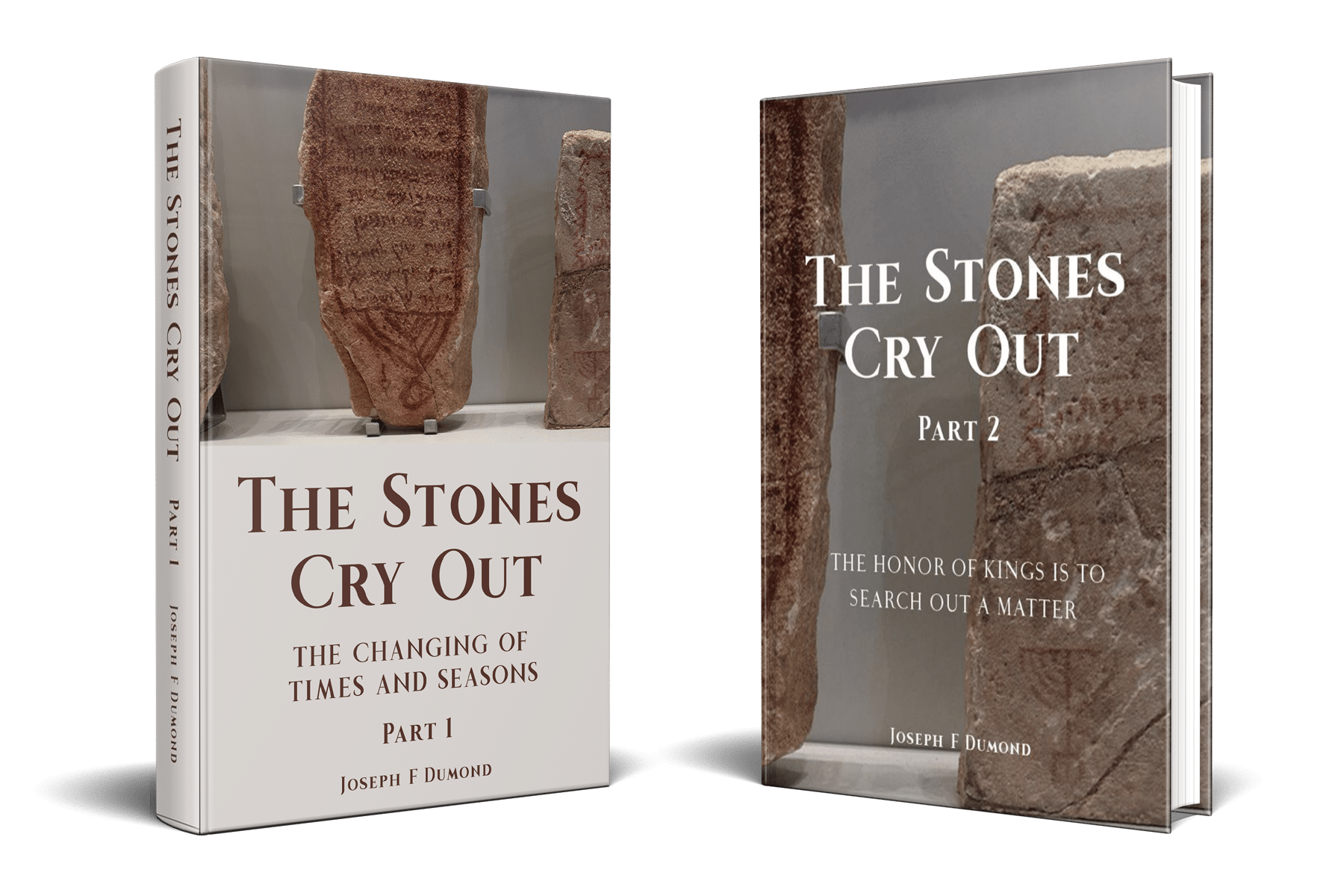
The Stones Cry Out Part 1 & Part 2
The Stones Cry Out Part 1 & Part 2
Do you want to know how to prove the Zadok Calendar, the Enoch Calendar, and the Book of Jubilee Calendar false?
Do you want to know how the calendar issue became so confusing?
I got this awesome endorsement and I want to share it here now. with you.

In The Stones Cry Out, I walk you through the history of each change and why those changes came about, starting with the Maccabean days. Yes, it all began around 164 B.C. When Yehshua was here, he was dealing with two schools of thought. The Sadducees were all but wiped out when the Temple fell in 70 C.E. This left only the Pharisees, who began to be persecuted after the failure of the Bar Kochbah Revolt in 134 C.E.
The truth began to become out of focus around 160 C.E. when Rabbi Jose wrote the Seder Olam. This work originally was written to proof Simon Bar Kochbah was the Messiah. When that did not pan out the history was later revived and then redacted as the truth into the Mishneh Torah by Rabbi Judah ha Nasi in 180 C.E. After this the Jerusalem Talmud begins to debate these issues. It was then during this time as the Jerusalem Talmudist are forced to flee and the Babylonian Talmudist continue to grow until the 6th century that Hillel came up with a solution to help them keep the Holy Days at the proper time while they were out of the land of Israel. He did this in 358 C.E. This work was then modified and adjusted over the next 800 years with additions added and other rejected. Until it was finally redacted once again in 1177 by Rambam. And with that we now have the modern Hillel calendar which includes the errors passed on during each redaction. These errors included the time of the Sabbatical and Jubilee years.
Once the Temple was destroyed in 70 C.E., the Jews recorded time by counting from the time It was destroyed. This is why the 40 tombstones of Zoar, which record this information, are crucial to understand.
When you understand why the Postponement rules were first created so that the crescent moon would not be seen in another part of the world before it was seen in Israel then you can understand how they were still trying to follow the crescent moon to begin the month. The Tombstones show us this exact thing. The tombstones also show us when the Jews changed from a crescent moon to a Conjunction moon to begin the month. They also show us when the Jews changed the year from the month of Aviv to the Tishri to begin the year.
I really want you to understand these things so you know why you do what you do as far as following a calendar to keep Yehovah’s moedim.
Get your Free copies of The Stones Cry Out Part 1 and Part 2 here https://sightedmoon.com/the-stones-cry-out-lp/
And share this information with your FB friends and Bibles Study groups. If they don’t like it, it never cost them anything.
Get your copy today. If you want a paperback copy, I have them on Amazon for the least amount they would let me post them there. Order both of them and start to understand the history of how these changes affect those who follow Yehovah and keep His Feasts.
I would like to add this recent comment to encourage you all to get this book and learn these truths. And the Book is FREE. You have no reason not to get it.
Most people assume that Hillel created the calendar in 358 C.E. They then assume that because it was a Sanhedrin, they are not allowed to change in order to obey Yehovah. The Hillel calendar has been changed many times since 358 C.E. up until 1177 C.E. Few people talk about these changes but we do in our latest Book The Stones Cry Out Part 1 which is free on our website. The Hillel calendar was changed on many occasions and many sought to make other changes during this time. They never needed a Bet Din to approve those changes. They just did them. So this excuse that we do not have the right to obey Yehovah because the Bet Din has not approved it is a crock of crap.
You have the obligation to obey Yehovah. You have the duty to prove which calendar you are to go by. You must prove it beyond all doubt. Yehshua never followed the Hillel calendar. Nor did any of the Apostles.
The reason no man can know the day or the hour is because it refers to a crescent moon to begin the 7th month. That is the day He was born on and the day He comes to judge on. At a day and hour no one can know. Using the Hillel calendar predicts Yom Teruah years in advance so every one knows when to keep it. But even in the Hillel calendar they keep two days of Yom Teruah reckoning back to the sighted moon. Also in the postponement rules developed long after Hillel, they again state that if the conjunction is at a certain time then the day begins at such and such, in order that the moon will not be seen in another part of the world before it is seen in Israel. That was rule number 2.
Everyone has to choose. You have the right to be wrong. But if you choose to be wrong then you also must live with the consequences that come with sin. And that is the death penalty for not keeping the Holy Days, these Sabbath at the proper time. It is your choice.
Just because you write in to me to justify your position does mean it is right. It just means your sounding off.
Allow me to share this endorsement of our latest book again. If you have read our books, please share your thoughts about them with us in the comments below or email me.
And yes, many observe the Equinox. There are many who are deceived, improperly educated. And this is why Joe puts out a newsletter every week, why he writes books, why the SightedMoon Zoom Shabbat service started, why he travels to places like England and the Philippines to share this message and why were are going to the NRB in February. The calendar is always a divisive issue in social circles because the details are many, that’s why there are so many books Joe has written. I’m not looking to put Joe on a pedestal here. This is not about Joe worship. But Joe has tenaciously studied out the calendar from every angle, not to prove himself right, to to seek to find and share what Yehovah is telling us about His Calendar.
In The Stones Cry Out, Joe has shared the history of all the different groups within Israel, and the beliefs they had about the scriptures and the feast days and the calendar. When you line it all up, you can see for yourself the how and why these misunderstandings and arguments about how and where and why they came about.
This is my new favourite book and I’m only 60-70 pages in. And I encourage you to read the footnotes in this one. Sometimes there’s more footnote on the page than Joe’s words.
Sombra Wilson
When I wrote Stones Cry Out, I wanted it to be one of our FREE books so everyone would have it. It is more of an encyclopedia than a book to read. It will be your quick resource book; you will have access to every question about any calendar, how it got started, and who started it. You will also learn the history of how the Mishnah was assembled, when it was assembled and why. Then, you will learn how that information was transferred into both the Jerusalem and the Babylonian Talmud until it reached its final stage in the Mishneh Torah. Along with this progression, the calendar also progressed and changed long after 358 C.E. when Rabbi Hillel first published it. But…what was before the Hillel calendar? What does the Mishnah record about those things?
The Stones Cry Out was originally going to be one book explaining all the various proofs we have discovered, demonstrating when the Sabbatical and Jubilee years are throughout history.
You can know; it is not a mystery.
As I began to write The Stones Cry Out, I quickly found myself going back, time and time again, to explain how the calendar is behind the confusion of the Sabbatical and Jubilee years. The Rabbis, as they began to write the Mishnah, incorporated wrong understandings, and those errors were written into what became known as the Talmud and then the Mishneh Torah. The expulsion from the land and subsequent persecutions in trying to send out messengers to report the barley being found or the crescent moon being seen, proved to be more and more dangerous over time. All of these things took place over 14 centuries.
Then as I was working on The Stones Cry Out, I discovered that many people were now accepting the Zadok calendar as factual. This is when we pivoted to include all the details of the various calendars that have crept back into public knowledge today and are being used to mislead new people who are just starting to learn about the calendar. All of this was directly connected to the period starting with the Hasmonaeans, up to the destruction of the Temple. Then, with the compiling of the Mishnah, the studies that led into the writing of the Jerusalem Talmud, then the Babylonian Talmud and finally the Mishneh Torah, each error that was added is compounded over time.
The Stones Cry Out, Part 1 explains the history of how each compilation of the Oral Torah incorporated errors, leading the followers thereof away from the actual Torah. In understanding these facts, it is then possible to understand more readily how the Sabbatical and Jubilee years were then mixed and later changed. By explaining all this history, I will be able to help you the reader understand the tombstones when most authorities do not. They have assumed, to their error, the Hillel calendar to have always been in use since Mount Sinai. Not understanding the history of the calendars is why most authorities dismiss the tombstones as too confusing to use. Once you understand The Stones Cry Out Part 1, Part 2 will be very easy to grasp.
Daniel 7:25 tells us he will change the appointed seasons and commandments. Many assume Constantine did this when he made Sunday the Sabbath. Few have considered the calendar’s many changes and how they relate to us today. Hidden in this proverbial swamp of confusion is the truth about the Sabbatical and Jubilee years. The Sabbatical and Jubilee years reveal the truths about the calendar that have been hidden for almost 2000 years.
We are in the very last days and Yehshua warned us that during this time:
Mat 24:10 And then many will be offended, and will betray one another, and will hate one another.
Mat 24:11 And many false prophets will rise and deceive many.
Mat 24:12 And because iniquity shall abound, the love of many will become cold.
Mat 24:13 But he who endures to the end, the same shall be kept safe.
Paul also warned Timothy about these last days, warning that some would leave the truth and begin to follow demonic teachers:
1Ti 4:1 But the Spirit expressly says that in the latter times some shall depart from the faith, giving heed to seducing spirits and teachings of demons,
Paul again warned the Thessalonians that the Great Falling away would take place in the last days. How can you fall away if you have never come to know the truth? So who is Paul talking to? Those who are called and answer that calling begin to walk this road of restoration back to Yehovah, and then at some point along that walk, they change and leave this walk following the teachings of demons to false calendar.
2Th 2:1 Now we beseech you, my brothers, with regard to the coming of our Lord Jesus Christ and our gathering together to Him,
2Th 2:2 that you should not be soon shaken in mind or troubled, neither by spirit, nor by word or letter, as through us, as if the Day of Christ is at hand.
2Th 2:3 Let not anyone deceive you by any means. For that Day shall not come unless there first comes a falling away, and the man of sin shall be revealed, the son of perdition,
2Th 2:4 who opposes and exalts himself above all that is called God, or that is worshiped, so that he sits as God in the temple of God, setting himself forth, that he is God.
We must endure until the end. We must not let ourselves become offended by personalities and leave the faith once given.
I want you all to have access to and the ability to read this book and use it as a reference. https://sightedmoon.com/the-stones-cry-out-lp/ Click on the link fill in the form and you will have access to the FREE PDF anywhere in the world. If you want a copy you can hold in your hands we have published it at Amazon for the lowest price they would allow us. Order you copy after Shabbat and begin to read it today.
Sightedmoon.com Podcasts
Sightedmoon.com Podcasts
Here is the link to all the podcast Ryan is now cranking out. https://podcasts.apple.com/us/podcast/sightedmoon-podcasts/id1208198329
Subscribe to the podcast here https://sightedmoon.blubrry.com/subscribe-to-podcast/
I encourage you all to subscribe so you can listen to it in your car or while working around the house.
Our Celtic Roots
Our Celtic Roots
A big thanks to our very first underwriter of the podcast. Joseph Dumond is an international speaker. He teaches the ancient roots of the Gaelic people at Sightedmoon.com.
You’ll hear me mention him in each episode of the podcast at the end of the show. This is not exactly advertising. It’s awareness promotion. I have no more than four more slots available every month if you, your business or your band want to be mentioned as an underwriter of the podcast.
Join Our Sabbath Meetings
Join Our Sabbath Meetings
There are many people in need of fellowship and who are sitting at home on the Sabbath with no one to talk to or debate with. I want to encourage all of you to join us on Shabbat, and to invite others to come and join us as well. If the time is not convenient then you can listen to the teaching and the midrash after on our YouTube channel.
What are we doing and why do we teach this way?
We are going to discuss both sides of an issue and then let you choose. It is the work of the Ruach (Spirit) to direct and to teach you.
The medieval commentator Rashi wrote that the Hebrew word for wrestle (avek) implies that Jacob was “tied”, for the same word is used to describe knotted fringes in a Jewish prayer shawl, the tzitzityot. Rashi says, “thus is the manner of two people who struggle to overthrow each other, that one embraces the other and knots him with his arms”.
Our intellectual wrestling has been replaced by a different kind of struggle. We are wrestling with Yehovah as we grapple with His Word. It is an intimate act, symbolizing a relationship in which Yehovah and you and I are bound together. My wrestling is a struggle to discover what Yehovah expects of us, and we are “tied” to the One who assists us in that struggle.
Today, many say Israel means “Champion of God”, or better — the “Wrestler of God”.
Our Torah sessions each Shabbat teaches you and encourages you to constantly challenge, question, argue against, as well as view alternative views and explanations of the Word. In other words, we are to “wrestle with the Word” to get to the truth. Jews worldwide believe that you need to wrestle with the Word and constantly challenge Dogma, Theology, and views or else you will never get to the Truth.
We are not like most churches where “The preacher talks and everyone listens.” We encourage everyone to participate, to question and to contribute what they know on the subject being discussed. We want you to be a champion wrestler of the Word of Yehovah. We want you to wear the title of Israel, knowing that you not only know but are capable of explaining why you know the Torah to be true with logic and facts.
We have a few rules though. Let others talk and listen. There is no discussion about UFO’s, Nephilim, Vaccines or conspiracy-type subjects. We have people from around the world with different world views. Not everyone cares who is the President of any particular country. Treat each other with respect as fellow wrestlers of the word. Some of our subjects are hard to understand and require you to be mature and if you do not know, then listen to gain knowledge and understanding and hopefully wisdom. The very things you are commanded to ask Yehovah for and He gives to those who ask.
Jas 1:5 But if any of you lacks wisdom, let him ask of God, who gives to all liberally and with no reproach, and it shall be given to him.
We hope you can invite those who want to keep Torah to come and join us by hitting the link below. It is almost like a Torah teaching fellowship talk show with people from around the world taking part and sharing their insights and understandings.
We start off with some music and then some prayers and it’s as though you were sitting around the kitchen back in Newfoundland having a cup of coffee and all of us enjoying each other’s company. I hope you will grace us with your company someday.
Sabbath services begin at 12:30 PM EDT where we will be doing prayers, songs and teaching from this hour.
Shabbat midrash will begin at about 1:15 pm Eastern.
We look forward to you joining our family and getting to know us as we get to know you.
Joseph Dumond is inviting you to a scheduled Zoom meeting.
Topic: Joseph Dumond’s Personal Meeting Room
Join Zoom Meeting
https://us02web.zoom.us/j/3505855877
Meeting ID: 350 585 5877
One tap mobile
+13017158592,,3505855877# US (Germantown)
+13126266799,,3505855877# US (Chicago)
Dial by your location
+1 301 715 8592 US (Germantown)
+1 312 626 6799 US (Chicago)
+1 346 248 7799 US (Houston)
+1 669 900 6833 US (San Jose)
+1 929 436 2866 US (New York)
+1 253 215 8782 US (Tacoma)
Meeting ID: 350 585 5877
Find your local number: https://us02web.zoom.us/u/kctjNqPYv0
Torah Portion
Torah Portions
We read through the entire Torah along with the Prophets and the New Testament once over the course of 3 1/2 years. Or according to the Sabbatical Cycle which means we read it all twice over a 7-year period. This allows us to cover more in-depth rather than being rushed to cover as much as is covered on an annual basis. We allow all to comment and take part in the discussions.
Septennial Torah Portion
If you go to Torah Portion in our archived section, you can then go to the 1st year, which is the 1st year of the Sabbatical Cycle, the one we are in now, as we state at the top of every Newsletter. There, you can scroll down to the proper date and see that this Shabbat, we could very well be midrashing about:
Leviticus 26
Ezekiel 33-36
2 Peter 2-3
We are in the 1st Sabbatical Cycle in 2024-2025. We go through the entire Bible twice in a 7 year cycle. This means we cover the entire Bible once every 3 1/2 years. It gives us more time to debate and discuss each portion we read.
If you missed last week’s exciting discoveries as we studied that section, you can go and watch past Shabbats on our media section.
Counting the Omer
Counting the Omer
Someone is surely going to ask you or say it publicly, Where are we commanded to count the omer?
When you are asked this, then you will take them to Lev 23:15
“You shall count seven full weeks from the day after the Sabbath, from the day that you brought the sheaf of the wave offering. You shall count fifty days to the day after the seventh Sabbath. Then you shall present a grain offering of new grain to the Lord.
Here you are told that there are different methods of counting the 50 days. The first was to count 7 full weeks, and the second was to count out the full 50 days.
Again in Deut 16:9 you are told to again COUNT. It is a commandment to count the days and/or weeks. And you start from the time when the sickle is first put to the barley grain, which was done after sunset after the weekly Saturday Sabbath. This counting began with Wave Sheaf Day.
“You shall count seven weeks. Begin to count the seven weeks from the time the sickle is first put to the standing grain.
According to some the commandment ‘and you shall count for yourselves fifty days’ means to simply observe the 50th day as Shavuot while others actually declare out loud the number on each of the fifty days. A medieval Karaite Jewish practice combines two different methods of declaring the daily count. The first method is the counting of seven weeks. Each day, the number of the week and the number of the day in the week are declared. So for example, the first day is ‘first day of the first week’. The second counting method used is an overall number for each day. In this method Day one is ‘the first day’ and Day 25 is ‘the twenty-fifth day’. These two methods are used to satisfy the commandment to count seven weeks (Deuteronomy 16:9) as well as the commandment to count fifty days (Leviticus 23:16).
During each one of these days of counting the Omer to Pentecost, Jewish tradition has developed around reading the Psalms on certain days. I find this to be very beneficial. It is customary that following the “Counting of the Omer,” one recites Psalm 67, for according to tradition, that Psalm has forty-nine words, which corresponds perfectly to the forty-nine days of the “Counting of the Omer.”
And as you meditate on and do these readings, which includes the Counting of the Omer command, keep in mind what this symbolizes. It is the counting of the Sabbatical and Jubilee Years and where we are in that cycle. We are in the twenty-fourth year in 2019, which corresponds to the twenty-fourth day of the “Counting of the Omer.”
Wave Sheaf day is so exciting to understand and so amazing to believe because it forebodes the time when we will be changed and raised up. If you want to call this the Rapture then I can accept that if you are obeying Yehovah. If you’re not obeying Yehovah and you think the laws are done away with, then you will not be in this resurrection or rapture. You will be told to be gone, you workers of lawlessness; I never knew you.
We will speak more about this as Pentecost draws closer. The Feast of Oaths, the 8th day and the Jubilee year.
When you count from the Wave offering of the barley to Pentecost, it is called the counting of the Omer. You are to count each day up to the 50th day. This Sabbath, March 13, 2021, is day fourteen. We are to count the Omer.
As I said, this is the most special time of year for me, and in years past, I couldn’t put my finger on exactly why, other than it had something to do with Yehshua’s resurrection and waiting in anticipation for Shavuot. While I cannot put into words how my understanding of this has grown, all I can say is that “it clicked!” and “now I get it!”, at least more than before. Understanding follows obedience. So OBEY and learn. You learn by doing as we are told in James.
James 2:18 But someone will say, “You have faith and I have works.” Show me your faith apart from your works, and I will show you my faith by my works. You believe that God is one; you do well. Even the demons believe—and shudder! Do you want to be shown, you foolish person, that faith apart from works is useless? Was not Abraham our father justified by works when he offered up his son Isaac on the altar? You see that faith was active along with his works, and faith was completed by his works; and the Scripture was fulfilled that says, “Abraham believed God, and it was counted to him as righteousness”—and he was called a friend of God. You see that a person is justified by works and not by faith alone. And in the same way was not also Rahab the prostitute justified by works when she received the messengers and sent them out by another way? For as the body apart from the spirit is dead, so also faith apart from works is dead.
All 50 days and each of the Psalms can be found at the back of our book, Remembering the Sabbatical year of 2016
Counting the Omer Day 21 to Day 28
Today is the seventh day of the third week of seven weeks. Today is the twenty-first day of the counting of fifty days from the day of the waving of the Omer on the morrow after the Sabbath. Today is Sabbath, the third Sabbath of seven Sabbaths. Today completes the third week of seven weeks.
Psa 67:1 Elohim does favour us and bless us, Cause His face to shine upon us. Selah.
Psa 67:2 For Your way to be known on earth, Your deliverance among all nations.
Psa 67:3 Let the peoples praise You, O Elohim, Let all the peoples praise You.
Psa 67:4 Let the nations be glad and sing for joy! For You judge the peoples uprightly, And lead the nations on earth. Selah.
Psa 67:5 Let the peoples praise You, O Elohim; Let all the peoples praise You.
Psa 67:6 The earth shall give her increase; Elohim, our own Elohim, blesses us!
Psa 67:7 Elohim blesses us! And all the ends of the earth fear Him!
Day Twenty-One | Dedication To the Law of Yehovah | Psalm 119:161-168
161 Rulers have persecuted me without a cause, but at Your Word my heart stood in awe. (Psalm )119:161
162 I rejoice at Your Word as one who finds great treasure. (Psalm 119:162)
163 I have hated falsehood and loathe it, Your Torah I have loved. (Psalm 119:163)
164 I have praised You seven times a day, because of Your righteous right-rulings. (Psalm )119:164
165 Great peace have those loving Your Torah, and for them there is no stumbling-block. (Psalm )119:165
166 Yehovah I have waited for Your deliverance, and I have done Your commands. (Psalm 119:166)
167 My being has guarded Your witnesses, and I love them exceedingly. (Psalm 119:167)
168 I have guarded Your orders and Your witnesses, for all my ways are before You. (Psalm 119:168)
WEEK FOUR | 4
Today is the first day of the fourth week of seven weeks. Today is the twenty-second day of the counting of fifty days from the day of the waving of the Omer on the morrow after the Sabbath.
Psa 67:1 Elohim does favour us and bless us, Cause His face to shine upon us. Selah.
Psa 67:2 For Your way to be known on earth, Your deliverance among all nations.
Psa 67:3 Let the peoples praise You, O Elohim, Let all the peoples praise You.
Psa 67:4 Let the nations be glad and sing for joy! For You judge the peoples uprightly, And lead the nations on earth. Selah.
Psa 67:5 Let the peoples praise You, O Elohim; Let all the peoples praise You.
Psa 67:6 The earth shall give her increase; Elohim, our own Elohim, blesses us!
Psa 67:7 Elohim blesses us! And all the ends of the earth fear Him!
Day Twenty-Two | A Prayer For Help | Psalm 119:169-176
169 My cry comes before You, O Yehovah. Make me understand according to Your Word. (Psalm )119:169
170 Let my prayer come before You. Deliver me according to Your Word. (Psalm 119:170)
171 My lips pour forth praise, for You teach me Your laws. (Psalm 119:171)
172 My tongue sings of Your Word, for all Your commands are righteousness. (Psalm 119:172)
173 Your hand is a help to me, for I have chosen Your orders. (Psalm 119:173)
173 Your hand is a help to me, for I have chosen Your orders. (Psalm 119:173)
173 Your hand is a help to me, for I have chosen Your orders. (Psalm 119:173)
174 I have longed for Your deliverance, O Yehovah, and Your Torah is my delight. (Psalm 119:174)
175 My being lives, and it praises You; and Your right-rulings help me. (Psalm 119:175)
176 I have strayed like a lost sheep. Seek Your servant, for I have not forgotten Your commands. (Psalm 119:176)
Today is the second day of the fourth week of seven weeks. Today is the twenty-third day of the counting of fifty days from the day of the waving of the Omer on the morrow after the Sabbath.
Psa 67:1 Elohim does favour us and bless us, Cause His face to shine upon us. Selah.
Psa 67:2 For Your way to be known on earth, Your deliverance among all nations.
Psa 67:3 Let the peoples praise You, O Elohim, Let all the peoples praise You.
Psa 67:4 Let the nations be glad and sing for joy! For You judge the peoples uprightly, And lead the nations on earth. Selah.
Psa 67:5 Let the peoples praise You, O Elohim; Let all the peoples praise You.
Psa 67:6 The earth shall give her increase; Elohim, our own Elohim, blesses us!
Psa 67:7 Elohim blesses us! And all the ends of the earth fear Him!
Day Twenty-Three | True Happiness | Psalm 1:1-6
1 Blessed is the man who shall not walk in the counsel of the wrong, and shall not stand in the path of sinners, and shall not sit in the seat of scoffers. (Psalm 1:1)
2 But his delight is in the Torah of Yehovah, and he meditates in His Torah day and night. (Psalm 1:2)
3 For he shall be as a tree planted by the rivers of water, that yields its fruit in its season, and whose leaf does not wither, and whatever he does prospers. (Psalm 1:3)
4 The wrong are not so, but are like the chaff which the wind blows away. (Psalm 1:4)
5 Therefore, the wrong shall not rise in the judgment, nor sinners in the congregation of the righteous. (Psalm 1:5)
6 For Yehovah knows the way of the righteous, but the way of the wrong comes to naught. (Psalm 1:6)
Today is the third day of the fourth week of seven weeks. Today is the twenty-fourth day of the counting of fifty days from the day of the waving of the Omer on the morrow after the Sabbath. This represents the 24th year of the Counting of the Jubilee cycle. 2019
Psa 67:1 Elohim does favour us and bless us, Cause His face to shine upon us. Selah.
Psa 67:2 For Your way to be known on earth, Your deliverance among all nations.
Psa 67:3 Let the peoples praise You, O Elohim, Let all the peoples praise You.
Psa 67:4 Let the nations be glad and sing for joy! For You judge the peoples uprightly, And lead the nations on earth. Selah.
Psa 67:5 Let the peoples praise You, O Elohim; Let all the peoples praise You.
Psa 67:6 The earth shall give her increase; Elohim, our own Elohim, blesses us!
Psa 67:7 Elohim blesses us! And all the ends of the earth fear Him!
Day Twenty-Four | Confidence In Yehovah | Psalm 11:1-7
Psa 11:1 In Yehovah I have taken refuge; Why do you say to me, “Flee to your mountain like a bird”?
Psa 11:2 For look! The wrong bend a bow, They set their arrow on the string, To shoot in darkness at the upright in heart.
Psa 11:3 When the foundations are destroyed, What shall the righteous do?
Psa 11:4 Yehovah is in His set-apart H??al, The throne of ???? is in the heavens. His eyes see, His eyelids examine the sons of men.
Psa 11:5 Yehovah tries the righteous, But His being shall hate the wrong And the one who loves violence.
Psa 11:6 Upon the wrong He rains snares, Fire and sulphur and a scorching wind Are the portion of their cup.
Psa 11:7 For Yehovah is righteous, He has loved righteousness; The upright shall see His face.
Today is the fourth day of the fourth week of seven weeks. Today is the twenty-fifth day of the counting of fifty days from the day of the waving of the Omer on the morrow after the Sabbath.
Psa 67:1 Elohim does favour us and bless us, Cause His face to shine upon us. Selah.
Psa 67:2 For Your way to be known on earth, Your deliverance among all nations.
Psa 67:3 Let the peoples praise You, O Elohim, Let all the peoples praise You.
Psa 67:4 Let the nations be glad and sing for joy! For You judge the peoples uprightly, And lead the nations on earth. Selah.
Psa 67:5 Let the peoples praise You, O Elohim; Let all the peoples praise You.
Psa 67:6 The earth shall give her increase; Elohim, our own Elohim, blesses us!
Psa 67:7 Elohim blesses us! And all the ends of the earth fear Him!
Day Twenty-Five | What Yehovah Requires | Psalm 15:1-5
1 Yehovah who does sojourn in Your Tent? Who does dwell in Your set-apart mountain? (Psalm )15:1
2 He who walks blamelessly, and does righteousness, and speaks the truth in his heart. (Psalm )15:2
3 He has not slandered with his tongue, he has not done evil to his neighbor, nor lifted up a reproach against his friend. (Psalm 15:3)
4 In whose eyes a reprobate one is despised, but he esteems those who fear Yehovah, he who swears to his own hurt and does not change. (Psalm 15:4)
5 He has not put out his silver at interest, and has not taken a bribe against the innocent. He who does these is never moved. (Psalm 15:5)
Today is the fifth day of the fourth week of seven weeks. Today is the twenty-sixth day of the counting of fifty days from the day of the waving of the Omer on the morrow after the Sabbath.
Psa 67:1 Elohim does favour us and bless us, Cause His face to shine upon us. Selah.
Psa 67:2 For Your way to be known on earth, Your deliverance among all nations.
Psa 67:3 Let the peoples praise You, O Elohim, Let all the peoples praise You.
Psa 67:4 Let the nations be glad and sing for joy! For You judge the peoples uprightly, And lead the nations on earth. Selah.
Psa 67:5 Let the peoples praise You, O Elohim; Let all the peoples praise You.
Psa 67:6 The earth shall give her increase; Elohim, our own Elohim, blesses us!
Psa 67:7 Elohim blesses us! And all the ends of the earth fear Him!
Day Twenty-Six | The Creation of Yehovah | Psalm 19:1-7
1 The heavens are proclaiming the esteem of El; and the expanse is declaring the work of His hand. (Psalm 19:1)
2 Day to day pours forth speech, and night to night reveals knowledge. (Psalm 19:2)
3 There is no speech, and there are no words. Their voice is not heard. (Psalm 19:3)
4 Their line has gone out through all the earth, and their words to the end of the world. In them He set up a tent for the sun. (Psalm 19:4)
5 And it is like a bridegroom coming out of his room. It rejoices like a strong man to run the path. (Psalm 19:5)
6 Its rising is from one end of the heavens, and its circuit to the other end. And naught is hidden from its heat. (Psalm 19:6)
7 The Torah of Yehovah is perfect, bringing back the being. The witness of Yehovah is trustworthy, making wise the simple. (Psalm 19:7)
Today is the sixth day of the fourth week of seven weeks. Today is the twenty-seventh day of the counting of fifty days from the day of the waving of the Omer on the morrow after the Sabbath.
Psa 67:1 Elohim does favour us and bless us, Cause His face to shine upon us. Selah.
Psa 67:2 For Your way to be known on earth, Your deliverance among all nations.
Psa 67:3 Let the peoples praise You, O Elohim, Let all the peoples praise You.
Psa 67:4 Let the nations be glad and sing for joy! For You judge the peoples uprightly, And lead the nations on earth. Selah.
Psa 67:5 Let the peoples praise You, O Elohim; Let all the peoples praise You.
Psa 67:6 The earth shall give her increase; Elohim, our own Elohim, blesses us!
Psa 67:7 Elohim blesses us! And all the ends of the earth fear Him!
Day Twenty-Seven | A Prayer For Guidance | Psalm 25:4-10
4 Show me Your ways, O Yehovah. Teach me Your paths. (Psalm 25:4)
5 Lead me in Your truth and teach me, for You are the Elohim of my deliverance. On You I wait all the day. (Psalm 25:5)
6 Remember, O Yehovah, Your compassion and Your kindnesses, for they are from everlasting. (Psalm 25:6)
7 Do not remember the sins of my youth, and my transgressions. According to Your kindness remember me, for Your goodness’ sake, O Yehovah. (Psalm 25:7)
8 Good and straight is Yehovah; therefore, He teaches sinners in the way. (Psalm 25:8)
9 He guides the meek ones in right-ruling, and He teaches the meek ones His way. (Psalm 25:9)
10 All the paths of Yehovah are kindness and truth, to those who guard His covenant and His witnesses. (Psalm 25:10)
The Watchmen Are Asleep!
What is Aviv Barley?
What is Aviv Barley?
Aviv Barley in the Biblical Calendar
Biblical Leap Years
The Biblical year begins with the first New Moon after the barley in Israel reaches the stage in its ripeness called Aviv. The period between one year and the next is either 12 or 13 lunar months. Because of this, it is important to check the state of the Barley crops at the end of the 12th month. If the barley is Aviv at this time, then the following New Moon is Hodesh Ha-Aviv (“New Moon of the Aviv”). If the barley is still immature, we must wait another month and then check the barley again at the end of the 13th month.
By convention, a 12-month year is referred to as a Regular Year while a 13th month year is referred to as a Leap Year. This should not be confused with Leap Years in the Gregorian (Christian) Calendar, which involve the “intercalation” (addition) of a single day (Feb. 29). In contrast, the Biblical Leap Year involves the intercalation of an entire lunar month (“Thirteenth Month”, also called “Adar Bet”). In general, it can only be determined whether a year is a Leap Year a few days before the end of the 12th Month.
Where is Aviv Mentioned in the Hebrew Bible?
The story of the Exodus relates “This day you are going out in the the month of the Aviv.” (Ex 13:4).
To commemorate that we left Egypt in the month of the Aviv, we are instructed to bring the Passover sacrifice and celebrate the Feast of Unleavened Bread (Chag HaMatzot) at this time of year. In Dt 16:1 we are commanded:
“Keep the month of the Aviv and make the Passover (sacrifice) to Yehovah your God at night, because in the month of the Aviv, Yehovah your God took you out of Egypt”.
Similarly, we are commanded in Ex 23:15,
“You will keep the Feast of Unleavened Bread; seven days you will eat unleavened bread, as I have commanded you, at the time of the month of the Aviv, because in it you went out of Egypt.”
The same is commanded in Ex 34:18,
“You will keep the Feast of Unleavened Bread; seven days you will eat unleavened bread, as have I commanded you, at the time of the month of the Aviv, because in the month of the Aviv you went out of Egypt.”
What is Aviv?
Aviv indicates a stage in the development of the barley crops. This is clear from Ex 9:31-32 which describes the devastation caused by the plague of hail:
“And the flax and the barley were smitten, because the barley was Aviv and the flax was Giv’ol. And the wheat and the spelt were not smitten because they were dark (Afilot).”
The above passage relates that the barley crops were destroyed by the hail while the wheat and spelt were not damaged. To understand the reason for this we must look at how grain develops. When grains are early in their development they are flexible and have a dark green color. As they become ripe they take on a light yellowish hue and become more brittle. The reason that the barley was destroyed and the wheat was not is that the barley had reached the stage in its development called Aviv and as a result had become brittle enough to be damaged by the hail. In contrast, the wheat and spelt were still early enough in their development, at a stage when they were flexible and not susceptible to being damaged by hail. The description of the wheat and spelt as “dark” (Afilot) indicates that they were still in the stage when they were deep green and had not yet begun to lighten into the light yellowish hue which characterizes ripe grains. In contrast, the barley had reached the stage of Aviv at which time it was no longer “dark” and at this point it probably had begun to develop golden streaks.
Parched Aviv
We know from several passages that barley which is in the state of Aviv has not completely ripened, but has ripened enough so that its seeds can be eaten parched in fire. Parched barley was a commonly eaten food in ancient Israel and is mentioned in numerous passages in the Hebrew Bible as either “Aviv parched (Kalui) in fire” (Lev 2,14) or in the abbreviated form “parched (Kalui/ Kali)” (Lev 23:14; Jos 5:11; 1Sam 17:17; 1 Samuel 25:18; 2 Samuel 17:28; Ruth 2:14).
While still early in its development, barley has not yet produced large enough and firm enough seeds to produce food through parching. This early in its development, when the “head” has just come out of the shaft, the seeds are not substantial enough to produce any food. At a later stage, the seeds have grown in size and have filled with liquid. At this point the seeds will shrivel up when parched and will only produce empty skins. Over time the liquid is replaced with dry material and when enough dry material has amassed the seeds will be able to yield “barley parched in fire”.
Aviv and the Harvest
The month of the Aviv is the month which commences after the barley has reached the stage of Aviv. 2-3 weeks after the beginning of the month the barley has moved beyond the stage of Aviv and is ready to be brought as the “wave-sheaf offering” (Hanafat HaOmer). The “wave-sheaf offering” is a sacrifice brought from the first stalks cut in the harvest and is brought on the Sunday which falls out during Passover (Chag HaMatzot). This is described in Lev 23:10-11,
“When you come to the land which I give you, and harvest its harvest, you will bring the sheaf of the beginning of your harvest to the priest. And he will wave the sheaf before Yehovah so you will be accepted; on the morrow after the Sabbath the priest will wave it.”
From this it is clear that the barley, which was Aviv at the beginning of the month, has become harvest-ready 15-21 days later (i.e by the Sunday during Passover). Therefore, the month of the Aviv can not begin unless the barley has reached a stage where it will be harvest-ready 2-3 weeks later.
That the barley must be harvest-ready 2-3 weeks into the month of the Aviv is also clear from Dt 16:9 which states:
“From when the sickle commences on the standing grain you will begin to count seven weeks.”
From Lev 23:15 we know that the seven weeks between Passover (Chag Hamatzot) and Pentecost (Shavuot) begin on the day when the wave-sheaf offering is brought (i.e. the Sunday which falls out during Passover):
“And you shall count from the morrow after the Sabbath, from the day you bring the sheaf of waving; they will be seven complete Sabbaths.”
Therefore, the “sickle commences on the standing grain” on the Sunday during Passover, i.e. 2-3 weeks after the beginning of the month of the Aviv. If the barley is not developed enough so that it will be ready for the sickle 2-3 weeks later, then the month of the Aviv can not begin and we must wait till the following month.
It should be noted that not all the barley ripens in the Land of Israel at the same time. The wave-sheaf offering is a national sacrifice brought from the first fields to become harvest-ready. However, the first-fruit offerings brought by individual farmers can vary in ripeness anywhere from “Aviv parched in fire” to fully ripe grain which may be brought “crushed” or “coarsely ground”. This is what is meant in Lev 2:14,
“And when you bring a first-fruit offering to Yehovah; you shall bring your first-fruit offering as Aviv parched in fire or crushed Carmel” (Carmel is grain which has hardened beyond Aviv to the point where it can be “crushed” or “coarsely ground”).
All of the above passages have been translated directly from the Hebrew and it is worth noting that the King James translators seem to have only understood the various Hebrew agricultural terms very poorly. In Lev 2:14 they translated Carmel as “full ears” and “Aviv” as “green ears” whereas in Lev 23:14 they translated Carmel as “green ears”!
In summation, barley which is in the state of Aviv has 3 characteristics:
- It is brittle enough to be destroyed by hail and has begun to lighten in color (it is not “dark”).
- The seeds have produced enough dry material so it can be eaten parched.
- It has developed enough so that it will be harvest-ready 2-3 weeks later.

Yoel Halevi Report March 22, 2026

Yoel Halevi
An hour ago Sunday March 22, 2026 10:22 Eastern
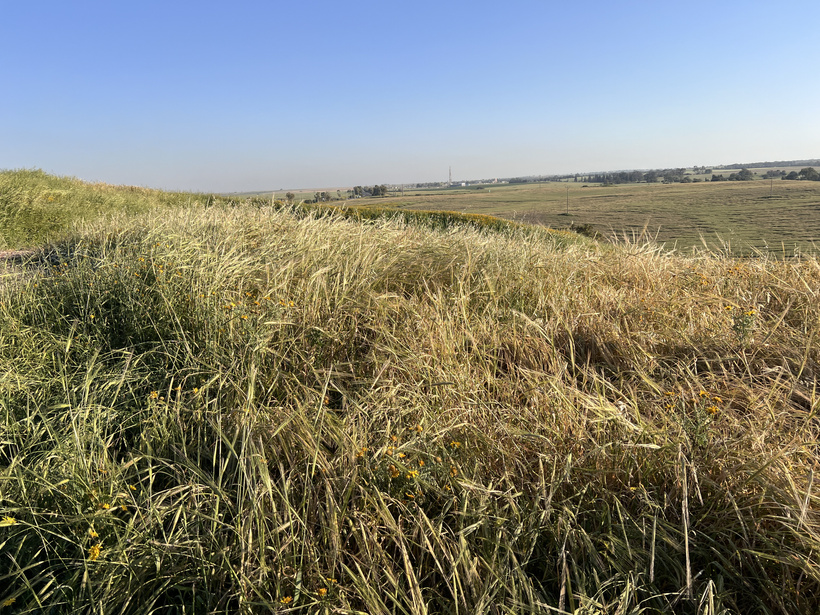
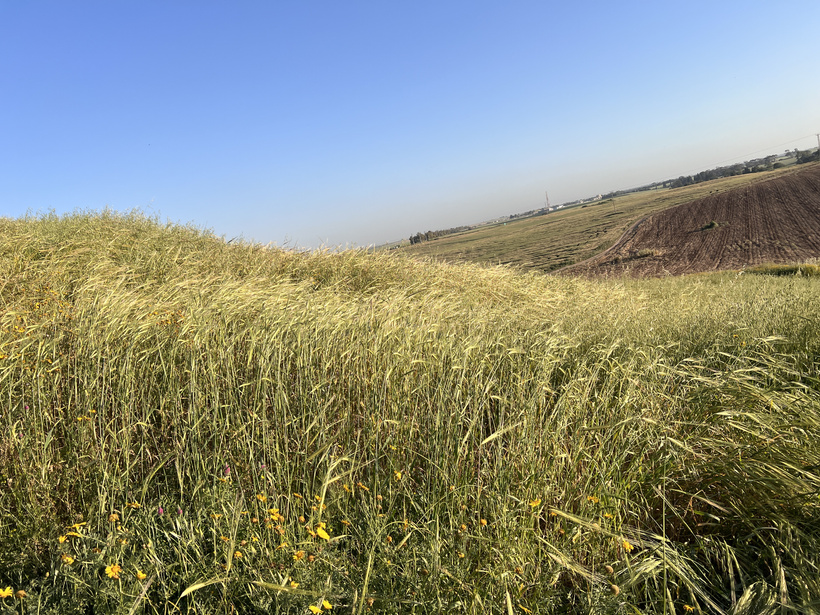
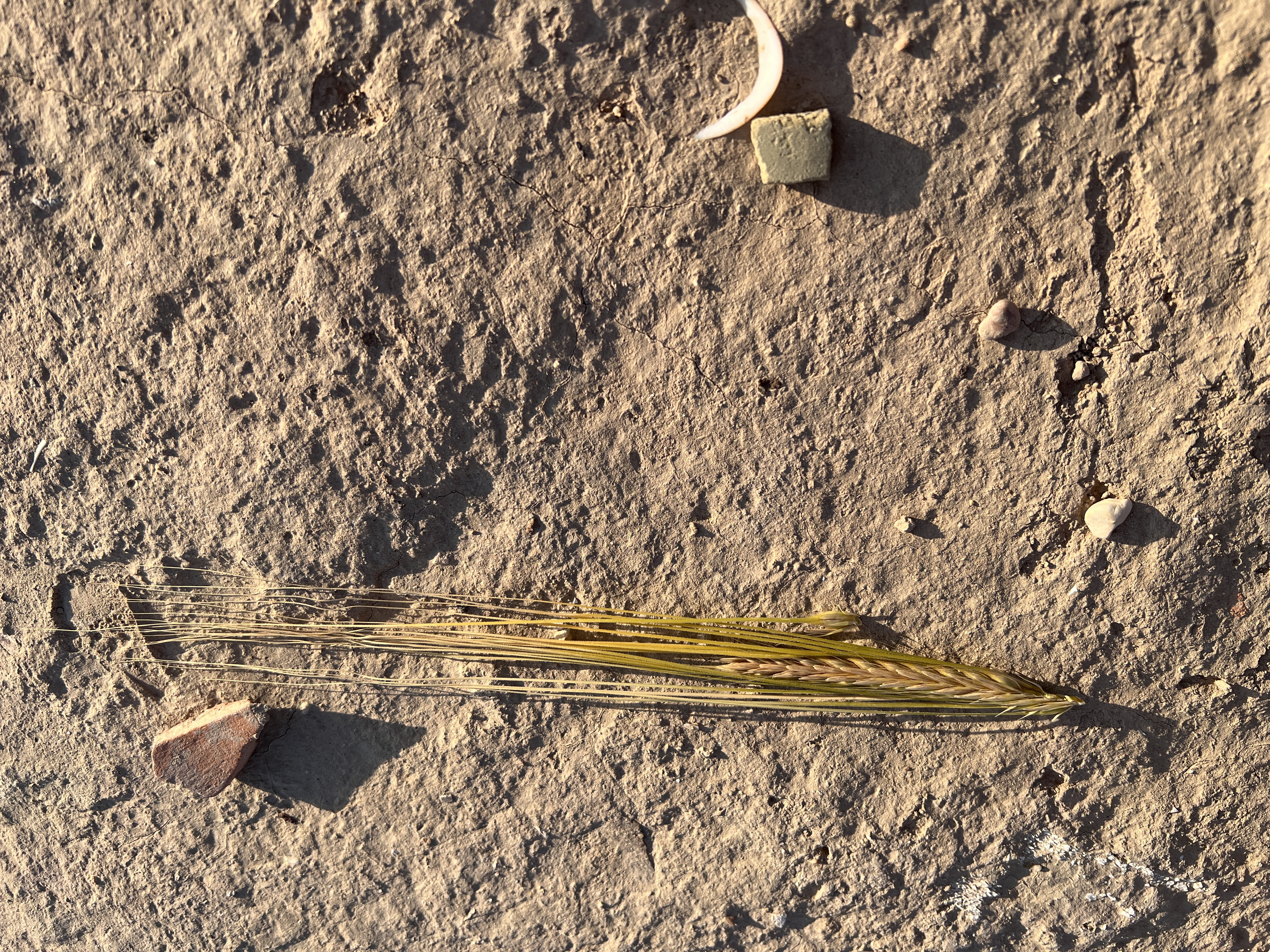
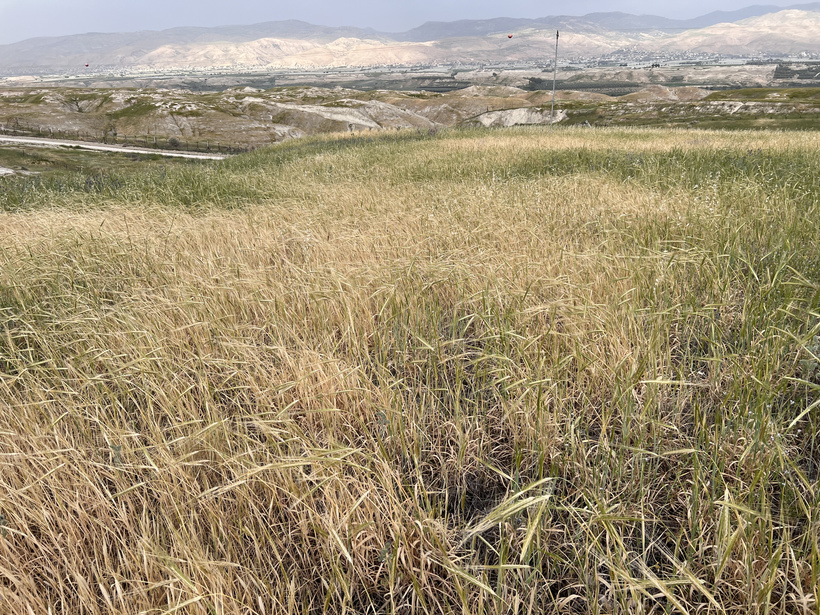
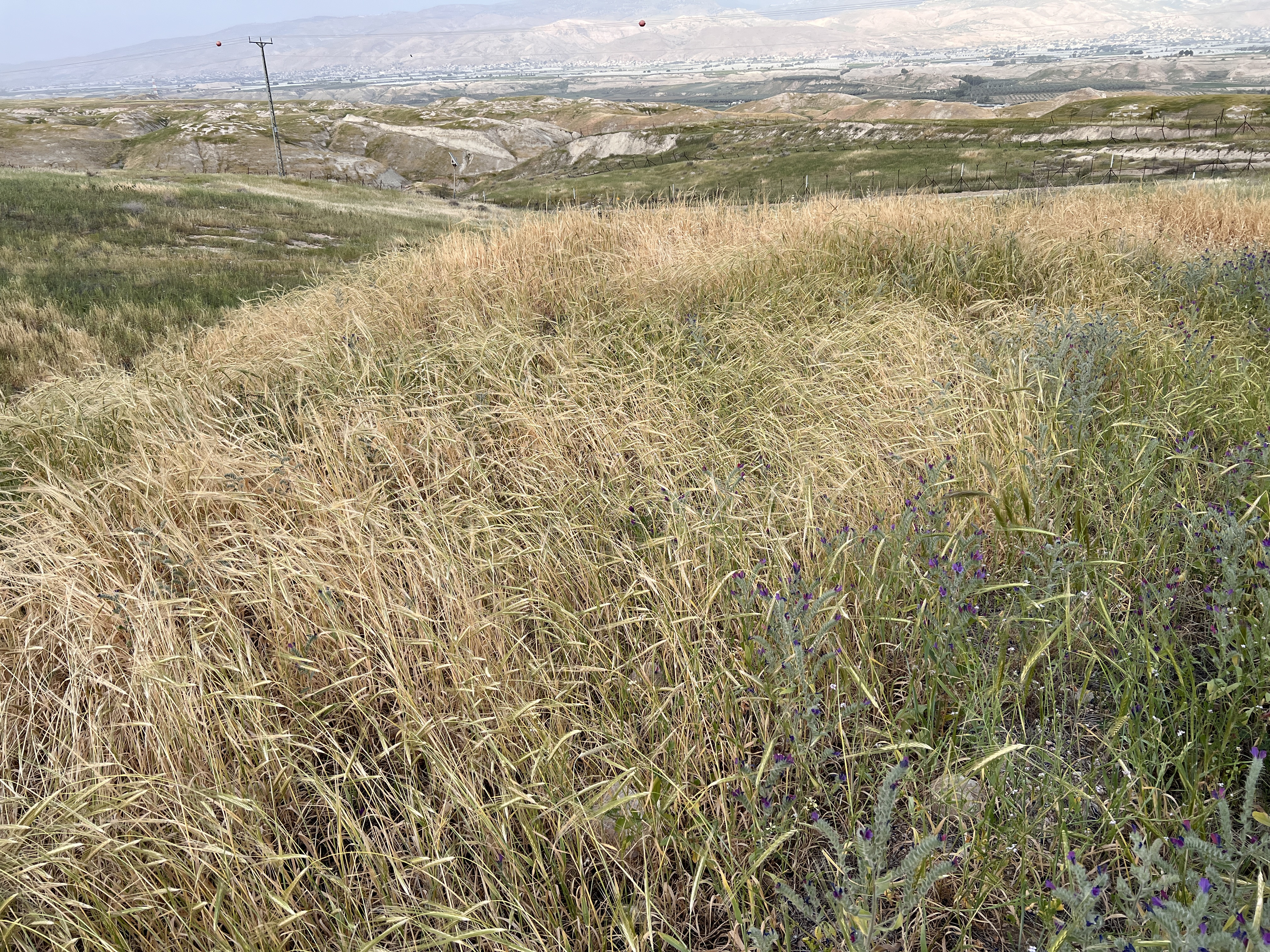
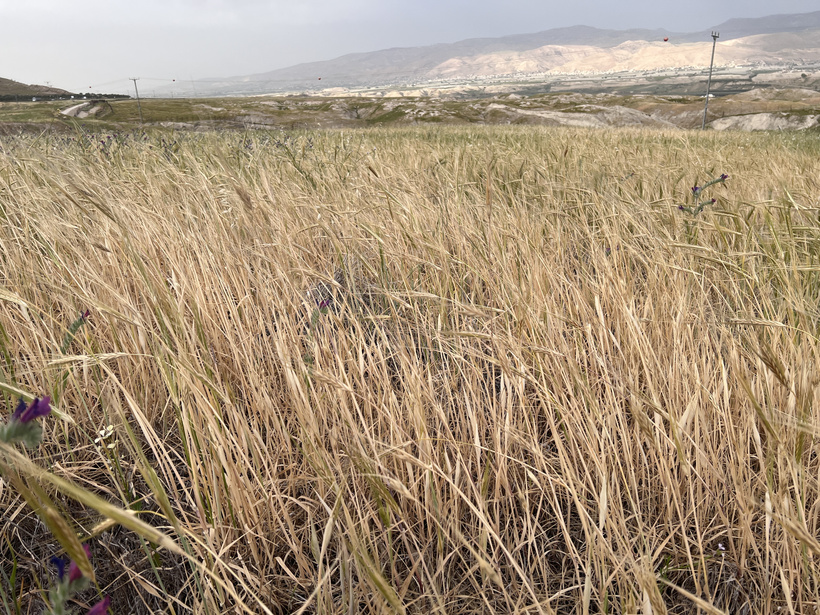
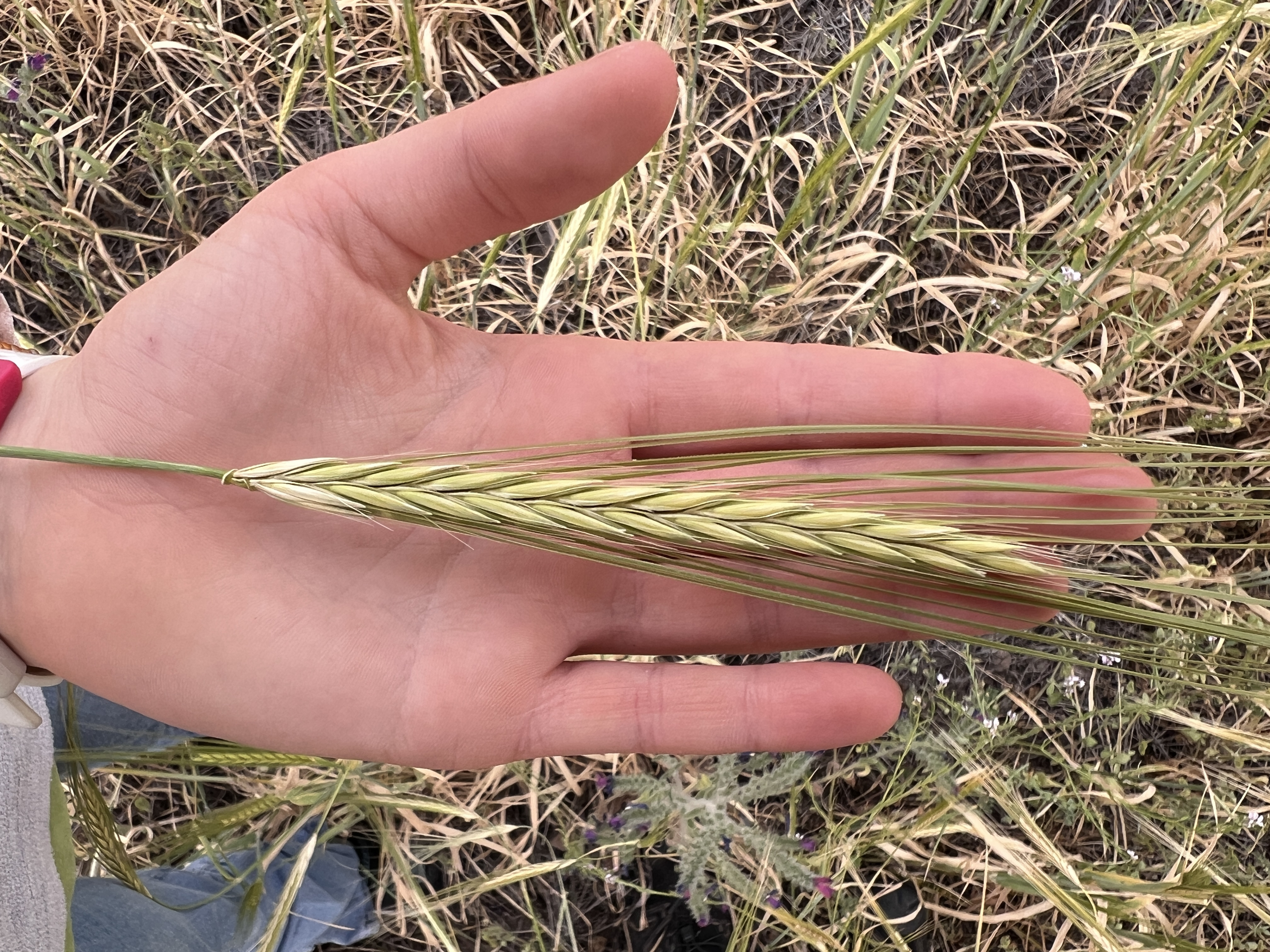
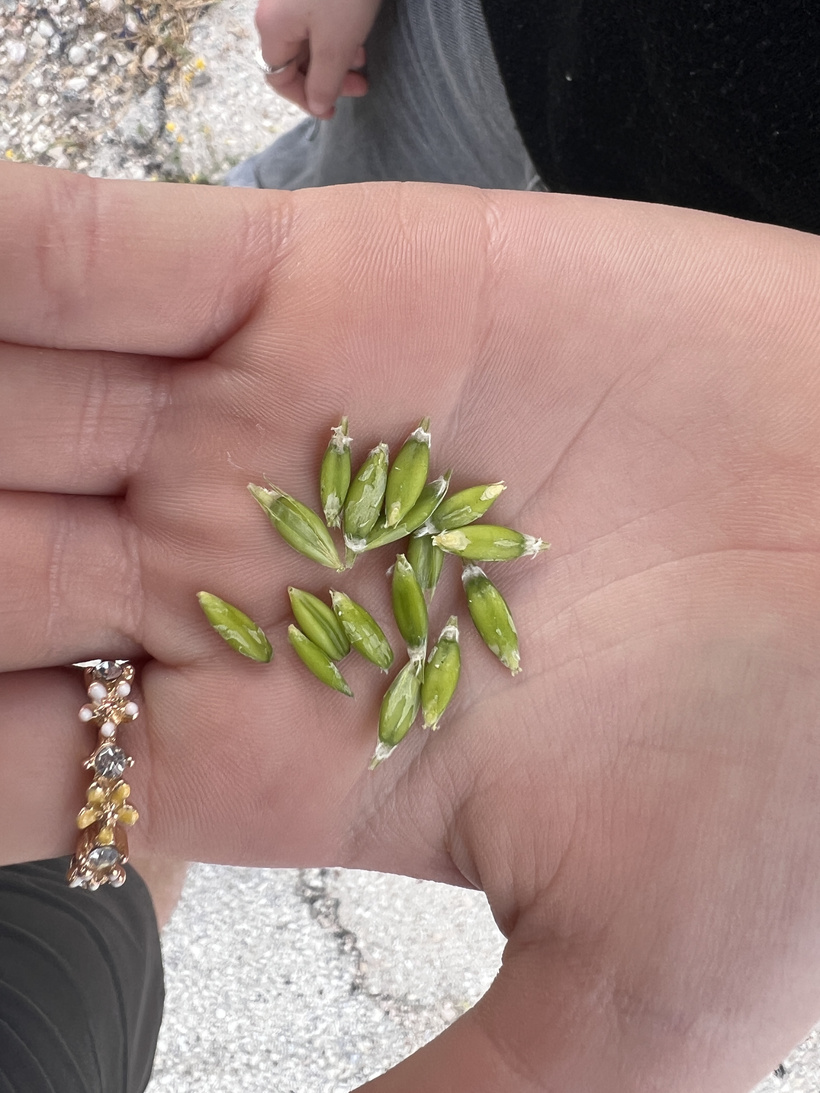
The following report provides a summary of barley development observations in Israel conducted on March 17 and 18, 2026 (Adar 28–29, 5786). The inspections focused primarily on wild barley (Hordeum spontaneum) to determine the progression toward the Aviv stage.
Overview of Growth Stages
The observations utilize specific developmental markers to categorize the readiness of the grain:
- Flowering/Milk/Soft Dough: Early stages of development following heading.
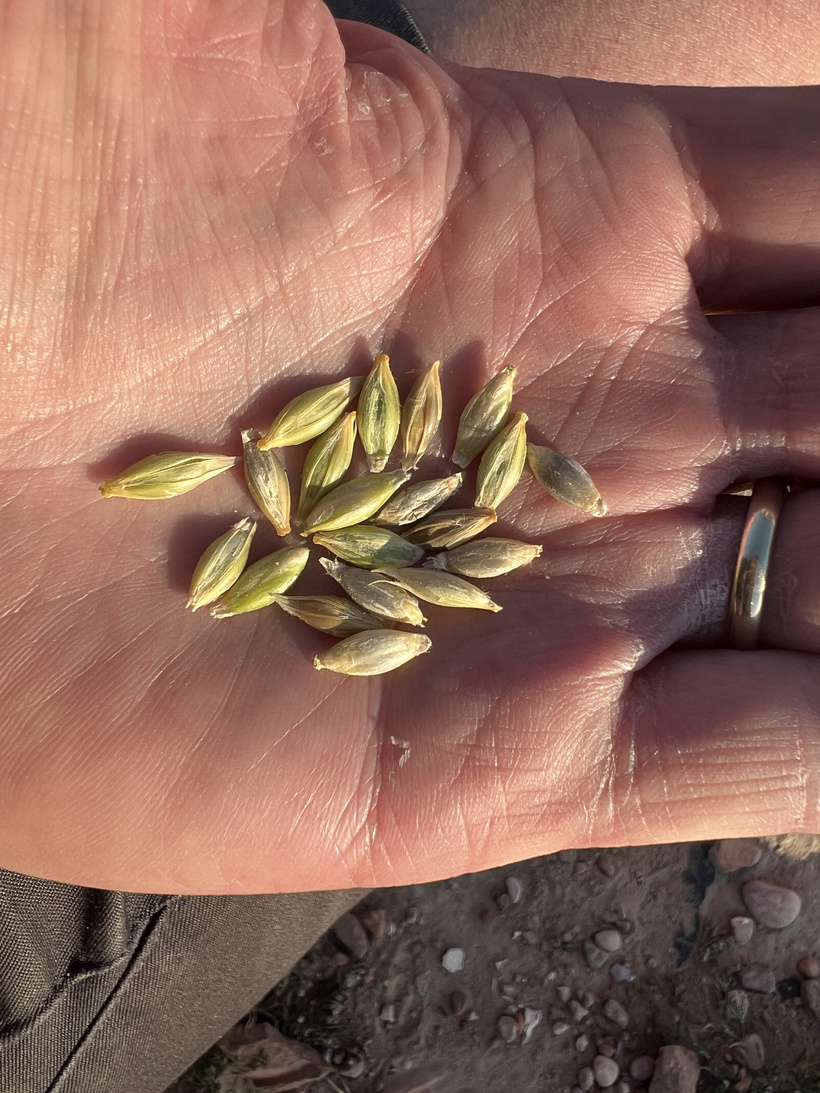
- Aviv Stage (אָבִיב): The first edible stage for humans; kernels are filled with starch and firm enough to be parched in fire.
- Harvest Ready: Kernels are hard and cannot be divided with a thumbnail.
- Shattered: The final stage where heads dry and seeds fall to the ground (typical of wild barley).
Regional Observations
1. Northern Negev / Gaza Perimeter (March 17)
The region experienced 105% of its average annual precipitation, though recent weeks were cold and rainy.
- General Area: Most wild barley along Highways 3 and 4 was in the flowering stage. Agricultural wheat was observed in flowering and soft dough stages.
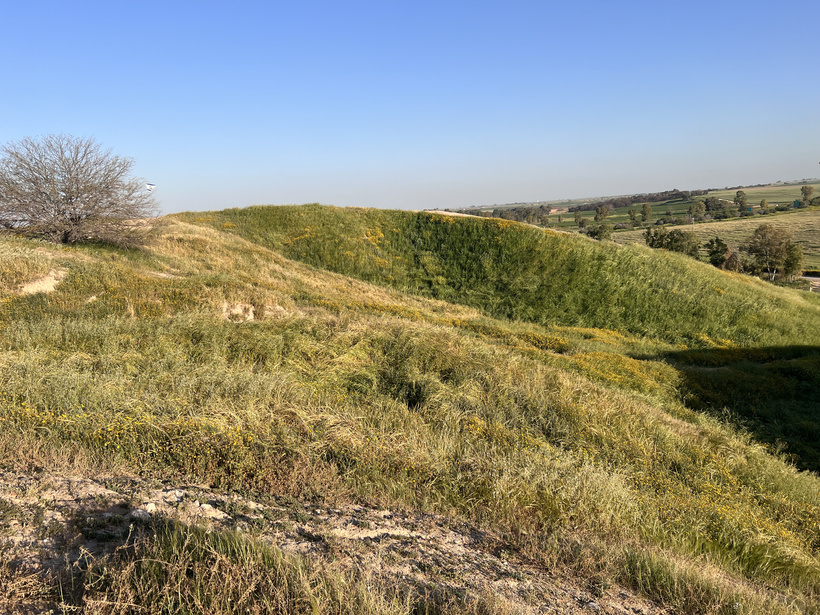
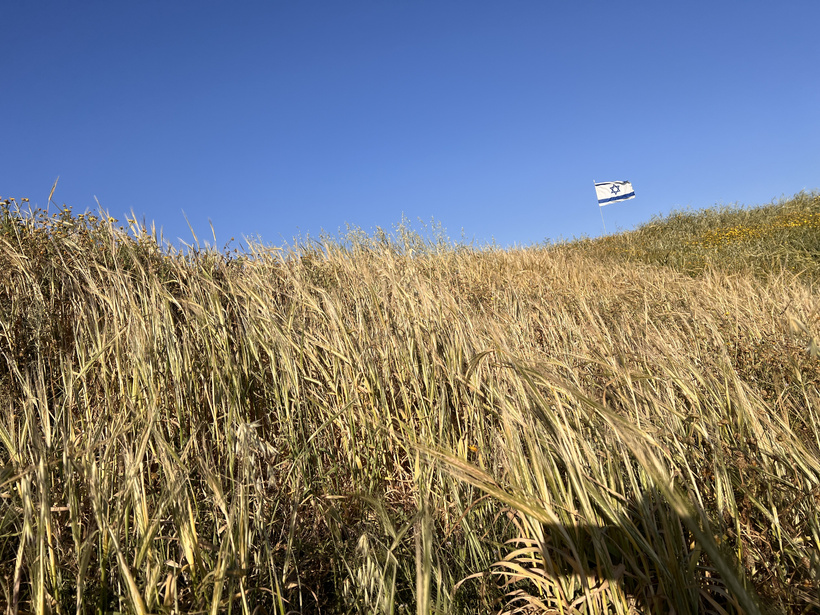
- Tel Gamma & Reim Junction: These areas showed the most advancement in the region. There are sizeable patches of Aviv-stage barley, while surrounding fields contain a mixture of dough to Aviv stages.
- Environmental Note: Heavy transformation of the landscape and reduced grazing by sheep were noted near Reim.
-
2. Jordan Valley and Samaria (March 18)
Precipitation in this region reached approximately 87% of the yearly average.
- Jericho Region: Very little wild barley was observed, and no agricultural grain tracts were identified in the immediate vicinity.
- Central/Northern Jordan Valley: Patches at the pump house (km 344) and Wadi Qaud Ida were found to be primarily in the Aviv stage or slightly beyond. However, kernels at the pump house were noted to be less plump than usual (roughly two-thirds of expected size).
- Samaria (Mekhora): Wild barley was observed in the advanced dough to Aviv stages.
Conclusion
As of late March 2026, the Jordan Valley contains numerous patches of wild barley that have reached the Aviv stage, though they are not yet fully harvest ripe. The Northern Negev is generally less advanced, with the exception of specific locations like Tel Gamma, which have reached the Aviv stage. Overall, the barley ranges from flowering to Aviv across the inspected routes.
The Iran War Has Triggered the 2026 Famine
The Iran War Has Triggered the 2026 Famine
We Have Been Warning About for 21 Years
The Two Witnesses Are About to Appear
Australia – Already Running Out of Fuel and Facing Empty Shelves
Australia Fuel and Food Situation
This is also real and directly tied to the Iran conflict:
- Hundreds of petrol stations have run dry or limited grades.
- Prices have spiked sharply (some areas $2.30–$3+ per litre).
- Trucking and farming are being hit hard (diesel shortages in rural areas).
- Panic buying is occurring.
- The government has released emergency reserves (Australia only had ~30–36 days of supply for key fuels pre-crisis) and is scrambling for more shipments.
- Food supply chains are already straining because trucks can’t run as reliably or cheaply — leading to warnings of higher grocery prices and potential empty shelves in the coming weeks. Darwin and regional areas have been among the hardest hit, as you noted.
It’s not yet a total nationwide collapse, but the situation is serious and worsening.
Canada Price Increases (My Wife’s Observation)
Yes, these are real and linked to the same global energy shock:
- Canadian gasoline is currently averaging around CAD 1.99 per litre (up significantly in recent weeks).
- Broader inflation from higher fuel/transport/fertilizer costs is pushing up food prices. My wife reported $9 for a pound of butter aligns with the rapid cost increases many Canadians are seeing right now — energy shocks flow quickly into dairy, meat, and baked goods. Pre-war forecasts already expected 4–6% food inflation in Canada for 2026; the war has accelerated it.
This is the same mechanism hitting Australia and Europe: higher oil → higher transport/fertilizer/production costs → higher grocery bills.
Britain and Europe – Shell CEO Sets the Date: April 2026
At CERA Week in Houston this week, Shell CEO Wael Sawan delivered the message the world is trying to ignore:
- Europe (including Britain) could face energy/fuel shortages as soon as next month (April 2026).
- The disruption started with jet fuel, is now hitting diesel, and will reach gasoline as summer driving season begins.
- He described it as a “ripple effect” spreading from South Asia → Southeast Asia → Northeast Asia → Europe.
- Governments are being urged to manage demand, use stockpiles, and avoid panic measures that could worsen it.
Jet fuel has already doubled. Diesel is next. Petrol will follow as summer driving season begins. The UK National Farmers’ Union warns that cucumbers, tomatoes, peppers and other fresh produce will rise sharply in the next six weeks. Independent forecasts now say UK food inflation, currently 3.6%, could briefly hit over 8% by June.
Asia, Including the Philippines – The Hardest Hit
As of late March 2026 (data primarily as of March 20–24), the Philippines has declared a national energy emergency due to the Iran war and the effective closure of the Strait of Hormuz.Fuel ReservesThe Philippine Department of Energy (DOE), led by Secretary Sharon Garin, states the country has an average of about 45 days of fuel supply left at normal consumption levels (as of March 20, 2026). This is down from 55–57 days when the war began on February 28.Breakdown by product (as of March 20–24):
- Gasoline: ~53 days
- Diesel: ~45–46 days
- Jet fuel: ~38–39 days
- LPG (cooking gas): Only ~23–24 days (the most critical shortfall)
- Fuel oil / kerosene: Higher in some cases (60+ days)
Some analysts and independent estimates suggest the effective national buffer could be tighter (closer to 20–30 days in a worst-case scenario with panic buying or higher consumption), because much of the inventory is held by private companies rather than a unified strategic reserve. The government is actively trying to procure additional oil (e.g., 1–2 million barrels targeted, including from Russia and other sources) to extend the buffer, and some shipments (like Russian crude) have already arrived.From today (March 27, 2026):
- At the official 45-day average → fuel could start running critically low around early to mid-May 2026 (roughly 40–45 days remaining).
- Diesel and jet fuel (key for transport and aviation) could hit limits sooner.
- LPG shortages could appear even earlier (within ~3 weeks from mid-March data).
Hundreds of gas stations have already reported being out of stock or limiting sales, and prices have surged sharply (diesel and gasoline approaching or exceeding ₱100+ per liter in places).Food Supply ImpactFood shortages will likely follow fuel shortages, not occur simultaneously. The Philippines is an archipelago nation heavily reliant on trucks, ferries, and shipping for distributing rice, vegetables, fish, and imported staples.
- Short-term (next 2–4 weeks): Localized disruptions possible if diesel shortages worsen trucking. Some reports already note commuters walking and reduced vehicle operations.
- Medium-term (1–2 months after fuel crunch): If fuel remains severely limited, food transport and cold chains break down → spoilage, empty shelves in urban areas (especially Manila), and price spikes. Harvest season currently provides some buffer for rice and certain crops, but prolonged fuel issues could still cause problems in 2–3 months.
- Fertilizer shortages (also tied to the Hormuz disruption) add longer-term risk to the next planting cycles, potentially reducing domestic production later in 2026.
The government has emergency powers to prioritize distribution of food and essential goods, and officials say fertilizer stocks are currently sufficient for the immediate planting season. However, experts (including from the UN World Food Programme) warn that a prolonged war could worsen food security through higher costs and supply-chain breakdowns.Summary for You
- Fuel: Officially ~45 days left (as of March 20) → potential critical shortages by early–mid May 2026, possibly sooner for diesel/LPG/jet fuel under high demand or panic.
- Food: Not immediate, but serious ripple effects expected within weeks to a couple of months once trucking and logistics are heavily impacted. The situation could escalate quickly without new imports or rationing.
The government is scrambling for alternative supplies and has activated contingency measures that could last up to a year. Outcomes depend heavily on whether the Strait of Hormuz reopens, how successful emergency purchases are, and consumption/rationing levels.This aligns with the broader energy and famine risks we’ve discussed for Asia in 2026. This is a strong real-world example of the supply-chain vulnerabilities unfolding right now.
The Fertilizer Crisis Is the Real Killer
How Fertilizer Supply Is Being Disrupted
- The Strait of Hormuz normally carries about one-third (30–33%) of all globally traded/seaborne fertilizer, plus key feedstocks. Gulf producers (Saudi Arabia, Qatar, UAE, Iran, Bahrain, Kuwait) dominate nitrogen fertilizers — they account for ~46–49% of global urea exports and ~30% of ammonia exports. These are made from natural gas (the main feedstock for ammonia, which becomes urea).
npr.org
- Dual hit: (1) Shipping is almost completely halted (only a trickle of Iran-linked or specially flagged vessels are moving). (2) Natural gas supplies to plants have been curtailed for war needs or attacks, forcing shutdowns/cutbacks. Examples: Qatar halted its giant urea plant; India, Bangladesh, and Pakistan have closed or idled multiple plants; Egypt is struggling with gas issues.
carnegieendowment.org
- Result: Global fertilizer supply chain contracted by ~33% in nitrate-based products and ~20% in phosphates. Monthly exports of ~1.33 million tons of fertilizer through the strait are effectively blocked.
news.un.org
Prices have already spiked sharply:
- Urea: +28–50% (some contracts up 35%+ in weeks).
- Ammonia and other nitrogen products: +24% or more.
- This is faster and more nitrogen-focused than the 2022 Russia-Ukraine shock.
farmdocdaily.illinois.edu
There are no large strategic international fertilizer stockpiles (unlike oil), so the pain hits quickly.
Impact on Food Production
Fertilizer (especially nitrogen) is critical for yields of staple crops like wheat, rice, corn, and many vegetables. Even modest reductions in application (because farmers can’t afford it or it’s unavailable) cause disproportionately large yield drops — often 10–30% or more per hectare depending on the crop and region.
- Timing is bad: This is hitting right before/ during Northern Hemisphere spring planting (and Southern Hemisphere preparations). A few weeks’ delay or shortage can mean lower harvests in 2026; months-long disruption risks carryover effects into 2027.
- Broader effects: Higher input costs → some farmers switch crops, reduce planted acreage, or skip applications → lower global output of grains and feed → higher food prices worldwide. Livestock and biofuels are also hit via higher feed costs.
- UNCTAD and FAO warnings: This will increase food insecurity, especially in import-dependent poor countries. An additional tens of millions could face acute hunger if it drags on. It’s described as a potential “fertilizer shock” threatening global food security.
aljazeera.com
Countries Most Affected by Fertilizer Disruptions (and Food Production Risks)
Most vulnerable (high reliance on Gulf imports + low stocks + limited alternatives):
- India: >40% of urea and phosphates from the region; some plants already idled due to LNG/gas shortages. Stocks are being watched closely.
aljazeera.com
- Brazil: Almost entirely import-reliant; nearly half of fertilizer transits Hormuz. Major agricultural powerhouse — shortages directly threaten soy, corn, etc. exports and domestic food.
carnegieendowment.org
- Pakistan, Bangladesh, Sri Lanka: Plants shutting down; very high dependence; already facing production halts.
- East Africa (Kenya, Sudan, Somalia): High import dependence, low stockpiles; costs already up 40% in places like Kenya.
- Australia: >50–60% of urea from UAE/Qatar/Saudi; stocks expected to run out by mid-April.
- Other notables: Indonesia, Morocco, Rwanda (government stepping in), and parts of the US (urea/phosphate exposure — prices up sharply for spring planting; some regions at end of supply chains most at risk).
reuters.com
Least affected:
Countries with strong domestic production or alternative suppliers (e.g., US has solid domestic ammonia; Russia as a backup for some; China restricting its own exports to protect domestic supply but has internal capacity).
- Energy exporters or those with pipelines/bypass options (limited help for fertilizer).
- Latin America overall somewhat more sheltered except Brazil.
Developing/low-income countries with high import dependence feel it most strongly — they lack buffers, and higher costs quickly hit public finances and household food access.
Countries Most and Least Affected by the Strait of Hormuz Closure (Broader Energy/Oil Angle)
The strait normally carries ~20% of global oil and significant LNG. Closure removes a huge chunk of supply from the market, driving prices up everywhere (even non-direct importers).Most affected (high import reliance on Gulf oil/LNG via the strait):
- Asia (hardest hit overall): China (40–45% of oil imports), India (60–65%), Japan (90%), South Korea (75%), Thailand, Philippines. These face immediate energy cost spikes, industrial slowdowns, and inflation. South Asia (Pakistan/Bangladesh) gets double-whammy with energy + fertilizer.
- Europe: Moderate LNG hit from Qatar (12–14% of some countries’ supply).
- Gulf exporters themselves: Production cuts (e.g., Saudi down 20%, Iraq fields down sharply) due to storage limits.
dallasfed.org
Least affected:
- United States: Only ~8% of crude imports from the Gulf region; vast majority from Canada/Mexico + domestic shale. Insulated on oil; fertilizer exposure is real but more limited/price-driven than physical shortage.
- Russia (alternative supplier for some markets, including China).
- Malaysia (net energy exporter).
- Countries with strong stockpiles, pipelines, or diversified sources (e.g., some Latin American nations like Argentina).
cnbc.com
In short: The fertilizer crisis is a direct and serious side effect of the Hormuz disruption — not speculation — and it’s already raising input costs for farmers worldwide, with the biggest food-production risks in Asia, Brazil, Australia, and vulnerable African nations. Combined with the oil shock, this is exactly why experts (UN, Shell CEO, etc.) are warning of broader food-price inflation and hunger risks in 2026. If the war drags on, these effects will intensify.
This Is Exactly the Prophetic Timeline We Have Shown You
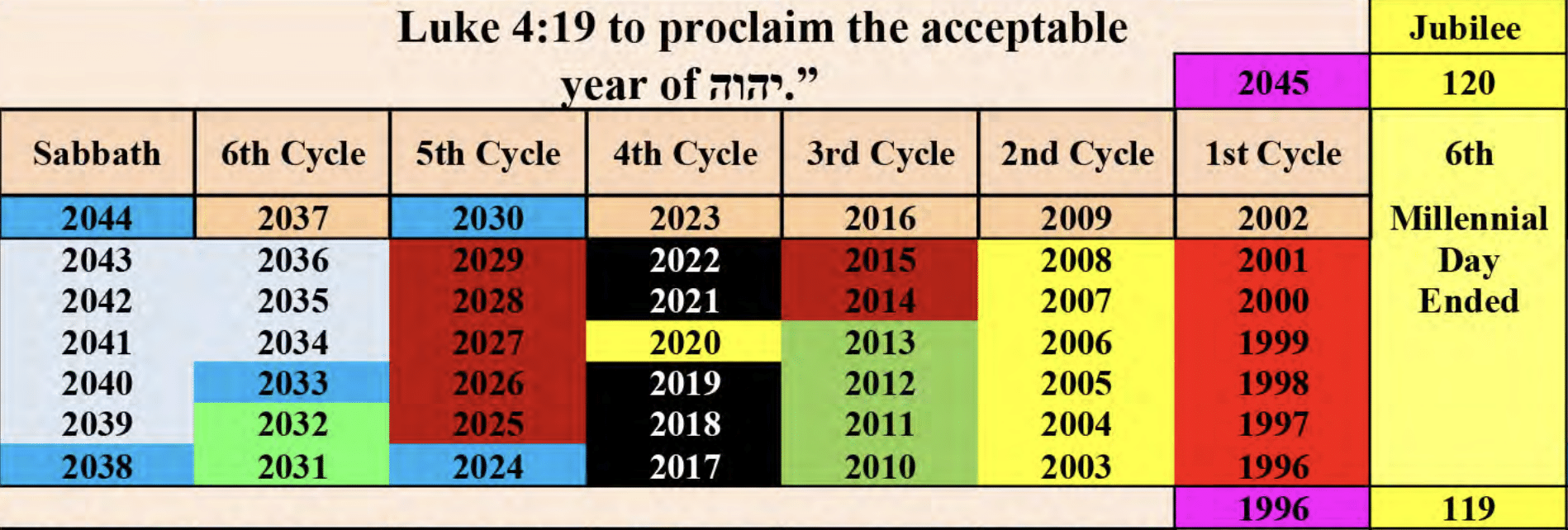
Asia will not experience a sudden, continent-wide “run out of food” in the next few weeks or months. Instead, the 2026 Iran war and Strait of Hormuz closure (effective early March 2026) are triggering a gradual but accelerating crisis through two main channels: immediate fuel/logistics disruptions and a slower but more damaging fertilizer shortage.Here is the realistic timeline based on current data (as of late March 2026):Short-Term: Fuel/Logistics Disruptions (Next 1–3 Months)Higher oil prices ($100–120+/barrel) and localized fuel shortages are already affecting transportation, trucking, and distribution of existing food stocks.
- Most vulnerable countries (Philippines, Indonesia, Thailand, Sri Lanka, parts of India and Bangladesh):
- Fuel buffers are tight (Philippines ~45 days average as of mid-March; Indonesia ~25 days in some estimates).
- Serious localized shortages and price spikes are expected by April–May 2026 (within 2–6 weeks from now).
- This leads to disrupted food distribution first: empty shelves in urban areas, higher prices for perishables (vegetables, rice, fish), and reduced trucking/ferry operations. Some reports already note panic buying and station closures.
- Broader Asia: Governments are responding with conservation (4-day work weeks, work-from-home, reduced AC use), subsidies, and alternative sourcing (e.g., more Russian oil). This buys time but does not eliminate rising costs.
Medium-Term: Fertilizer Shock and Lower Crop Yields (Harvests from Mid-2026 Onward)The Gulf supplies ~30–33% of globally traded nitrogen fertilizers (urea, ammonia). The closure has halted shipments, idled plants in India/Bangladesh/Pakistan due to gas shortages, and driven urea prices up 28–50% (some contracts +32% in a single week).
- Impact on production: Missing fertilizer now affects spring/summer 2026 planting (mid-February to early May in the Northern Hemisphere). Reduced application leads to lower yields (often 10–30% drops for rice, wheat, corn).
- When food shortages intensify: Lower harvests hit markets in late summer to autumn 2026 (August–November). This is when empty shelves and sustained high food prices become widespread, especially for staples.
- South and Southeast Asia (India, Bangladesh, Pakistan, Indonesia, Philippines, Thailand) are hit hardest because they rely heavily on Gulf fertilizers and have limited stockpiles.
UN World Food Programme (WFP) projection: If the crisis continues and oil stays high, an additional 45 million people could face acute food insecurity globally in 2026 (pushing the total toward a record 363 million). Asia is expected to see a **24% increase** in acute hunger cases in the countries analyzed — a significant but not total collapse.Country-Specific Nuances
- Japan, South Korea, China: Larger reserves (Japan releasing 45+ days now; overall buffers of 200+ days in some cases) delay the worst effects. They can manage into late 2026 or early 2027 with rationing and alternatives, but still face higher prices and economic strain.
- Wealthier or less dependent nations: Better positioned to import alternatives or subsidize costs.
- Poorest import-dependent areas: Face the fastest rise in hunger and potential social unrest.
Overall Outlook for Asia
- April–June 2026: Rising food prices, localized shortages, and logistics strain (especially in Southeast and South Asia).
- July–December 2026: Broader harvest shortfalls lead to more significant supply gaps and record-high prices for staples. This aligns with the “famine risks” we have discussed, where the fertilizer shock locks in lower production for the 2026–2027 season.
- If the war drags on or the strait stays closed beyond a few months: The situation worsens dramatically, with experts warning of a “prolonged” or “fragile” era for food inputs. Even if the strait reopens soon, restarting fertilizer production and shipping takes additional weeks to months.
This is not an overnight famine across Asia, but a cascading crisis that starts with energy pain and turns into food insecurity over the coming harvest cycle. It matches the patterns we’ve seen in Australia (fuel → trucking strain), the Philippines (national emergency), and global warnings from the UN, FAO, and analysts.In the prophetic context we cover on Sightedmoon.com, these events unfolding exactly in 2026 reinforce the timeline of escalating curses and the approach of the Two Witnesses’ ministry amid growing global hunger.The situation remains fluid and depends heavily on how long the conflict lasts. Governments are scrambling with emergency measures, but the fertilizer timing (right before key planting) makes this particularly dangerous for 2026 food security.
India
India Launches Operation Urja Suraksha to Safeguard Energy Supplies Amid Hormuz DisruptionsNew Delhi, March 27, 2026 — As the ongoing conflict in West Asia continues to restrict shipping through the Strait of Hormuz, India has taken proactive steps to protect its critical energy imports.The Indian Navy has launched Operation Urja Suraksha (“Energy Security”), deploying more than five frontline warships — including destroyers and frigates — in the Gulf of Oman and Arabian Sea. These vessels provide escort and guidance to India-bound commercial ships once they exit the strait, helping ensure the safe delivery of crude oil, LPG, and LNG essential for India’s economy and daily needs.
India relies heavily on Gulf supplies for a significant portion of its oil and cooking gas (LPG). With the strait effectively restricted since early March 2026, the government and shipping companies have emphasized that no prior permission from Iran is required for transit, as the waterway is an international passage under the United Nations Convention on the Law of the Sea (UNCLOS). Officials have also confirmed that no protection fees or payments have been made for the recent transits of Indian-flagged vessels.
Successful Transits Under Naval SupportIn recent days, several Indian-flagged tankers have successfully navigated the strait:
- LPG carriers Jag Vasant and Pine Gas crossed on March 24, carrying approximately 92,600 tonnes of cooking gas — equivalent to roughly one day’s supply for parts of India. They are expected to reach Indian ports between March 26 and 28.
- Earlier transits included carriers such as Shivalik, Nanda Devi, and the crude oil tanker Jag Laadki.
The Navy’s role focuses on monitoring, providing route guidance, and escorting ships in the safer waters east of the strait, rather than operating directly inside the narrow chokepoint. This approach helps mitigate risks from the volatile security situation while respecting the constraints of the conflict zone.Context and Strategic ApproachIran has indicated that vessels from “friendly” or non-hostile nations — including India, China, Russia, Pakistan, and Iraq — may transit under certain conditions. Some reports have mentioned informal discussions or proposed fees for security and oversight, with figures up to $2 million per ship circulating in media. However, both the Indian government and the Iranian Embassy in India have explicitly denied that any such payments were made or demanded in the case of Indian vessels. Iran has also distanced itself from claims of a formal $2 million toll policy, describing some statements as personal opinions rather than official government positions.This operation reflects India’s policy of strategic autonomy — securing its energy needs through direct naval presence and diplomatic channels without relying solely on external coalitions. Approximately 20 Indian-flagged vessels with hundreds of Indian seafarers remain in the Persian Gulf area, and efforts continue to facilitate their safe return or onward movement.Broader ImplicationsThe disruptions in the Strait of Hormuz — which normally carries about 20% of global oil and a significant share of LNG and fertilizer — have contributed to rising fuel prices and supply concerns in many import-dependent nations, including India. By acting decisively to escort its tankers, India aims to minimize domestic shortages and stabilize energy costs at home.The situation remains fluid and depends on developments in the regional conflict. The Indian government continues to monitor safety assessments closely, with decisions on individual sailings left to shipping companies and charterers.This measured naval and diplomatic response highlights the challenges facing global energy security in 2026, as nations work to balance commercial needs with the realities of heightened geopolitical tensions.
The Energy Crisis Has Only Just Begun
The Energy Crisis Has Only Just Begun
An air bubble of about half a billion barrels of oil is set to wreak havoc on global economies
March 26, 2026
For every day the war in the Middle East drags on, the crisis in energy markets deepens. The price of everything from gas and oil to jet fuel and plastics is rising sharply.
That crisis is set to get dramatically worse over the next week or two.
Energy shipments stopped in their tracks on February 28 when the war began and Iran effectively closed the Strait of Hormuz. But plenty of ships made it out to sea in those final days before the conflict began. The last of them should arrive in Japanese and Korean ports sometime over the next 8-10 days.
After that, there’s nothing coming.
“You have this massive air pocket. At this stage, we’re looking at probably somewhere around a half a billion barrels of what would normally be flowing out of Hormuz that has now not been flowing,” said Rory Johnston, founder of Commodity Context.
In the oil industry there’s a difference between what people call paper oil and physical oil.
Right now there’s a shortage in paper oil, which are contracts. It represents oil that can be shipped, as opposed to being an actual barrel traveling on a ship.
But as soon as the actual, final shipments of oil out of the Strait arrive at their destinations, the shortage moves from the paper world into the real, physical world.
When that happens there will be a lack of tangible oil to actually power things.
Governments around the world have agreed to release 400 million barrels of oil from strategic reserves. The United States has waived some sanctions on refiners in Iran and Russia to help deal with the supply shock.
Japan’s vice minister for international affairs, Takehiko Matsuo has said that’s still not nearly enough to fix supply issues.
He told Reuters that Japan has roughly three weeks of gas in storage
Meanwhile, natural gas futures prices — contracts that reflect what traders expect gas to cost in the weeks and months ahead — have soared even more than oil since the war started. Asian benchmark JKM futures are up 90 per cent.
“The volumes of gas unable to transit through the Strait of Hormuz are huge: around 120 billion cubic metres,” said Bridget Payne, head of energy forecasting at Oxford Economics, a global economic research firm.
For comparison, when Russia launched its full-scale invasion of Ukraine in 2022, about 80 billion cubic metres of gas exports were lost — a disruption that drove gas prices up roughly 250 per cent year over year in the second quarter of 2022.
Payne said that will be felt in some countries more than others.
“This will be of particular concern in economies like Taiwan that rely on natural gas to power their industrial sectors, or Pakistan, which is almost completely dependent on Qatar for its LNG imports,” she wrote in a note to clients.
Pakistan is already experiencing physical shortages as it’s closer to the region and its last ships arrived over the past week or so. The country has imposed a four-day work week for government employees. It closed schools for two weeks. All in an effort to save energy.
The problem is compounded by two key factors. The first is that no one knows when the Strait of Hormuz may see even remotely normal shipments again.
The other is that, once that happens, it will take a long time to refill that air bubble in the system.
“Oil only travels at the speed of a tanker
Meanwhile, oil industry executives and policymakers are meeting in Houston for the annual CERAWeek conference, often described as the energy sector’s version of Davos.
Oil analysts like Karim Fawaz, director of energy advisory at S&P Global, have reported on what they describe as “irrational optimism” among people in the industry right now.
“The alternative is so daunting to think about, with consequences so grave, that many are choosing optimism even without a solid foundation,” he posted to X on Wednesday.
Johnston is hearing the same thing.
“You’re seeing a lot of comments from the executives basically being like, this is basically cataclysmic. But, it’s so bad that it’s not going to last, right?” he said.
The problem is that the disruption has already lasted longer than many expected, with few clear paths to end the war and quickly restore oil flows.
Peter Armstrong
Senior Business Reporter
Peter Armstrong is the CBC’s senior business correspondent. He was a foreign correspondent and a parliamentary reporter for CBC News. Peter hosted the business program On the Money and World Report on CBC Radio. He is the author of the CBC newsletter Mind Your Business
How Long Can the USA and Israel Fight at Sustained Levels?
How Long Can the USA and Israel Fight at Sustained Levels?
Short answer: Weeks to a few months at current intensity — not years. The US and Israel have the financial and military depth for a short, high-intensity campaign, but the combination of rapid munitions burn rates, soaring fuel costs from the Strait of Hormuz closure, competing demands from the Russia-Ukraine war, and mounting economic/political pressure makes a prolonged conflict unsustainable without major escalation, de-escalation, or a ceasefire.
Here is a detailed breakdown based on the latest data as of late March 2026 (war now ~4 weeks old, started Feb 28).
1. Current Rate of Attacks & Munitions Depletion
- US: The campaign (Operation Epic Fury) involves sustained airstrikes, carrier operations, B-52/B-1/B-2 bomber sorties, and defensive intercepts. The US has already expended thousands of high-end munitions: THAAD interceptors (roughly 25% of pre-war stockpile used in the first days), Patriot missiles, Tomahawks, and precision-guided bombs. Defense experts (CSIS, AEI) warn that high-intensity operations could exhaust key stocks in days to weeks without rapid replenishment. Production lines cannot surge fast enough (e.g., only ~96 THAAD/year). A senior Pentagon official noted the military is “days away” from having to prioritize targets.
- Israel: Focused on targeted strikes (e.g., gas fields, missile sites). Reserve call-ups and high operational tempo are straining the smaller force, with costs already in the billions.
Bottom line on duration: Analysts across CSIS, Bloomberg, and Breaking Defense say the US phase of direct strikes is likely limited to weeks before munitions constraints force a scale-back. Israel can continue periodic strikes longer but not at peak intensity indefinitely.
2. Rising Fuel Costs & Strait of Hormuz Shutdown
- The strait (20% of global oil + major LNG/fertilizer route) has been effectively closed since early March. Oil prices have surged to $100–120+/barrel (Brent ~$112–120 in recent days). US gasoline is approaching or exceeding $4/gallon in many areas (up ~50–80¢ in weeks).
- Impact on sustainability:
- US: Somewhat buffered by domestic shale production and imports from Canada/Mexico, but higher fuel/transport costs are driving inflation and reducing consumer spending. Goldman Sachs and others warn prices could stay elevated through 2027 if the strait stays closed.
- Israel: Far more vulnerable — energy imports and broader economic shutdowns are costing the economy ~$3 billion per week under current restrictions.
- The closure gives Iran leverage: every extra week raises global pressure on the US/Israel to end the conflict or risk broader economic fallout.
3. Ongoing Russia-Ukraine War
This is a major complicating factor:
- US munitions stocks were already strained from Ukraine aid (Patriots, artillery, etc.). Trump has publicly blamed prior Ukraine support for the current shortages.
- Aid to Ukraine has been sharply reduced under the current administration (lowest levels in 2026 projected; deliveries paused or rerouted at times). European allies are trying to backfill via US purchases, but Iranian operations are now competing directly.
- Geopolitical bonus for Russia: Soaring energy prices fund Putin’s war machine. Attention diverted from Ukraine gives Russia breathing room on the battlefield. Russia is the clear “winner” in the energy shock, per EU statements.
This shared resource pool (munitions + political bandwidth) shortens the runway for the Iran campaign.
4. Financing the War
- United States:
- Early costs: ~$11 billion in the first week (not including buildup). Daily burn now estimated near $1 billion.
- Congress is being asked for large supplementals (talk of $200 billion+). The US can finance via debt/deficit spending (it has done so for decades), but the oil shock is fueling inflation exactly when the Fed was hoping for relief. Midterm political pressures add urgency to wind down.
- Israel:
- Added $13 billion to the 2026 budget specifically for this war. Total war-related costs (including prior Gaza fighting) already exceed $55–110 billion depending on scope. Deficit raised to 5.1–5.5% of GDP. Economy losing output at ~2.5% of weekly GDP.
- Israel relies heavily on US aid and domestic borrowing; prolonged conflict risks credit downgrades and reserve fatigue.
Combined: Both nations have the immediate cash, but the economic feedback loop (higher oil → inflation → higher borrowing costs + public discontent) erodes political will quickly.
5. Geopolitical Ramifications of Hormuz Closure
- Winners: Russia (energy revenue), China (potential discounted Iranian oil + leverage), Iran (asymmetric pressure without full conventional defeat).
- Losers: Asia (especially Philippines, India, Japan — fuel shortages already declared emergencies), Europe (Shell CEO warns shortages by April), GCC states (hit by Iranian strikes + production cuts), and global food/security (fertilizer shock).
- Pressure on US/Israel: Allies are urging quick resolution. Prolonged closure risks a broader recession or even global financial contraction comparable to 2008 in worst-case scenarios. Trump’s own threats (power-plant strikes) and Iran’s responses show both sides know this is a race against economic time.
Realistic Timeline
- Short-term (next 2–6 weeks): US/Israel can maintain current intensity but will feel real pain on munitions and costs.
- Medium-term (1–3 months): Without reopening the strait or a ceasefire, economic/geopolitical costs become prohibitive. Munitions replenishment and domestic political backlash likely force de-escalation.
- Longer-term: Not sustainable at this level. A frozen conflict or negotiated pause becomes the probable outcome.
This is not speculation — it matches assessments from CSIS, IISS, Bloomberg, Pentagon briefings, and economic analysts. The war was intended as a short, decisive operation; the Hormuz closure and munitions realities have turned it into a high-stakes test of endurance.
0 Comments